Best Plants for the Bedroom According to Science: Bangalore Apartment Guide (2026)
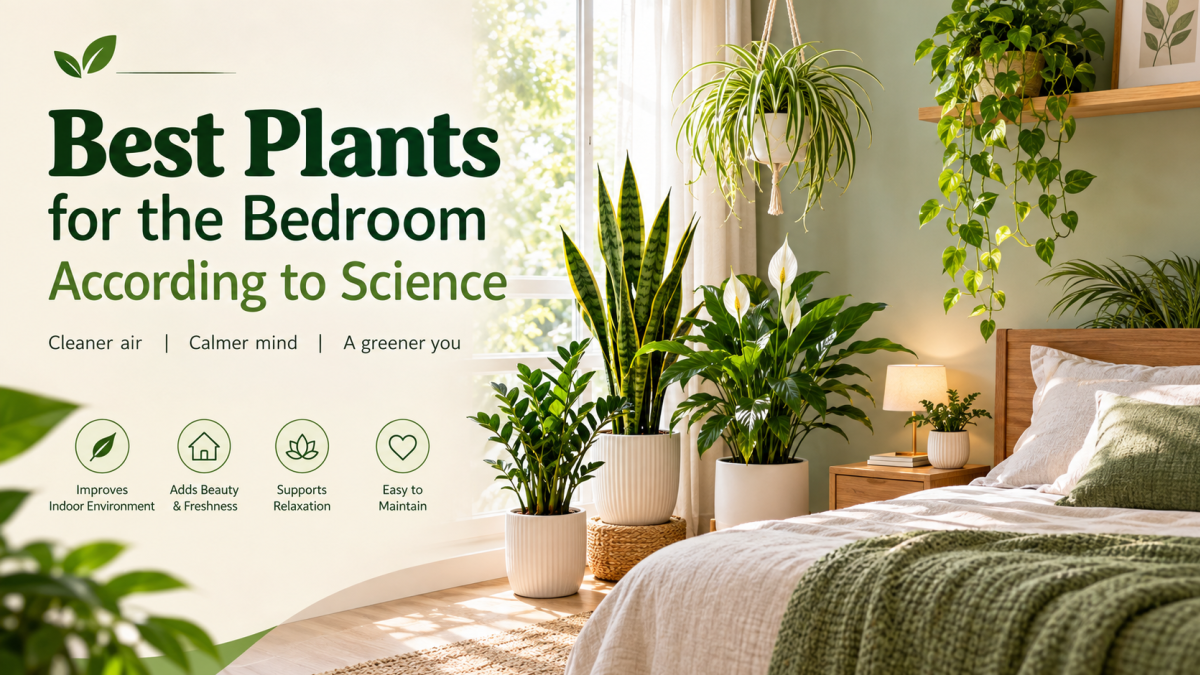
A bedroom is more than just a place to sleep — it is an intimate sanctuary where the body relaxes, the mind unwinds, and the day comes to a quiet end. In fast-paced urban hubs like Bengaluru, where traffic noise, screen fatigue, and concrete high-rises dominate daily life, bringing live plants into the bedroom adds a calming natural rhythm to our evenings.
However, with endless internet claims praising 'overnight oxygen machines' and 'instant air purifiers,' it has become difficult for plant lovers to separate real science from popular gardening myths. Can plants replace an air purifier or open ventilation? Does a Snake Plant really pump oxygen into your room while you sleep? In this comprehensive guide, we examine what science actually says about bedroom houseplants, debunk common myths, and introduce the 10 best science-backed plants for Bengaluru bedrooms — tailored specifically for apartment lighting, climate, and modern aesthetics.
🔬 The Science: What Bedroom Plants Can (and Cannot) Do
1. Do Bedroom Plants Really Produce Oxygen at Night?
One of the most persistent myths is that certain houseplants flood the bedroom with fresh oxygen all night long. The real botanical reality is more nuanced: During daylight, plants perform photosynthesis, absorbing carbon dioxide (CO2) and releasing oxygen (O2). At night, without sunlight, most plants respire — consuming tiny amounts of oxygen and releasing small traces of CO2. Certain desert-adapted plants — particularly Crassulacean Acid Metabolism (CAM) plants like the Snake Plant (Dracaena trifasciata) — have adapted to open their stomata at night to capture carbon dioxide, minimising water loss in hot climates.
The Reality Check: While CAM plants do capture CO2 at night, the volume involved from 2 or 3 potted plants is scientifically modest. They won't drastically alter your bedroom's oxygen levels, but they are 100% safe, beneficial, and soothing.
2. Can Plants Purify Indoor Air Like an Air Purifier?
The famous 1989 NASA Clean Air Study demonstrated that plants can absorb Volatile Organic Compounds (VOCs) such as formaldehyde, benzene, and trichloroethylene. These VOCs are common in modern Bengaluru apartments, off-gassing from wall paints, laminated wardrobes, new foam mattresses, and synthetic carpets. However, NASA's experiments took place in tiny, sealed, airtight chambers. Peer-reviewed environmental studies show that in real-world bedrooms with normal natural air exchange, you would need dozens of plants per square meter to match mechanical filtration. View houseplants as nature's visual and psychological therapists that gently interact with your indoor climate, stabilize ambient humidity, and promote deep, restorative sleep.
🌿 10 Best Plants for the Bedroom According to Science
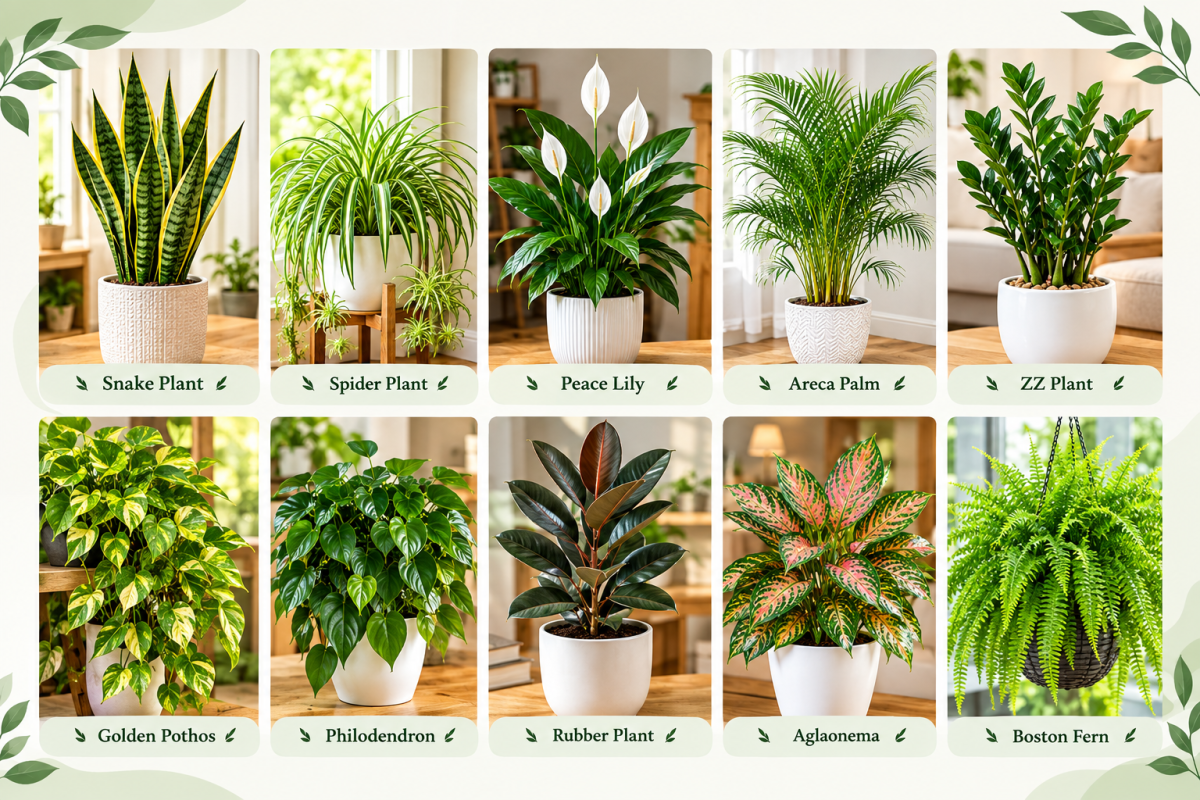
Here are the top 10 science-backed, resilient plants that thrive in Bengaluru bedrooms, balancing air interaction, ease of care, and tranquil design.
1. Snake Plant (Dracaena trifasciata / Sansevieria) – The Night-Time CAM Champion
The Snake Plant is the undisputed king of bedroom greenery. Its upright architectural sword-like leaves require almost zero fuss, and it utilizes CAM photosynthesis to absorb carbon dioxide during nocturnal hours.
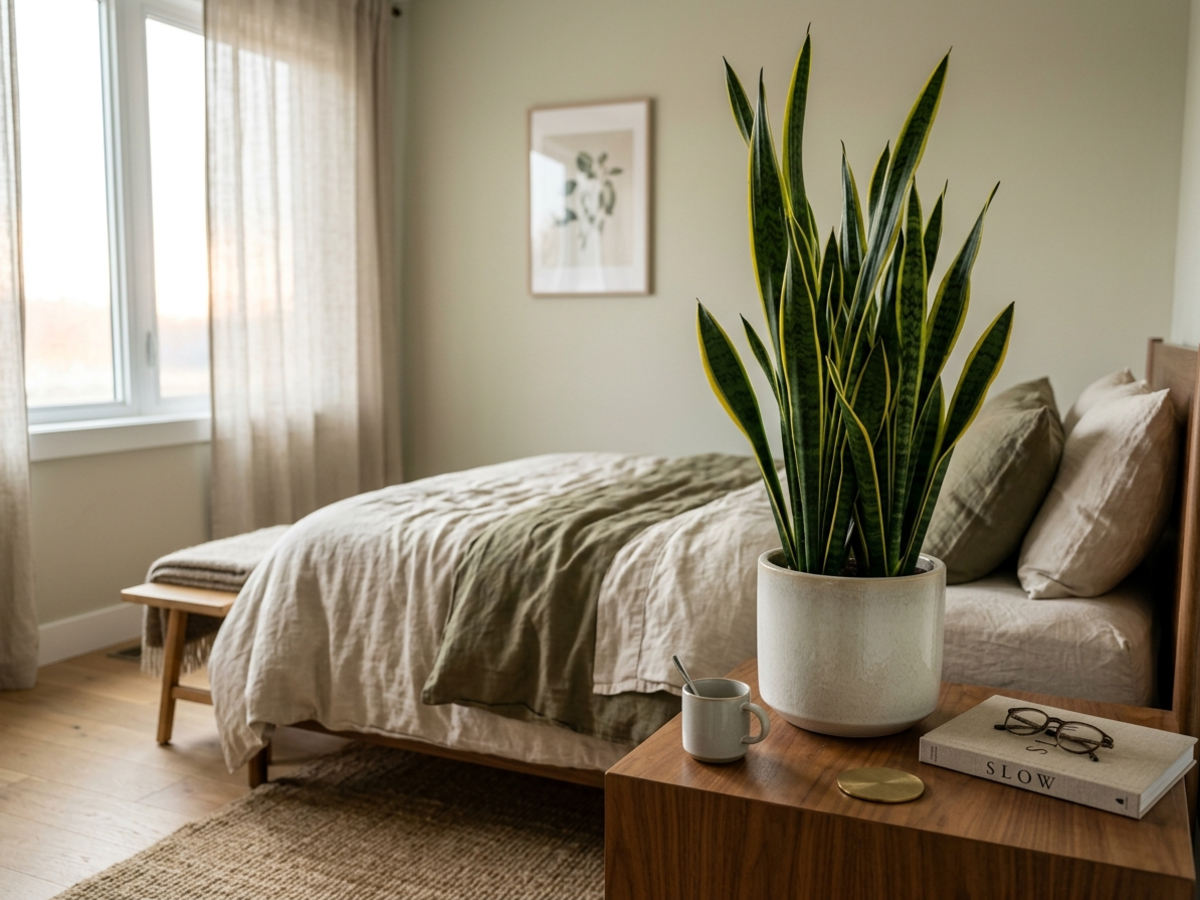
Scientific Advantage: Nocturnal carbon dioxide absorption via CAM pathway; proven resilience in dry air-conditioned rooms. Light: Adaptable from low indirect light to bright filtered windowsills. Watering: Once every 2–3 weeks. Overwatering is the only way to harm it. Bengaluru Placement: Next to the bedside table or in a bedroom corner in Whitefield or Bellandur high-rises.
Link to buy Snake Plant at Happy Greenery
2. Spider Plant (Chlorophytum comosum) – The Resilient Air-Friend
Spider Plant produces graceful arching variegated leaves and produces dangling plantlets ('spiderettes'). NASA research highlighted its high capacity to absorb common household pollutants like formaldehyde and xylene.
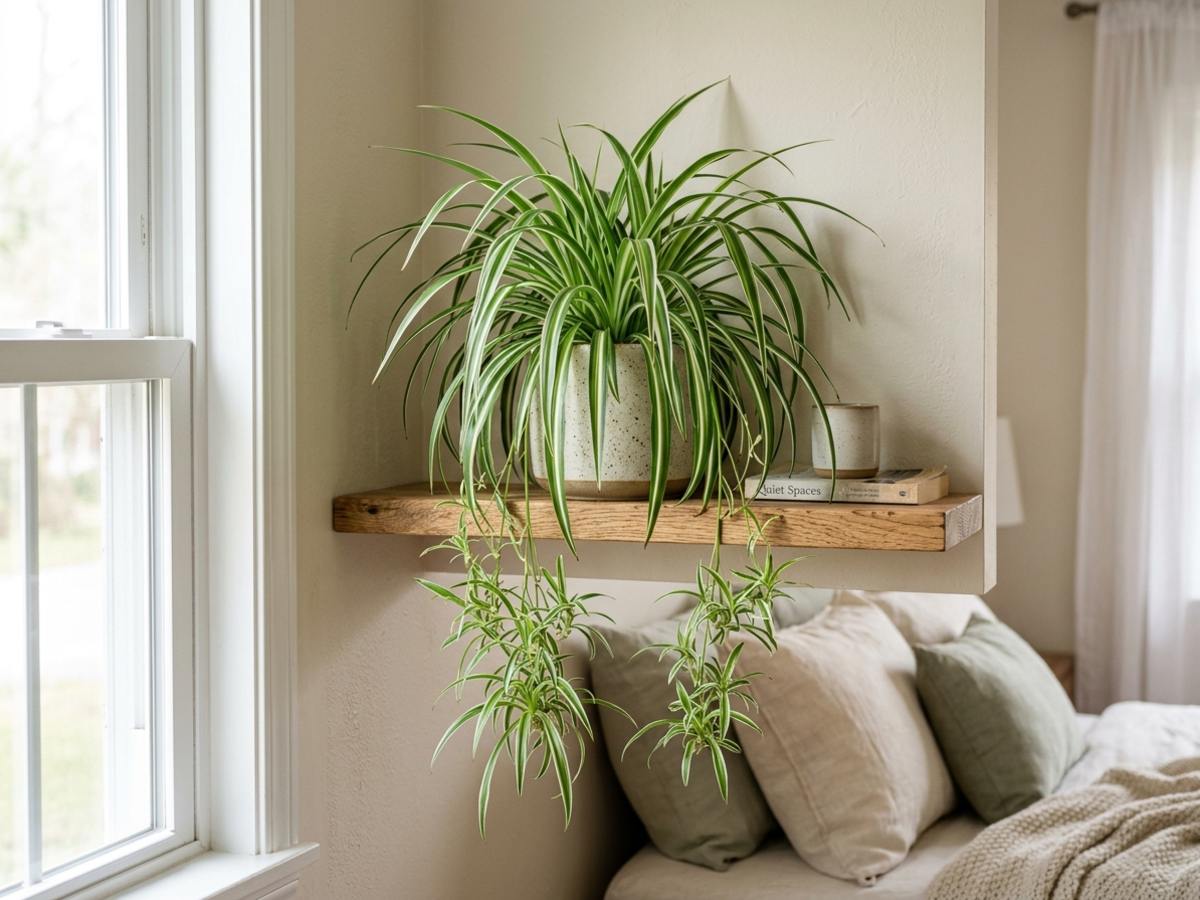
Scientific Advantage: High transpiration rate that gently humidifies dry, air-conditioned bedroom air without encouraging mould. Light: Medium to bright indirect sunlight (avoid scorching afternoon sun). Watering: Water when the top inch of soil feels dry (once a week in Bengaluru). Bengaluru Placement: Floating wooden headboard shelf or a hanging macrame basket near an east-facing window.
Link to buy Spider Plant at Happy Greenery
3. Peace Lily (Spathiphyllum) – Tropical Serenity & Moisture Indicator
With its deep emerald foliage and striking white spathes, Peace Lily creates an instant spa-like ambience in any master bedroom. It is renowned in environmental research for removing airborne acetone and alcohols.
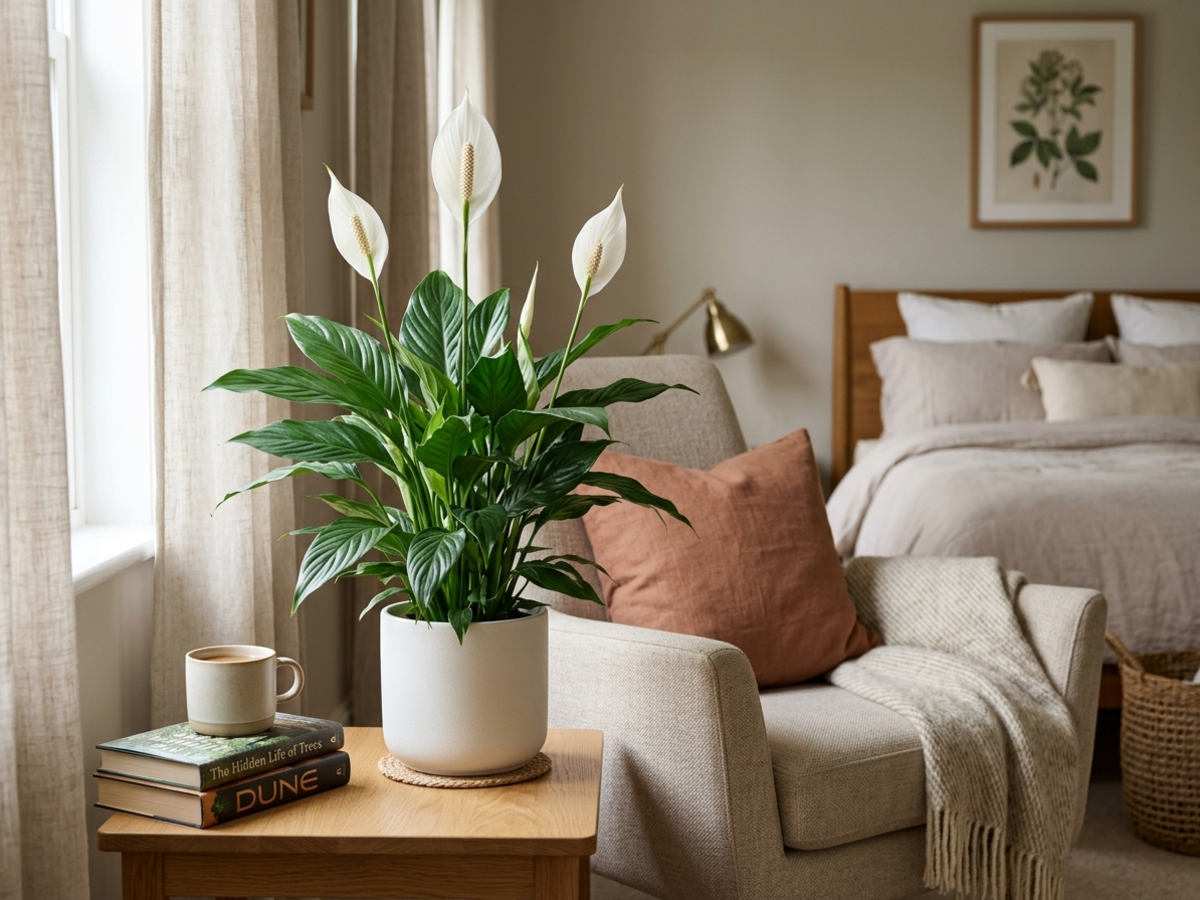
Scientific Advantage: Actively transpires clean moisture, boosting relative humidity by up to 5% in closed rooms. Light: Low to medium indirect light; direct sun scorches its delicate spathes. Watering: Keep soil evenly moist. It dramatically droops when thirsty and perks right up after watering! Bengaluru Placement: Beside an armchair or on a dresser away from direct AC draft.
Link to buy Peace Lily at Happy Greenery
4. Areca Palm (Dypsis lutescens) – Nature's Living Humidifier for Large Bedrooms
If you have a spacious bedroom in Indiranagar, Koramangala, or Sarjapur Road, the Areca Palm makes a breathtaking tropical statement. Known as one of the best natural humidifying plants in botanical studies, an adult Areca palm releases clean moisture into the room daily.
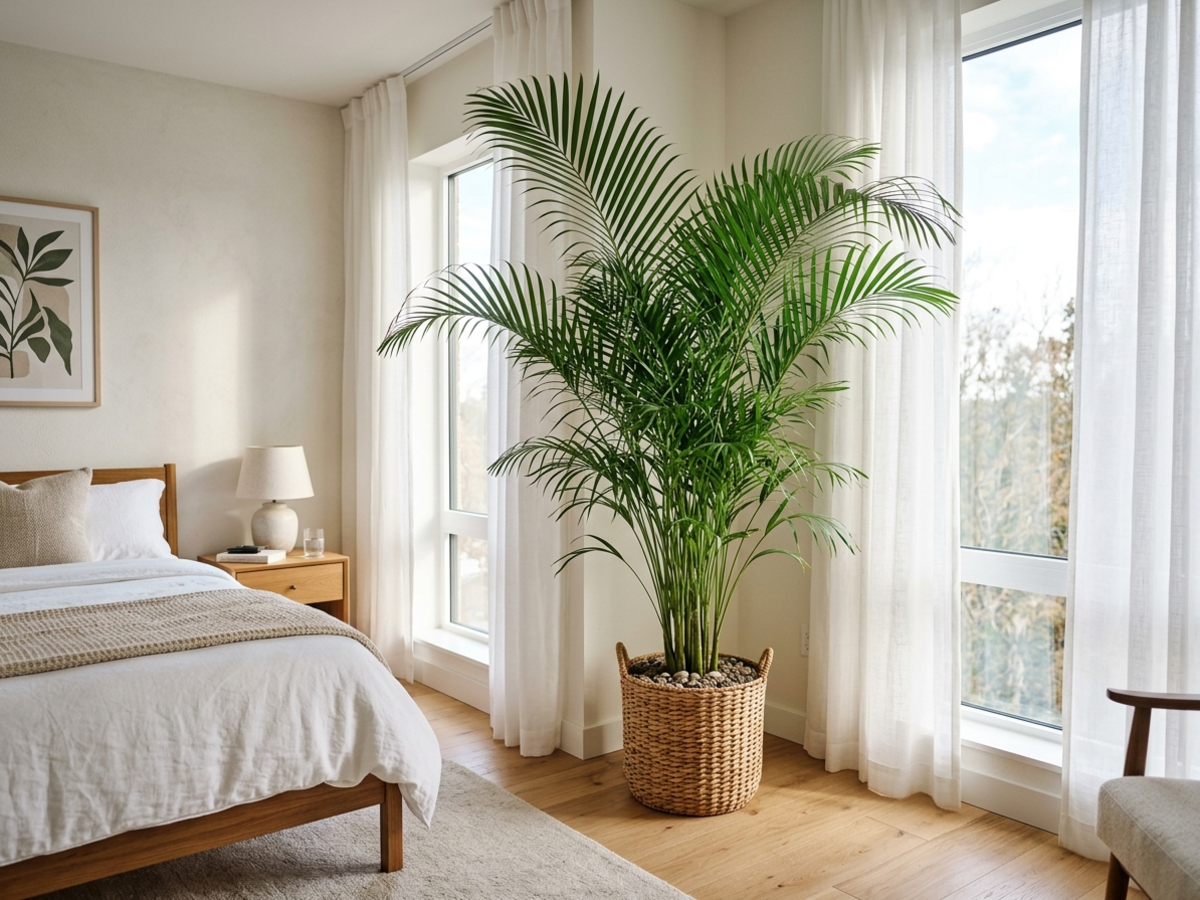
Scientific Advantage: High transpiration volume that combats respiratory dryness caused by overnight air conditioning. Light: Bright indirect sunlight near a large balcony door or window. Watering: Water thoroughly when top soil dries; thrives in Bengaluru's moderate climate. Bengaluru Placement: Empty bedroom corner in a woven wicker basket planter.
Link to buy Areca Palm at Happy Greenery
5. ZZ Plant (Zamioculcas zamiifolia) – Indestructible Low-Light Companion
For north-facing bedrooms, windowless dressing spaces, or busy professionals who travel frequently, the ZZ Plant is bulletproof. Its thick, fleshy stems and potato-like underground rhizomes store water for weeks.
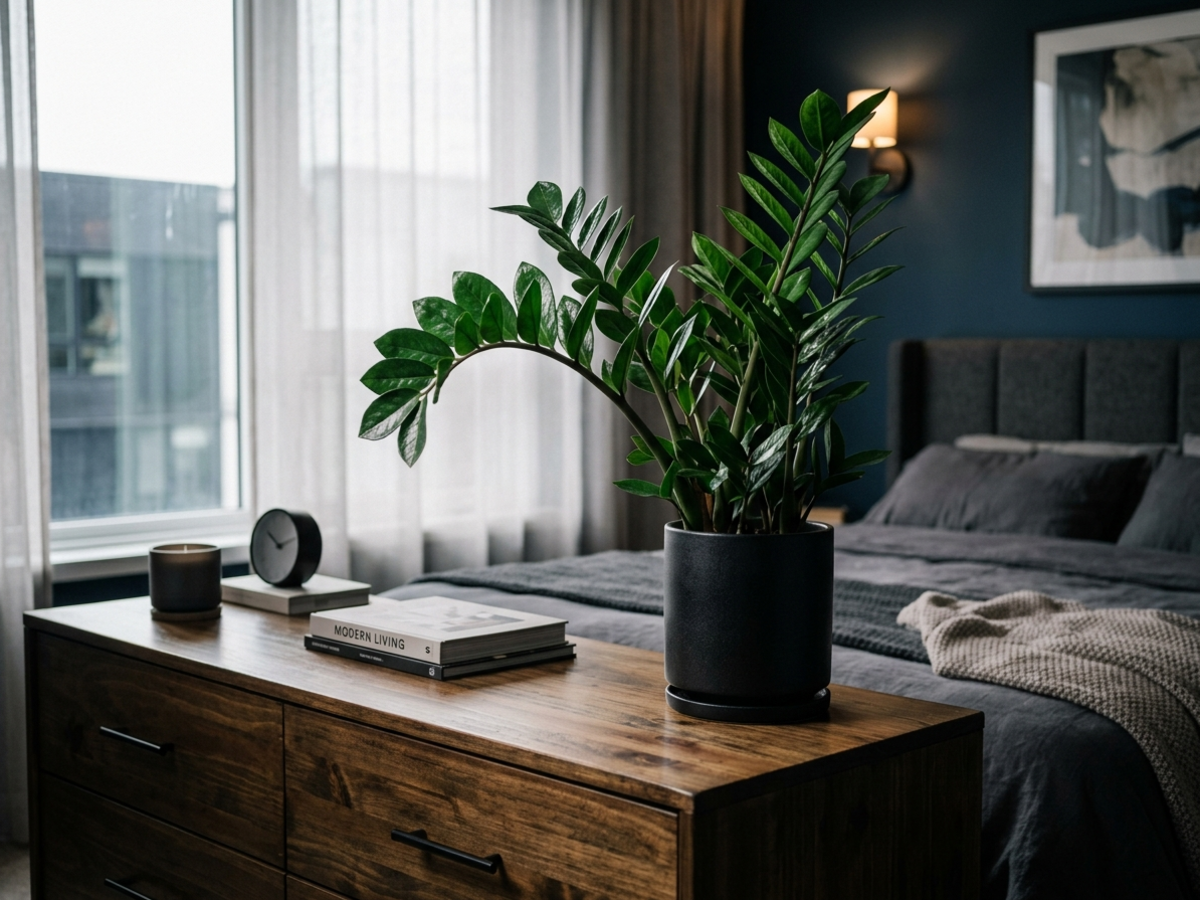
Scientific Advantage: Outstanding drought tolerance; requires minimal light to maintain chlorophyll density. Light: Thrives in low to medium indirect light; tolerates artificial LED room lighting. Watering: Once every 2 to 4 weeks. Highly forgiving of neglect. Bengaluru Placement: Modern chest of drawers, bedside credenza, or master bedroom vanity.
Link to buy ZZ Plant at Happy Greenery
6. Golden Pothos / Money Plant (Epipremnum aureum) – The Classic Sleep Booster
Golden Pothos is one of the most widely studied indoor vines. Its heart-shaped glossy leaves marbled with yellow and green trail elegantly across walls and shelves, bringing an organic cascade of calm to your resting space.
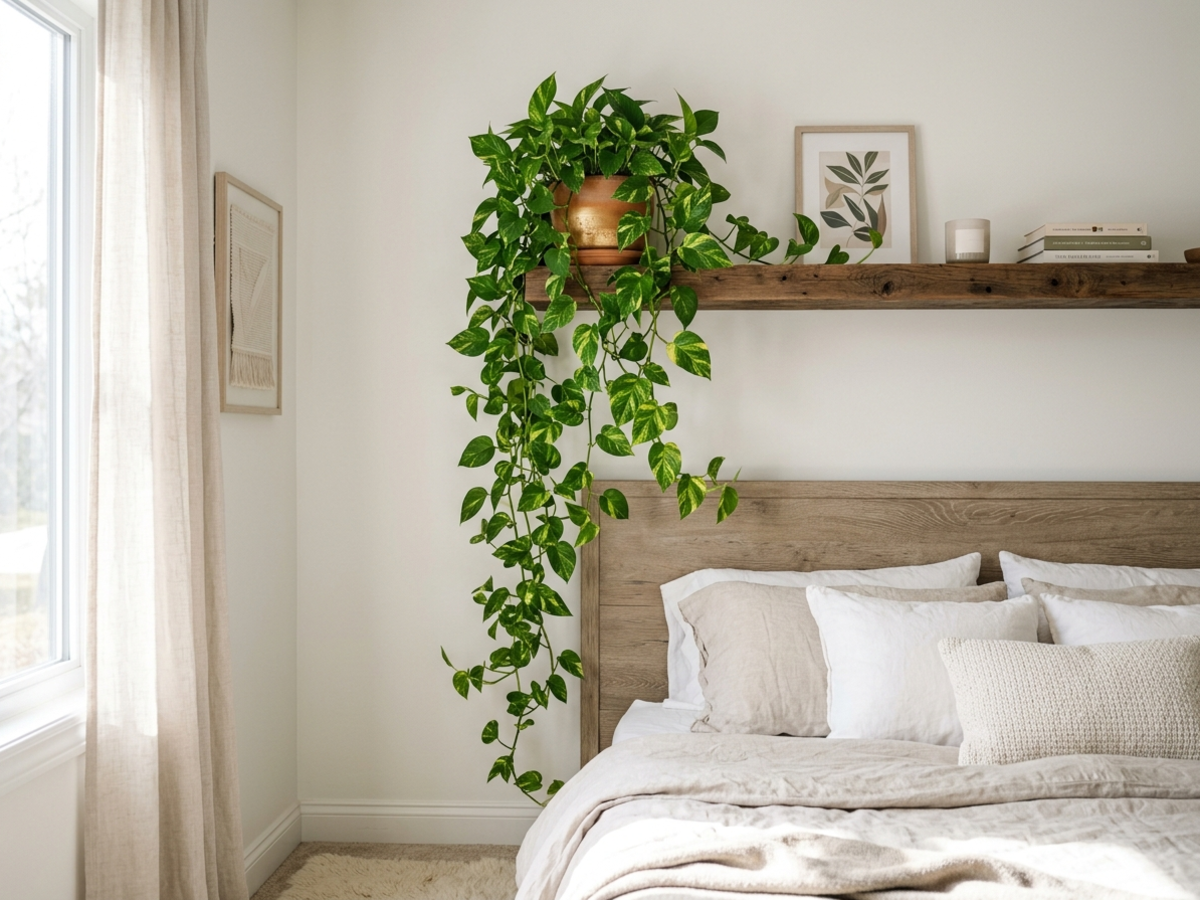
Scientific Advantage: Rapid growth rate and dense foliage area that maximises particulate interception and micro-climate buffering. Light: Highly adaptable; low light to bright indirect light. Watering: Water once a week; can even be grown directly in glass water carafes. Bengaluru Placement: High bedroom bookshelf, wardrobe top, or wall-mounted trellis.
Link to buy Money Plant at Happy Greenery
7. Heartleaf Philodendron (Philodendron hederaceum) – Lush Modern Elegance
With its graceful cascading habit and sweet heart-shaped leaves, Philodendron brings romantic, tranquil elegance to urban bedroom decor. It adapts easily to typical apartment room humidity and temperatures.
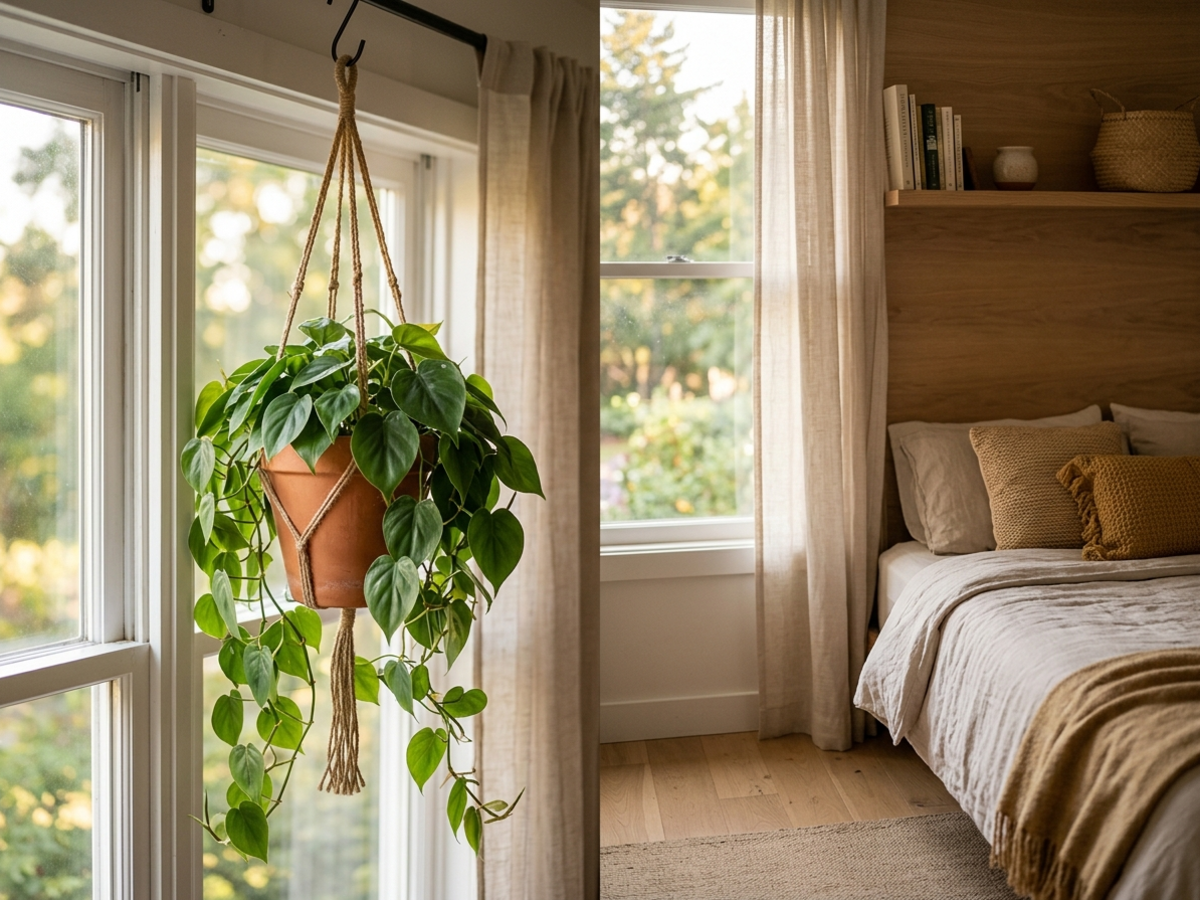
Scientific Advantage: High psychological restorative index — studies show trailing greenery reduces heart rate variability and induces relaxation. Light: Medium filtered daylight; keep away from harsh afternoon sun. Watering: Allow the top 2 inches of soil to dry before watering. Bengaluru Placement: Suspended beside sheer curtains or draped over a bed canopy.
Link to buy Philodendron at Happy Greenery
8. Aglaonema (Chinese Evergreen) – Vibrant Colour in Dim Corners
Who says bedroom plants must only be plain green? Aglaonema cultivars feature striking splashes of blush pink, cream, and silver variegation. It is officially recognised as one of the most shade-tolerant foliage plants available.
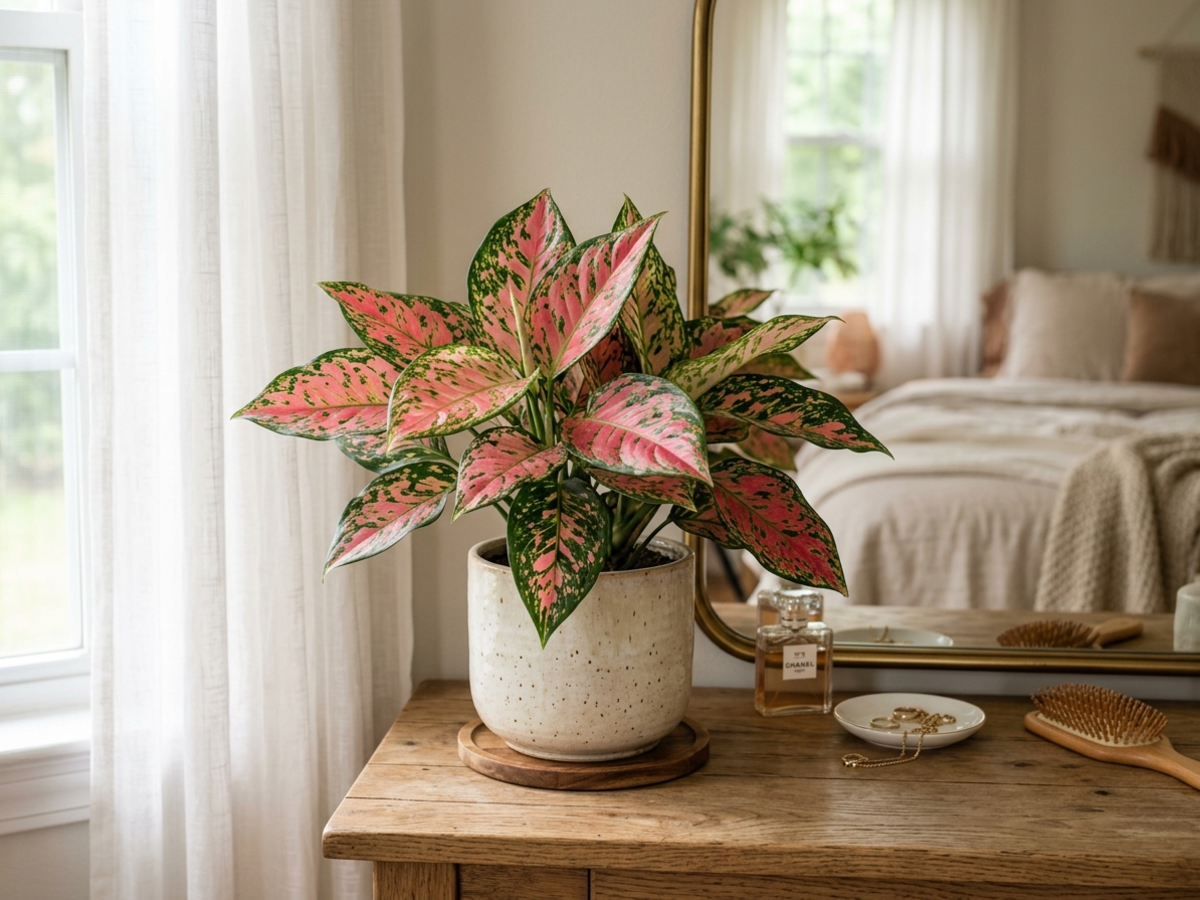
Scientific Advantage: High photosynthetic efficiency in low-lux environments; stable performance in air-conditioned interiors. Light: Low to medium indirect light; pink varieties love moderate ambient daylight. Watering: Moderate; water every 8–10 days in Bengaluru. Bengaluru Placement: Bedroom side table, mirror console, or study corner.
Link to buy Aglaonema Chinese Evergreen at Happy Greenery
9. Rubber Plant (Ficus elastica) – Architectural Foliage for Bright Master Suites
The Rubber Plant is an interior-design icon. Its broad, leathery, dark burgundy-green leaves make a bold architectural statement in sunny Bengaluru bedrooms, adding grounding visual weight to the room.
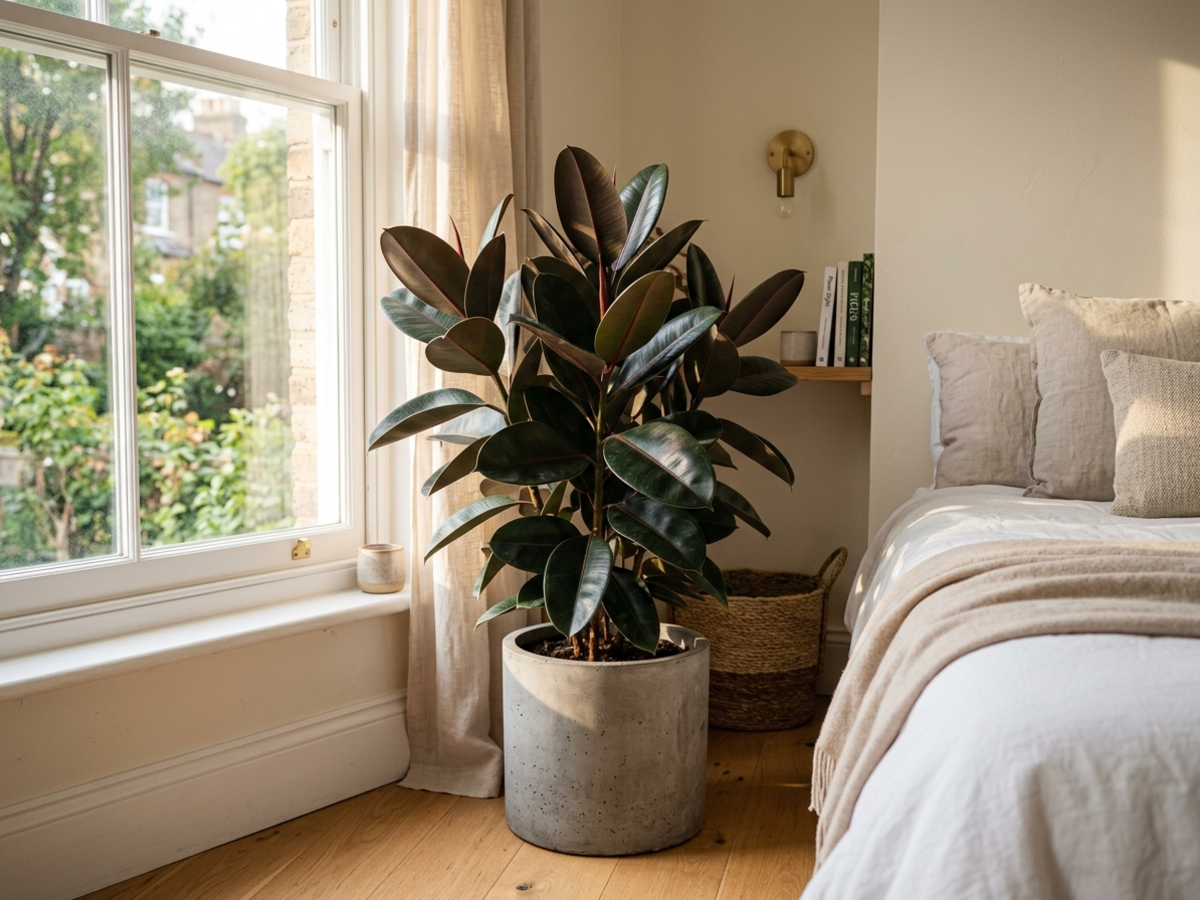
Scientific Advantage: Large broad leaf surface area that effectively traps micro-dust particles from settling on bed linen. Light: Bright indirect light or 2 hours of gentle morning sun near a balcony. Watering: Water when the top half of soil dries; wipe leaves monthly with a damp cloth. Bengaluru Placement: In a terracotta or ceramic planter next to large bedroom French windows.
Link to buy Rubber Plant at Happy Greenery
10. Boston Fern (Nephrolepis exaltata) – The Lush Humidity Ally
For plant parents who love delicate textures, the Boston Fern offers a fountain of feathery, arching green fronds. If your bedroom feels dry or stuffy, a Boston fern acts as a living humidifier.
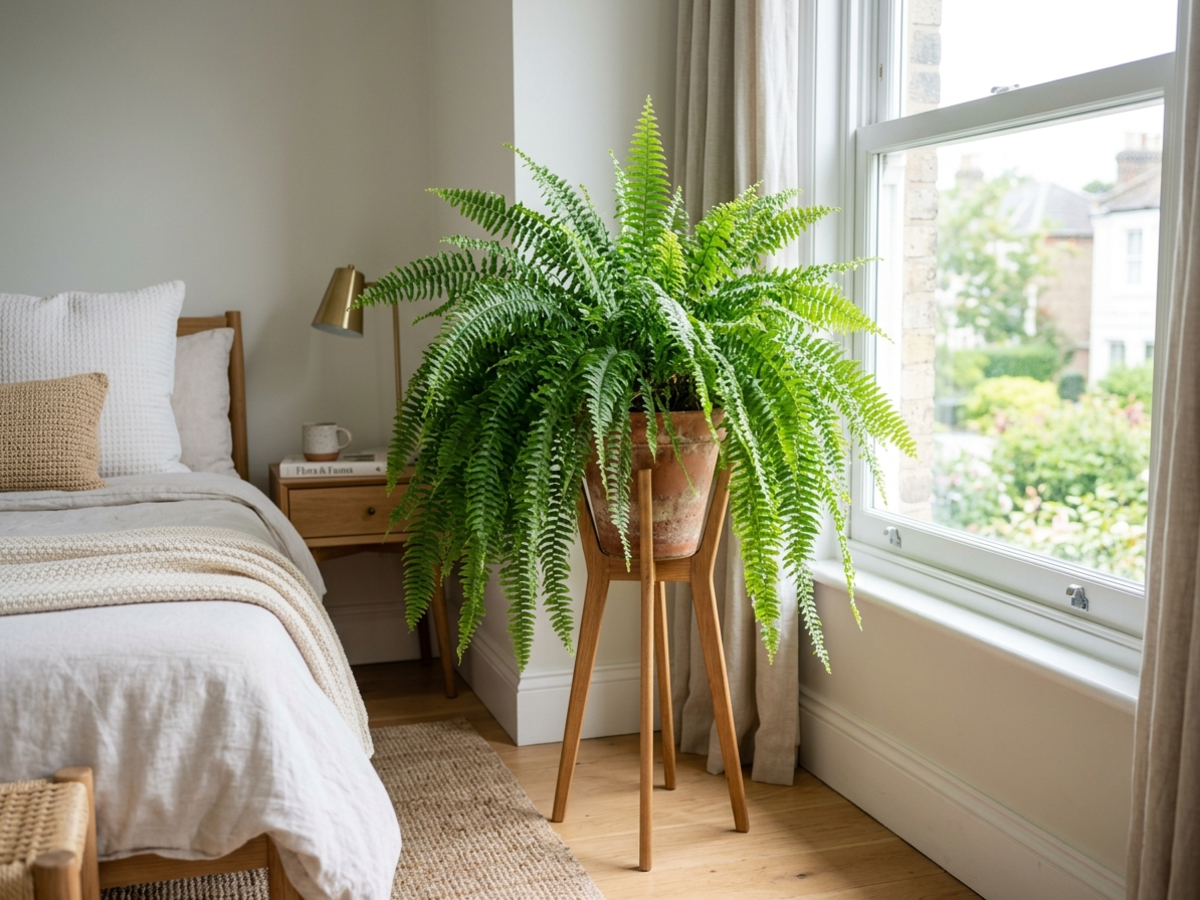
Scientific Advantage: Ranked highest among common houseplants for transpirational cooling and atmospheric moisture emission. Light: Gentle indirect morning light or dappled shade. Watering: Prefers consistently moist soil; mist lightly twice a week during dry months. Bengaluru Placement: On a mid-century wooden plant stand or near an en-suite bathroom door.
Link to buy Boston Fern at Happy Greenery
🛏️ How to Style and Care for Bedroom Plants in Bengaluru
To maximise the mental wellness benefits without creating clutter or moisture issues, follow these bedroom gardening rules:
1. Keep Nightstands Minimal: Place compact plants like Zebra Haworthia, small Snake Plants, or ZZ Plants on nightstands to keep space clear for your reading lamp and books. 2. Beware of AC Vent Blasts: Never place tropical plants (Peace Lily, Boston Fern, Philodendron) directly in the line of icy air-conditioner airflow, which causes leaf browning. 3. Use Saucers Under Pots: Always use well-fitted drip trays under ceramic pots to protect wooden flooring, bedside tables, and carpet from water runoff. 4. Wipe Leaves Regularly: Bedroom dust naturally settles on foliage. Wipe broad leaves (Rubber Plant, ZZ Plant, Snake Plant) once a month with a soft damp microfiber cloth to keep stomata clear. 5. Open Windows in the Morning: Plants love fresh air exchange. Open your bedroom windows for 20–30 minutes every morning to replenish carbon dioxide and flush out stale night air.
Frequently Asked Questions (FAQs)
Q: Is it safe to sleep in a bedroom with many plants? Absolutely yes. The myth that plants steal human oxygen at night is scientifically unfounded. A dog, cat, or human sleeping in the same room consumes vastly more oxygen than several houseplants combined.
Q: Which bedroom plant requires the least light? The ZZ Plant and Snake Plant are the champions of low-light tolerance. They can thrive in north-facing bedrooms and rooms with minimal window light.
Q: Are these bedroom plants safe for pets? Spider Plant and Boston Fern are 100% non-toxic and pet-safe for cats and dogs. Snake Plant, ZZ Plant, Peace Lily, and Pothos contain insoluble calcium oxalates and should be placed on high shelves out of reach of curious pets.
Q: Where can I buy fresh bedroom plants online in Bengaluru? Happy Greenery delivers nursery-healthy, pre-potted indoor plants directly to apartments across Bengaluru, including Whitefield, HSR Layout, Koramangala, Indiranagar, Electronic City, and Sarjapur Road.
Create Your Green Sleep Sanctuary
A peaceful bedroom is about balance. While houseplants might not replace mechanical air purifiers, their soothing colors, natural textures, and living presence transform a sterile sleeping area into a restorative green haven.
Start with one low-maintenance companion like a Snake Plant or ZZ Plant this weekend, and feel the calming difference every time you walk into your room.
Comments
Join the Conversation
Sign in with Google to post comments, ask questions, or reply to other readers.
No comments yet. Share your thoughts!