Butterfly Pea Flower (Clitoria Ternatea): Growing & Uses Guide for Bengaluru Gardens
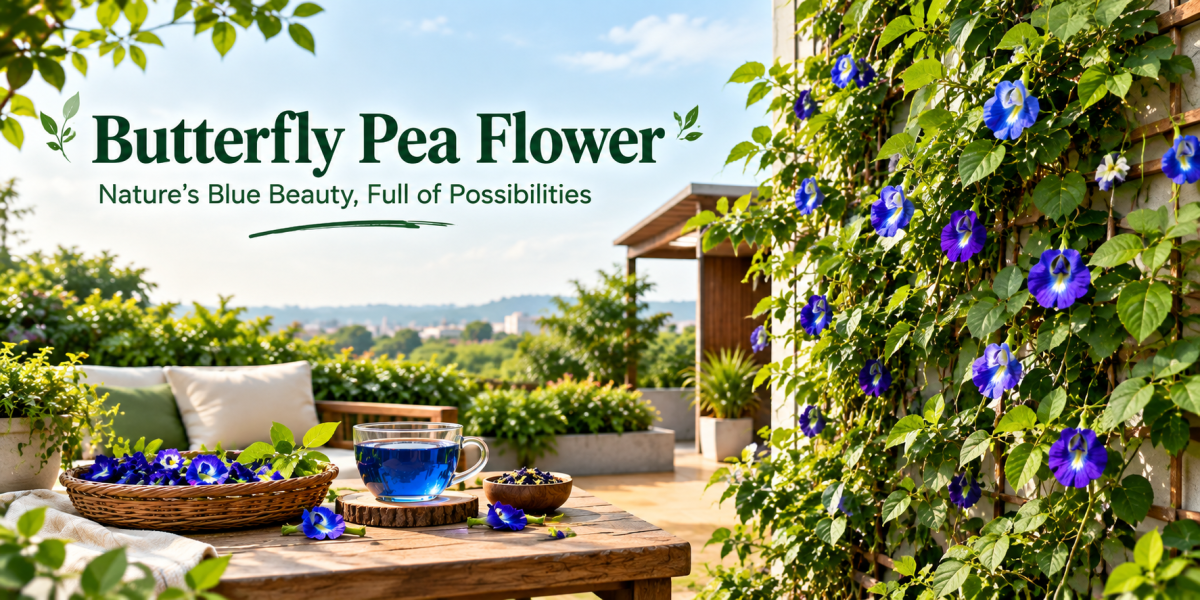
Meet the Butterfly Pea (Clitoria ternatea), a fascinating flowering climber commonly known as blue pea, Asian pigeonwings, and Shankhpushpi in traditional Indian contexts. This tropical leguminous plant offers a wonderful combination of ornamental beauty, utility, and ecological value. Belonging to the family Fabaceae (the legume family), Butterfly Pea is native to tropical regions of Asia and is celebrated for its twining climber habit, slender stems, pinnately compound leaves, and distinctive pea-shaped flowers.
The scientific name refers to the flower's characteristic anatomical shape, while its common name stems from its remarkable resemblance to a butterfly with outstretched wings. One of the most captivating features of the Butterfly Pea is its natural blue pigment. The petals contain anthocyanins—particularly ternatins—which are responsible for their intense, electric-blue color. For Bengaluru home gardeners, terrace growers, and landscape designers, Butterfly Pea is far more than an ornamental vine: it is a resilient, water-smart climber that introduces vibrant color, vertical interest, and natural nitrogen-fixing benefits into urban green spaces.
Landscape Design & Balcony Styling in Bengaluru
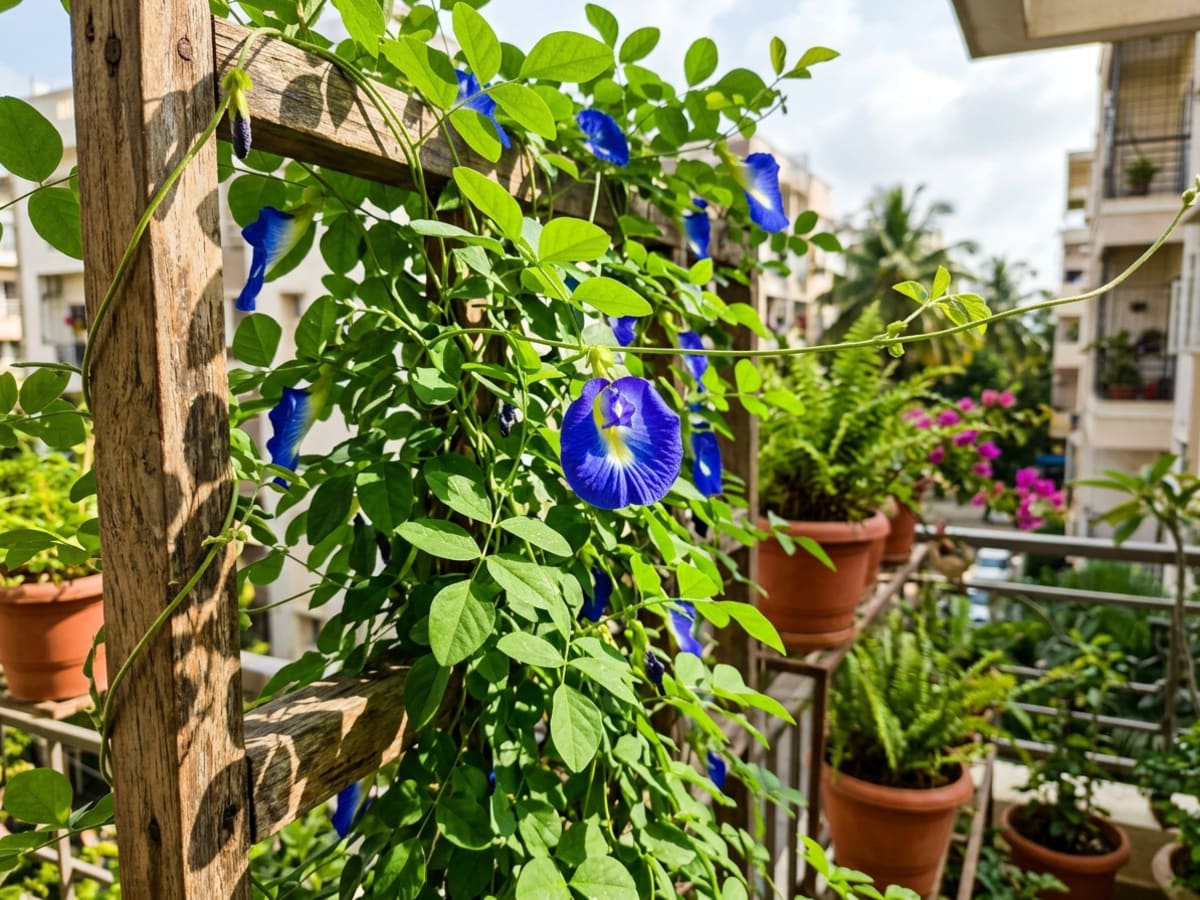
For landscape designers and apartment balcony gardeners across Bengaluru—from high-rises in Whitefield and Sarjapur Road to classic villas in Indiranagar and Koramangala—Butterfly Pea is a versatile climber that brings color, softness, and vertical elegance to outdoor settings.
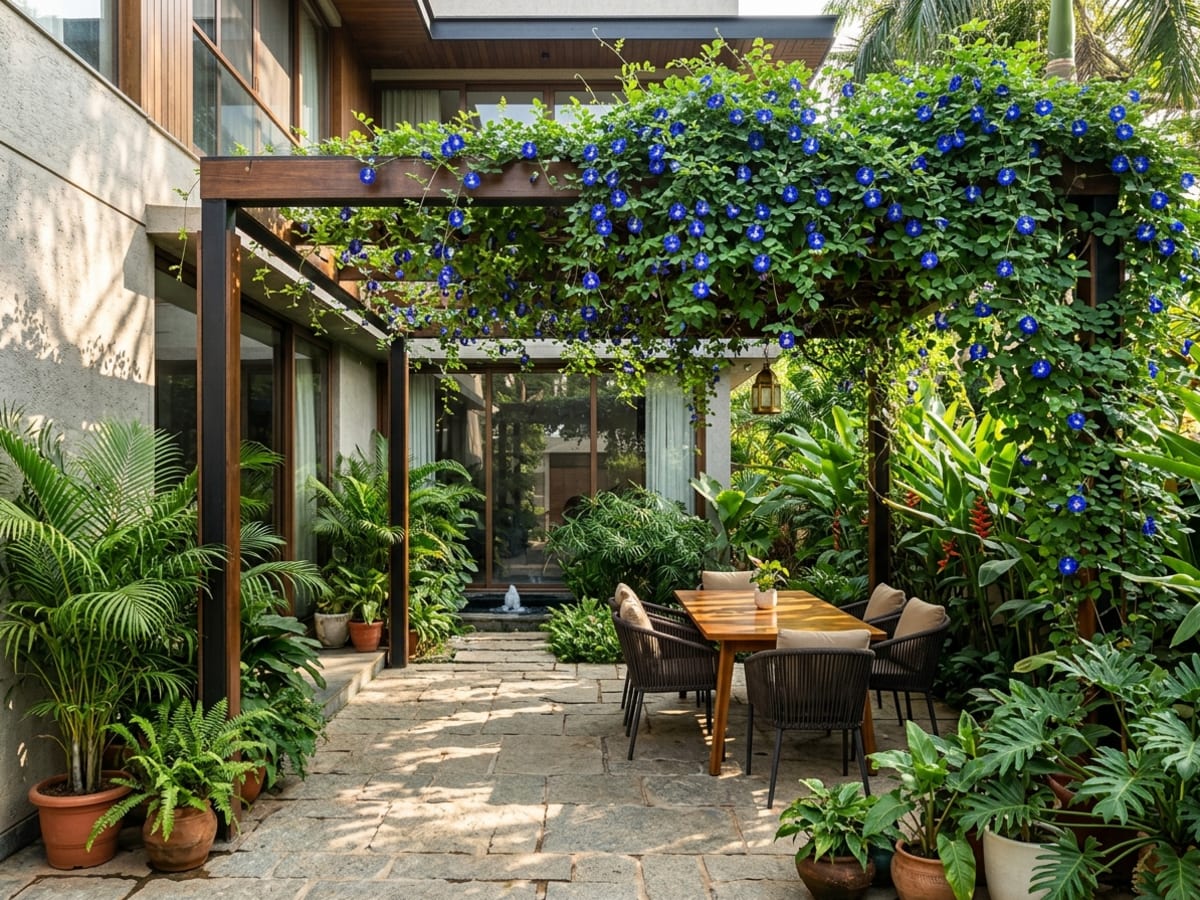
When trained over balcony trellises, wooden pergolas, bamboo arches, perimeter fences, and garden gateways, it creates a striking display of vivid blue flowers contrasting against fresh, emerald-green foliage. Its light, twining growth habit easily softens hard architectural concrete, metal balcony railings, and brick walls without placing heavy structural strain on trellises. Furthermore, as a leguminous plant, its root nodules host Rhizobium bacteria that fix atmospheric nitrogen into the soil, naturally enriching garden beds and surrounding potted plants.
Distinct Varieties & Ornamental Forms of Butterfly Pea
1. Clitoria ternatea (Single Blue Butterfly Pea)
The classic and most popular form, recognized by its vivid cobalt-blue petals and contrasting yellowish-white throat. It is a vigorous twining climber perfect for balcony grills, vertical wall panels, and garden arches. It is also the primary variety harvested for natural blue tea and food colorants.
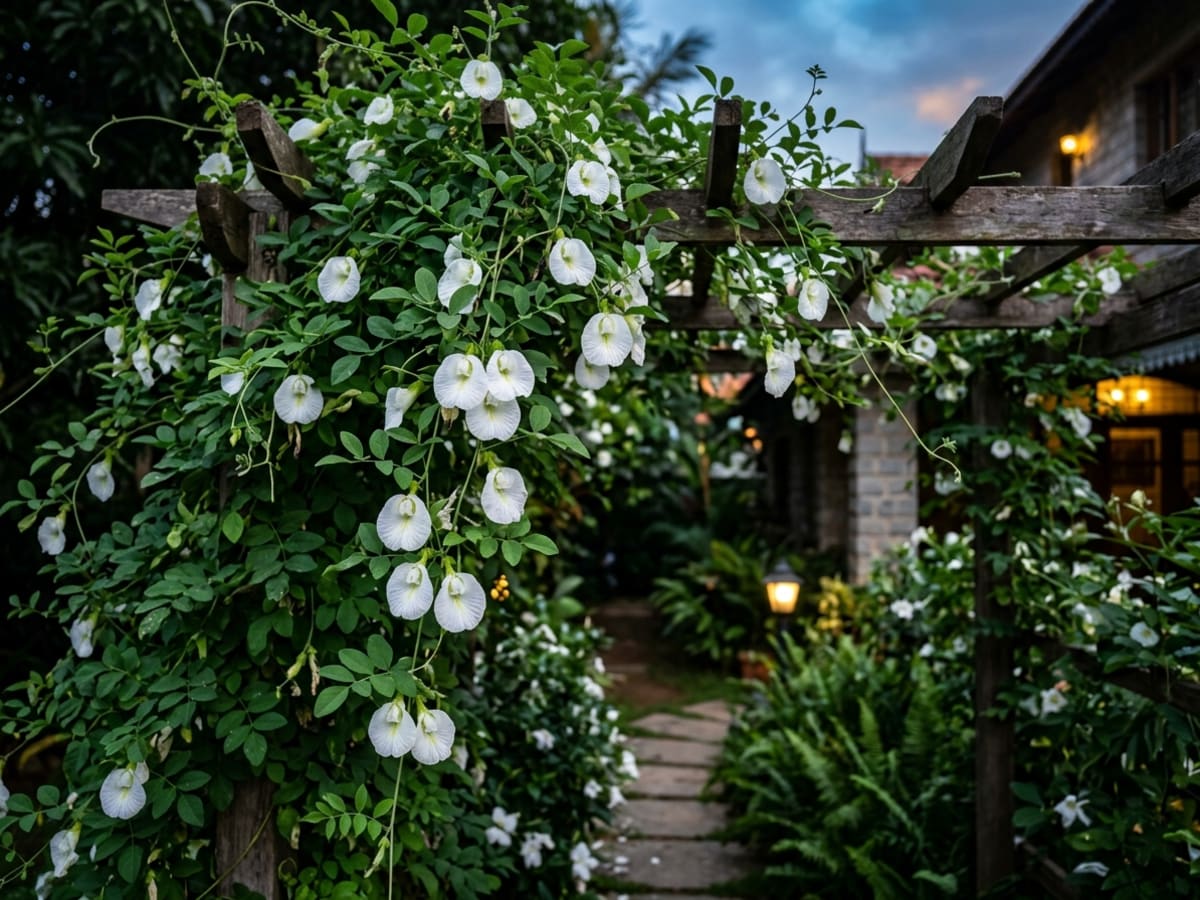
2. Clitoria ternatea (White-Flowered Form)
This exquisite ornamental variety produces pure white to creamy-white blossoms. It creates a serene, luminous aesthetic and works exceptionally well in Bengaluru moon gardens, white-themed landscape borders, and soft contrasting compositions alongside purple or blue flowering vines.
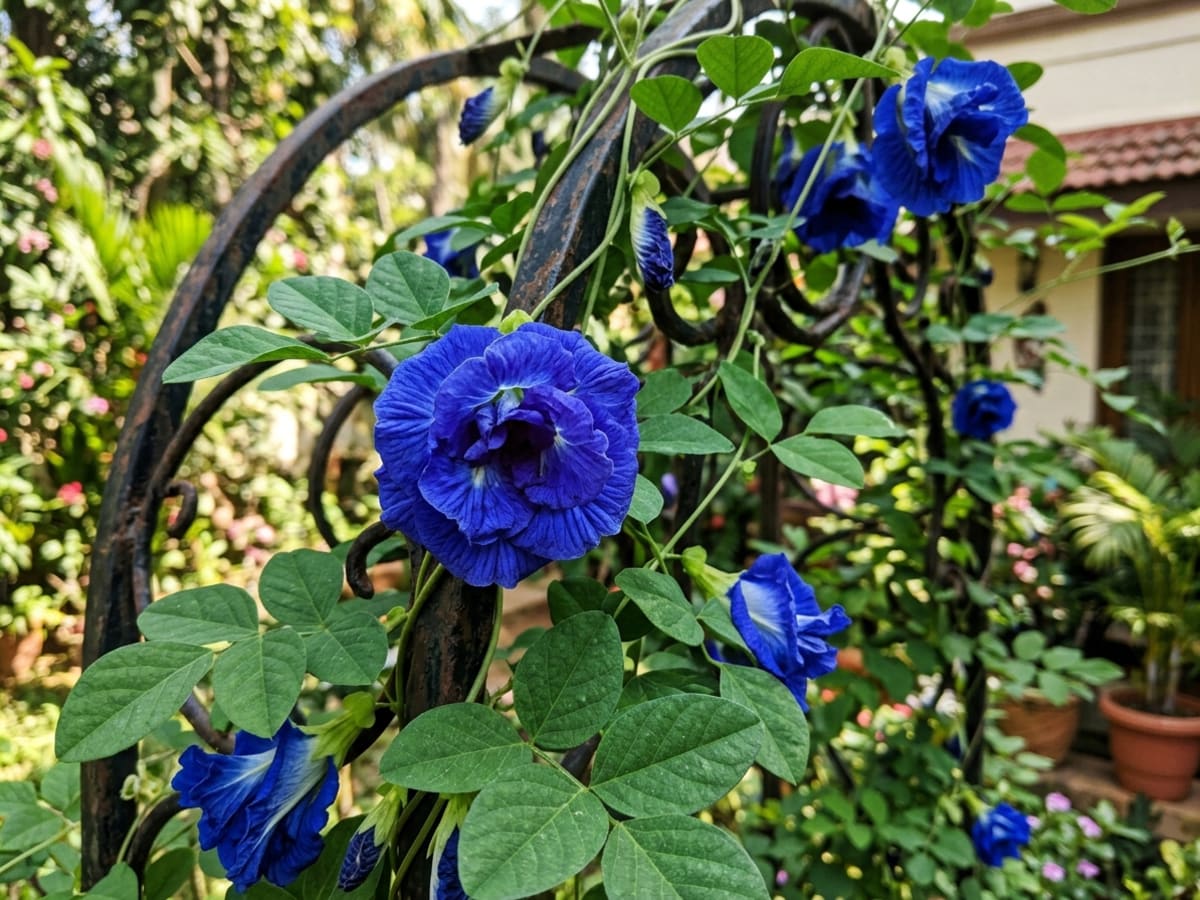
3. Clitoria ternatea (Double-Flowered Form)
Double-flowered selections feature extra layers of petal-like structures, giving each bloom a lush, ruffled, rose-like appearance. These double blooms create a dense floral display that stands out dramatically on decorative entry arches and courtyard trellises.
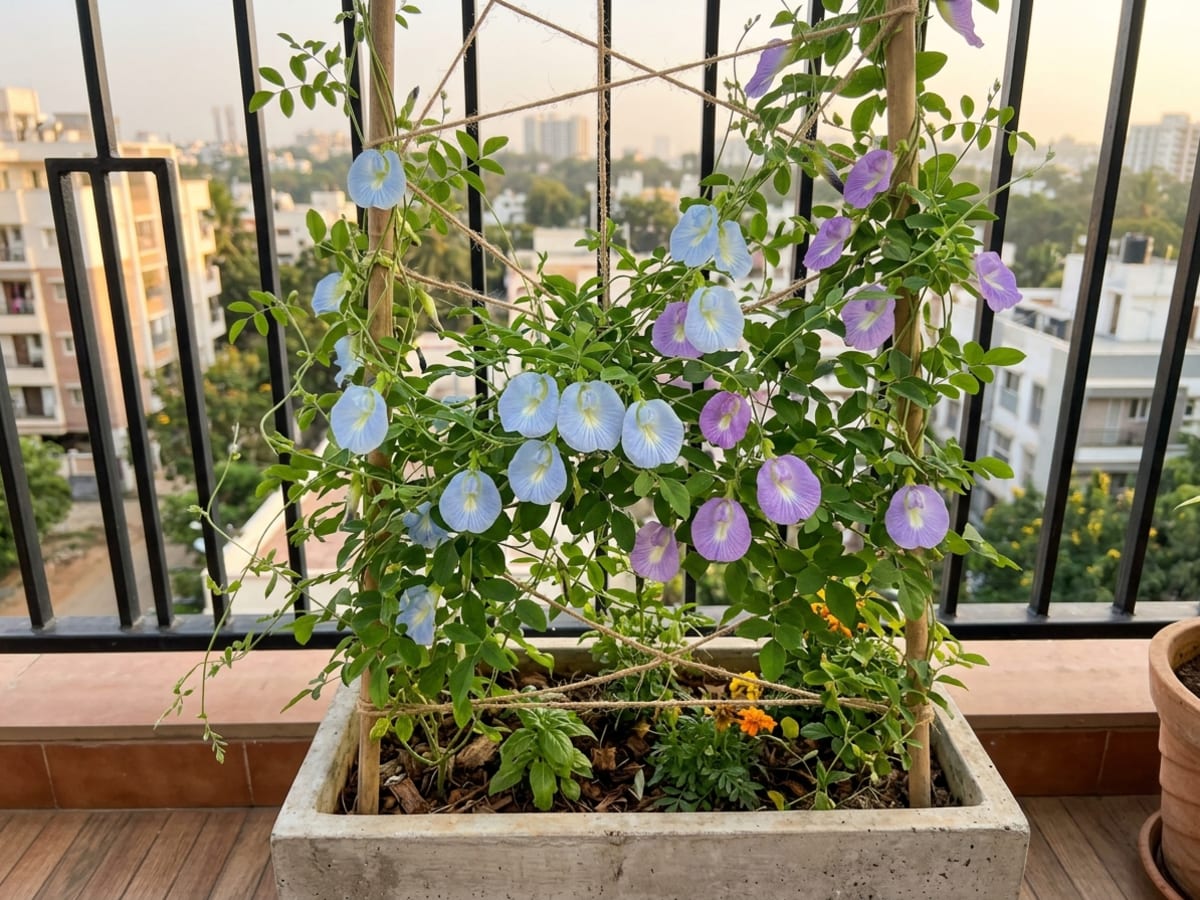
4. Clitoria ternatea (Pale Blue & Violet-Purple Forms)
Featuring softer sky-blue or rich violet-purple tones, these cultivated selections add subtle color gradients to mixed climber displays, cottage gardens, and informal potted collections.
5. Clitoria mariana (Atlantic Pigeonwings)
A distinct species within the same genus native to North America, producing pale bluish-purple pea-shaped flowers suitable for informal meadow-style gardens and wild floral displays.
Phytochemical Profile, Blue Tea & Household Uses
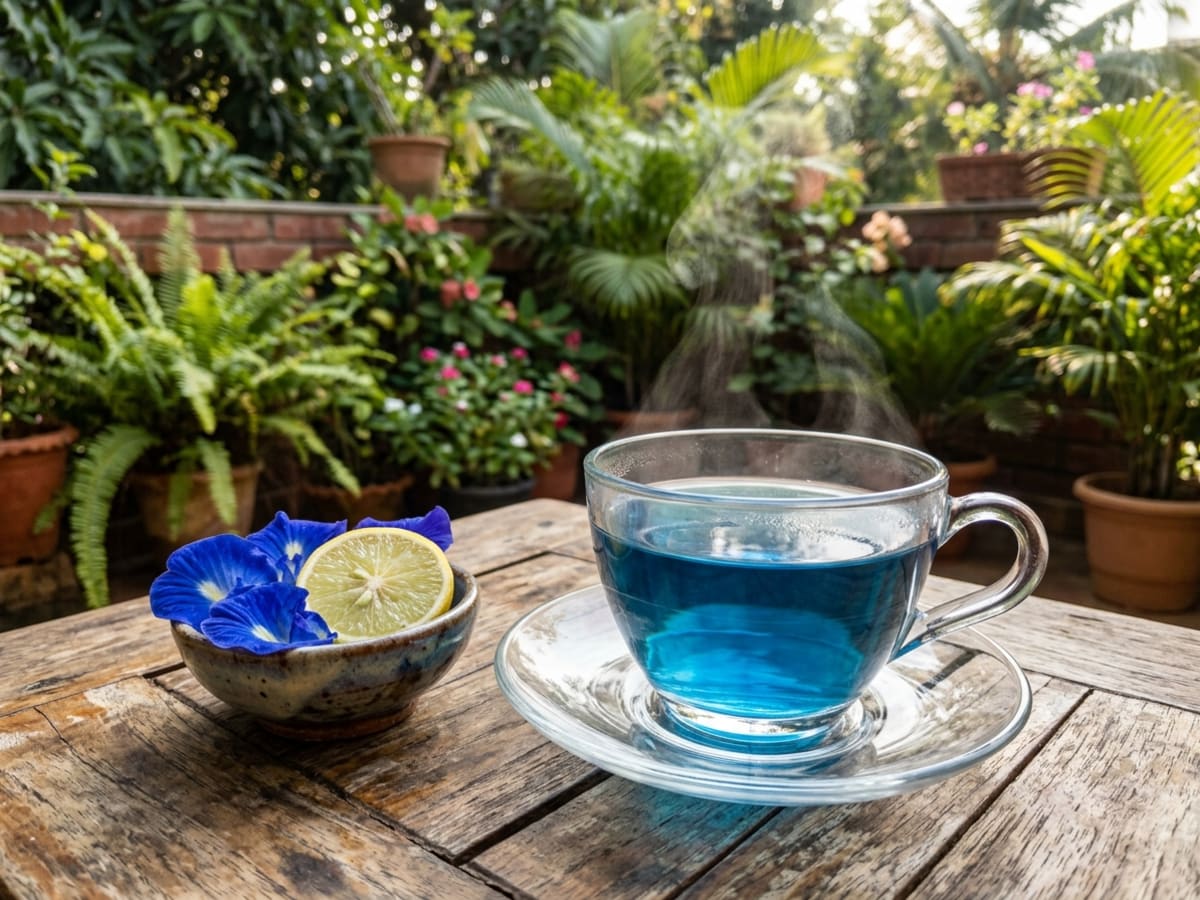
Beyond its visual appeal, Butterfly Pea flowers are rich in water-soluble anthocyanins (ternatins), flavonoids, and phenolic compounds known for their natural antioxidant activity. Fresh flowers contain approximately 92.4% moisture, while dried flowers offer a concentrated source of polyphenols (approx. 77.15 mg GAE/g) and anthocyanins (approx. 4.13 mg/g dry matter).
In Indian households and modern culinary mixology, steeping 4 to 5 dried or fresh flowers in hot water produces a mesmerizing deep-blue herbal tea. Adding a splash of citrus lemon juice changes the pH, magically shifting the color from electric blue to bright purple! It is widely enjoyed as a soothing herbal tea and natural food colorant for rice, lemonades, ice cubes, and desserts.
Bengaluru Growing Guide: Care, Soil & Water Management
1. Sunlight Requirements
Butterfly Pea requires 4 to 6 hours of direct sunlight daily for maximum flower production. South-facing or east-facing balconies, open terrace gardens, and sunlit villa courtyards across Bengaluru provide the ideal light intensity.
2. Soil Preparation & Drainage (Addressing Bengaluru Red Soil)
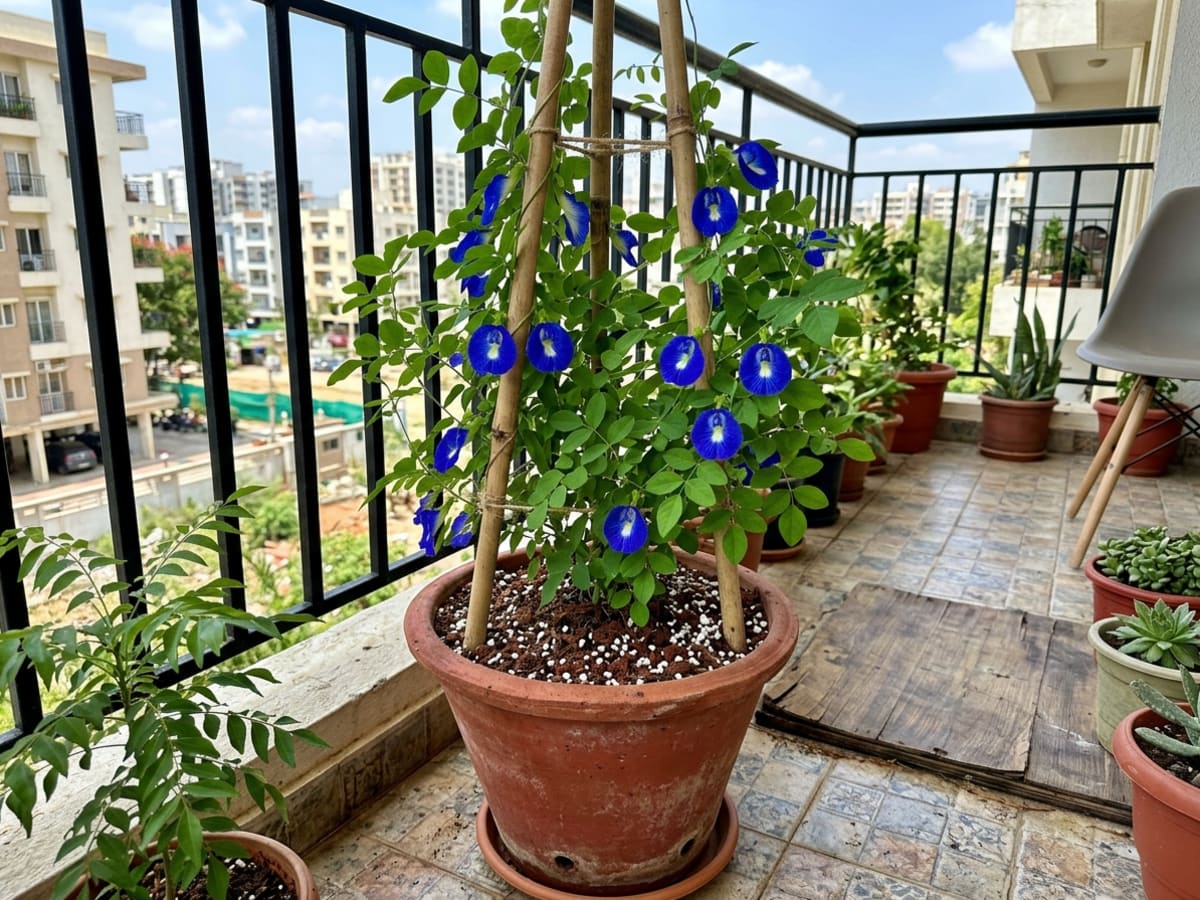
Bengaluru’s native red loam soil can compact easily in container pots, choking roots during heavy monsoon downpours. Combine 40% Red Soil / Garden Soil, 30% Coco Peat, 20% Vermicompost or Aged Manure, and 10% Perlite or Coarse Sand. This mixture ensures rapid root aeration and prevents waterlogging during the South-West monsoon season (June–September).
3. Watering & Water-Smart Gardening
Once established, Butterfly Pea is drought-tolerant, making it an excellent choice for water-smart urban gardening during summer BWSSB water restrictions in areas like Whitefield, Sarjapur, and Electronic City. Water deeply when the top 1 inch of soil feels dry, and avoid stagnant standing water.
4. Support & Pruning
Provide a sturdy trellis, bamboo tripod, or mesh net for the slender tendrils to grab onto. Tip-pinch young shoots to encourage bushy lateral branching and more flower nodes. Lightly prune after heavy flowering flushes to refresh growth.
Bring Home Vibrant Blue Blooms with Happy Greenery
Looking to add natural blue elegance, vertical greenery, or therapeutic blue tea flowers to your Bengaluru balcony or garden? Happy Greenery delivers nursery-grown, healthy Clitoria ternatea plants and potting mixes directly to your doorstep across Bangalore.
Explore Outdoor Plants & Climbers at Happy Greenery Store →
Looking for healthy indoor & outdoor plants in Bengaluru?
Explore our curated nursery collection delivered safe and fresh to your doorstep across Bangalore.
Explore Plant Shop →
Comments
Join the Conversation
Sign in with Google to post comments, ask questions, or reply to other readers.
No comments yet. Share your thoughts!