Hanging Plants: Transforming Spaces with Green Elegance
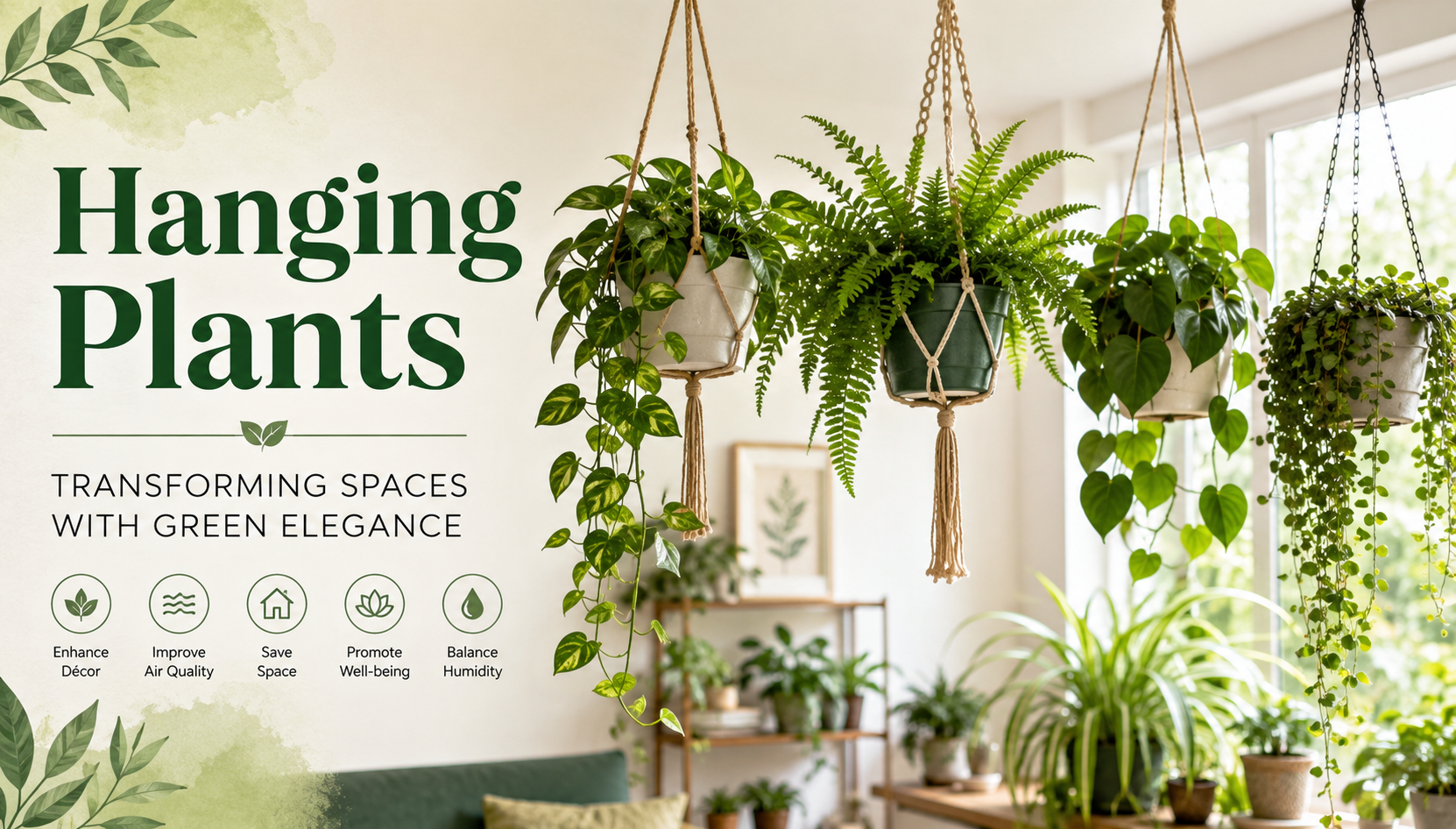
Indoor gardening has become an integral part of modern living and hanging plants are one of the most attractive and space-efficient ways to incorporate greenery into homes and workplaces. Whether placed in balconies, living rooms, kitchens, or offices, hanging plants enhance aesthetic appeal, add freshness, and create a calming environment. Their cascading foliage and vibrant growth habit can instantly uplift even small or compact spaces.
What are hanging plants?
Hanging plants are ornamental plants grown in containers such as pots, baskets, or planters that are suspended above ground level rather than placed on the floor or tables. These plants typically exhibit trailing, drooping, or cascading growth patterns, making them ideal for decorative vertical displays. They are widely used in both indoor and outdoor gardening for aesthetic enhancement and efficient space utilization.
Why choose hanging plants?
Hanging plants are especially suitable for urban homes where floor space is limited. By utilizing vertical space, they offer an effective solution for compact living areas. In addition to their decorative value, many hanging plants contribute to improved indoor air quality, humidity regulation and stress reduction, thereby promoting a healthier living environment.
Key features of hanging plants
⦁ Grown in suspended containers such as hanging pots, baskets, or macramé holders
⦁ Exhibit trailing, drooping, or cascading growth habits
⦁ Primarily used for decorative and space-saving purposes
⦁ Suitable for indoor, balcony and patio gardening
⦁ Generally easy to maintain and often fast-growing under suitable conditions
Benefits of hanging plants
⦁ Enhance interior and exterior décor
⦁ Improve air quality by filtering pollutants
⦁ Save valuable floor space in small homes and apartments
⦁ Create a soothing, relaxing and natural atmosphere
⦁ Help reduce indoor heat and improve humidity balance
⦁ Require relatively low maintenance when properly placed
Popular hanging plants suitable for different light conditions
1. Complete indoor plants (Low light conditions)
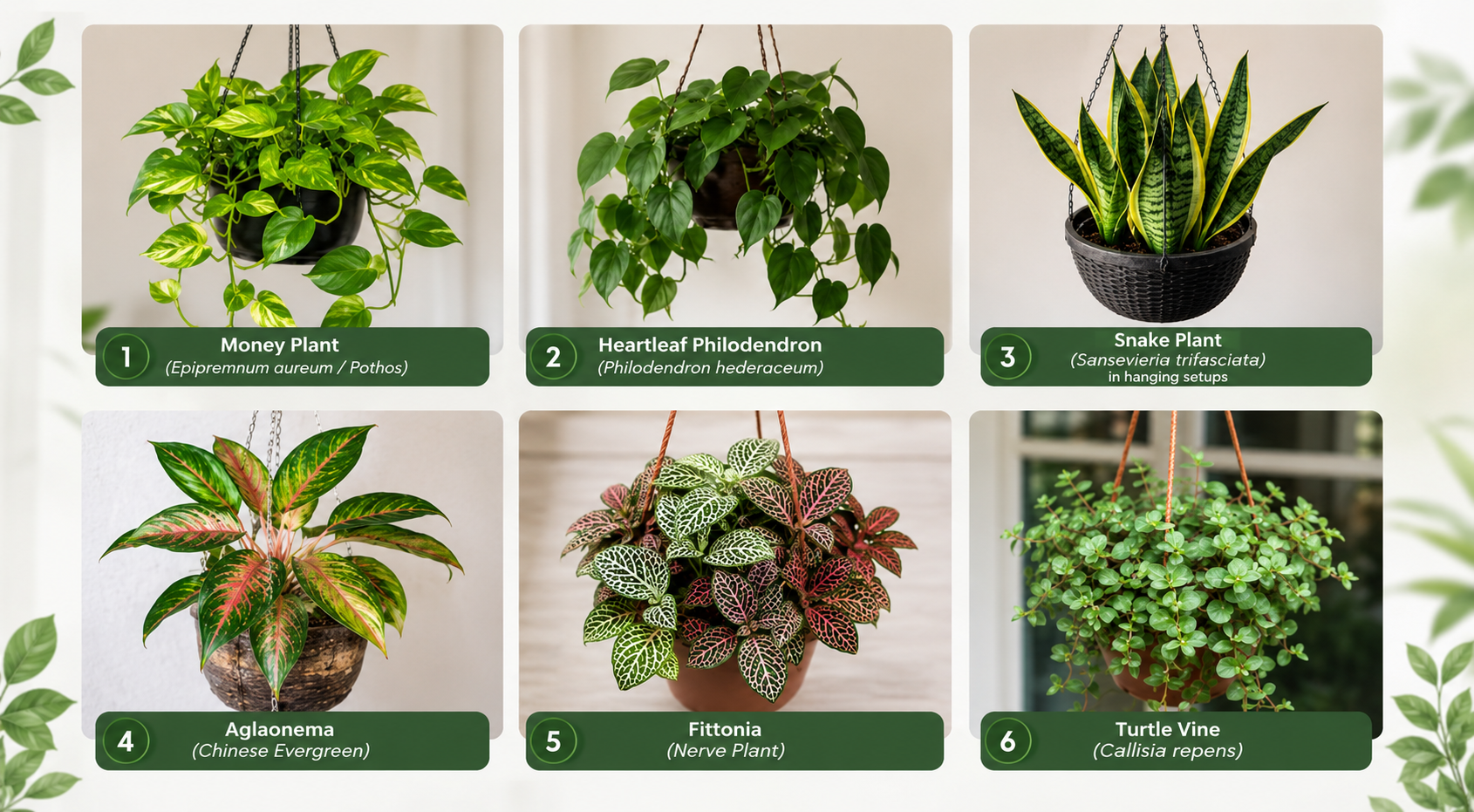
These plants are well-suited for bedrooms, offices, and shaded interiors with minimal sunlight:
⦁ Money Plant (Epipremnum aureum / Pothos)
⦁ Heartleaf Philodendron (Philodendron hederaceum)
⦁ Snake Plant (Sansevieria trifasciata) in hanging setups
⦁ Aglaonema (Chinese Evergreen)
⦁ Fittonia (Nerve Plant)
⦁ Turtle Vine (Callisia repens)
2. Partial indoor / Bright indirect light plants
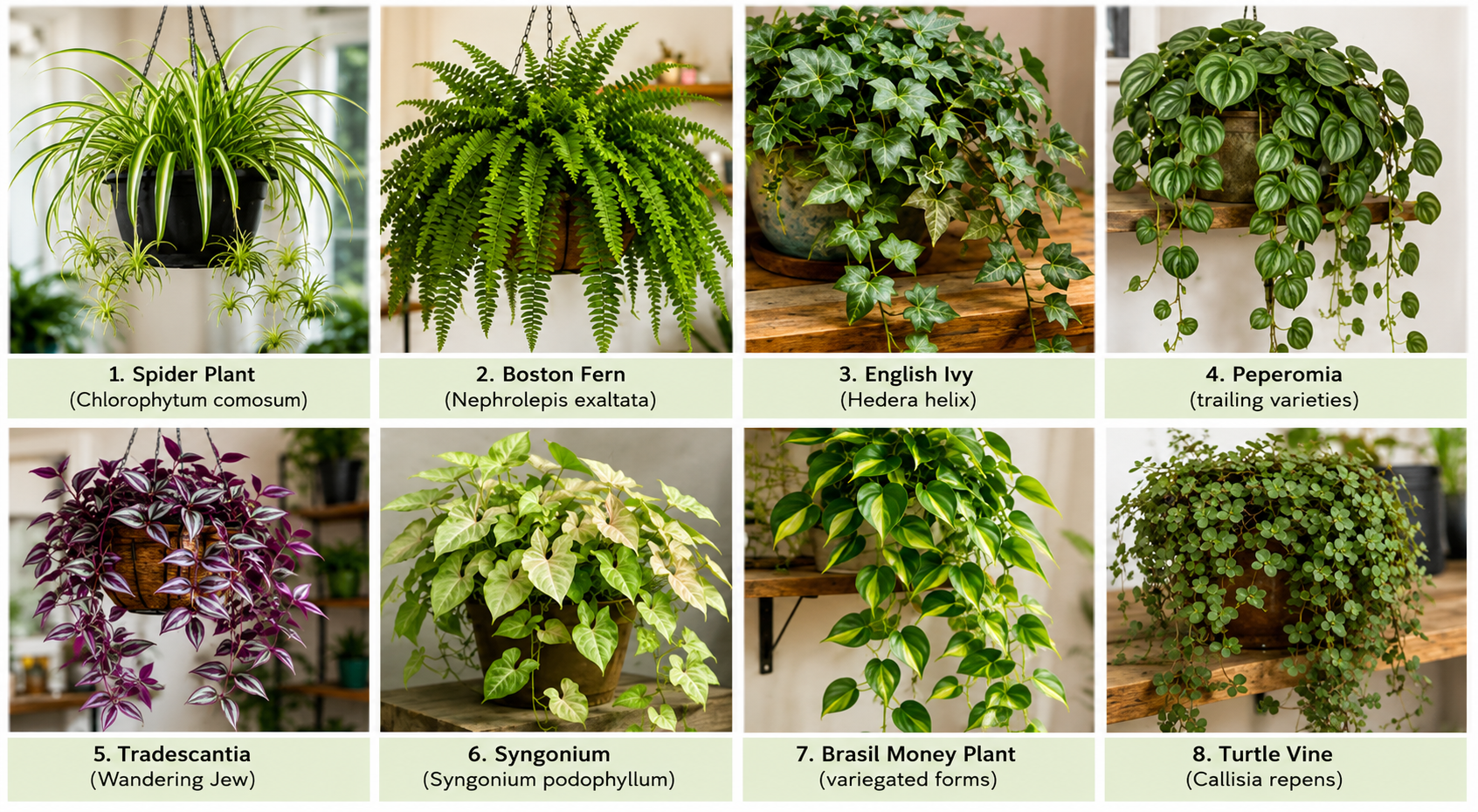
These plants grow best near windows, shaded balconies, or areas with filtered sunlight:
⦁ Spider Plant (Chlorophytum comosum)
⦁ Boston Fern (Nephrolepis exaltata)
⦁ English Ivy (Hedera helix)
⦁ Peperomia (trailing varieties)
⦁ Tradescantia (Wandering Jew)
⦁ Syngonium (Syngonium podophyllum)
⦁ Brasil Money Plant (variegated forms)
⦁ Turtle Vine (Callisia repens)
3. Outdoor / Full sun hanging plants
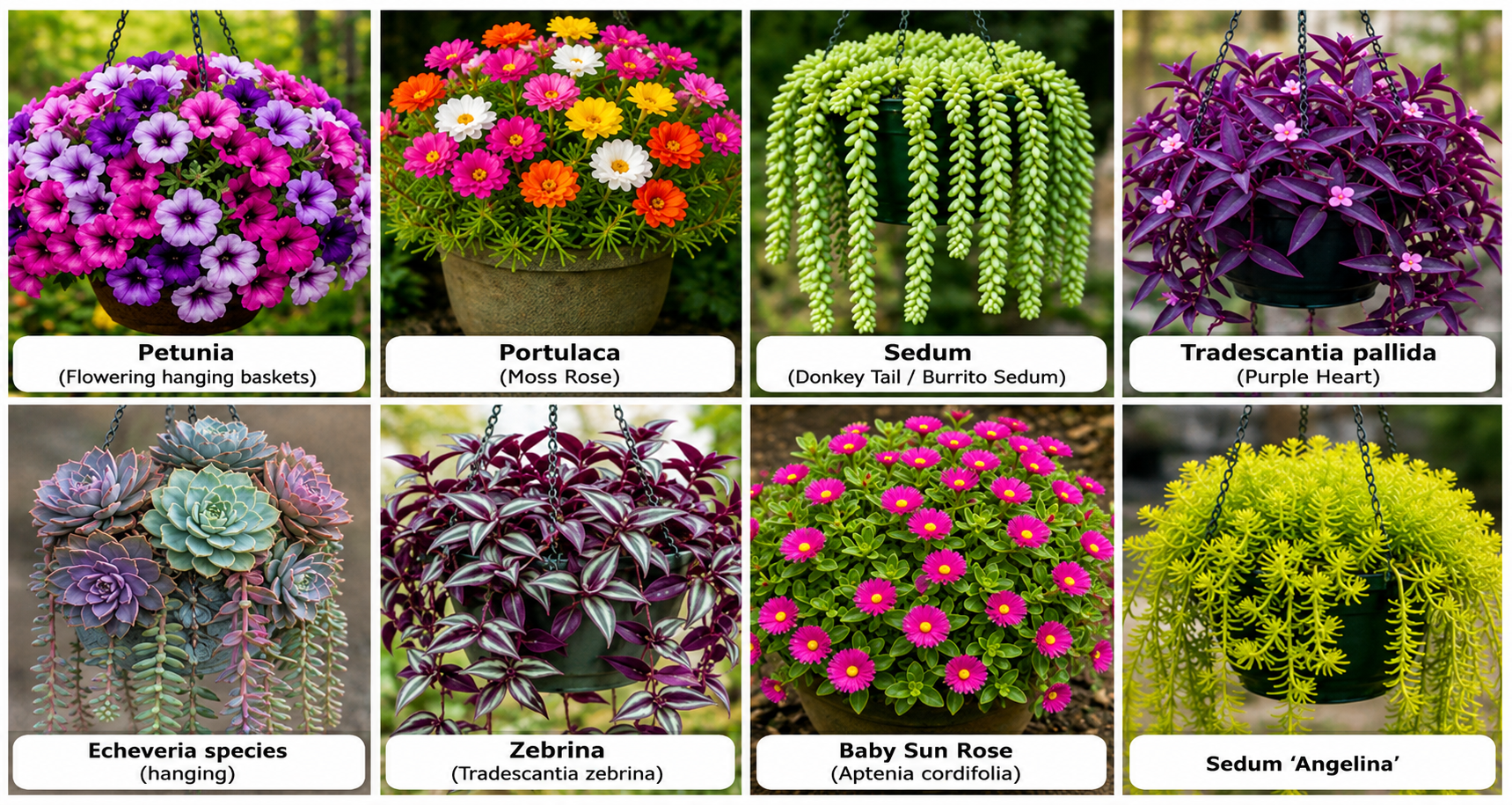
⦁ Petunia (flowering hanging baskets)
⦁ Portulaca (Moss Rose)
⦁ Turtle Vine (Callisia repens)
⦁ String of Hearts (Ceropegia woodii)
⦁ Sedum (Donkey Tail / Burrito Sedum)
⦁ Tradescantia pallida (Purple Heart)
⦁ Echeveria species
⦁ Zebrina (Tradescantia zebrina)
⦁ Kalanchoe species
⦁ Baby Sun Rose (Aptenia cordifolia)
⦁ Sedum ‘Angelina’
4. Flower bearing hanging plant
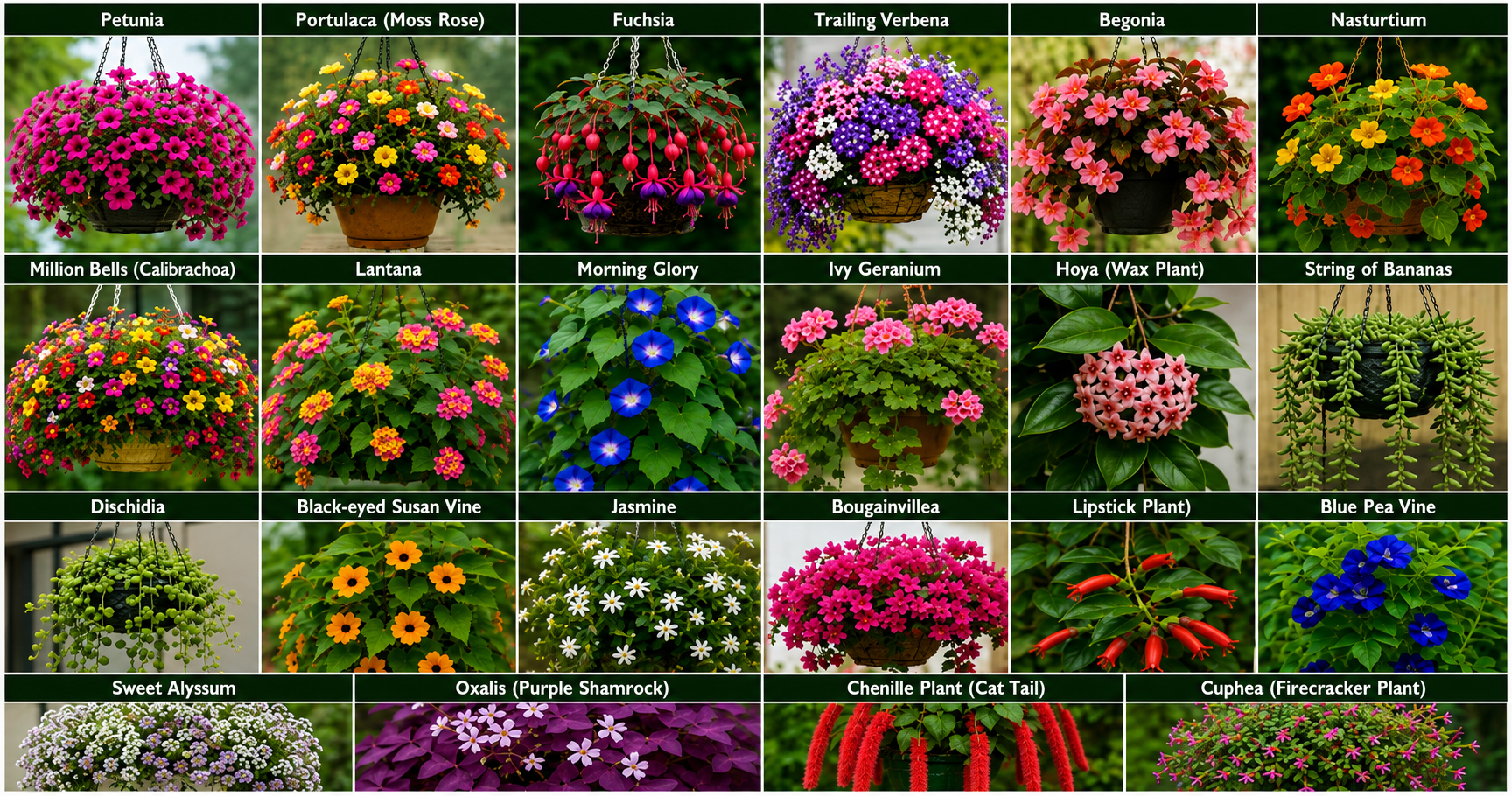
Flower-bearing hanging plants are those which grow in trailing or cascading form and produce attractive flowers. They are widely used in balconies, terraces, pergolas, and indoor hanging baskets.
Example: Petunia, portulaca, begonia, fuchsia, verbena, lantana, million bells, baby sun rose, bougainvillea, etc.
Flower bearing hanging plants
Conclusion
Hanging plants are a practical and aesthetically appealing solution for modern gardening needs. They efficiently utilize vertical space while enhancing environmental quality and visual beauty. With proper selection based on light conditions, these plants can thrive both indoors and outdoors, making them a valuable addition to any living space.
Comments
Join the Conversation
Sign in with Google to post comments, ask questions, or reply to other readers.
No comments yet. Share your thoughts!