Hard Borewell Water & White Salt Crusts on Plants: A Bengaluru Gardener's Survival Guide
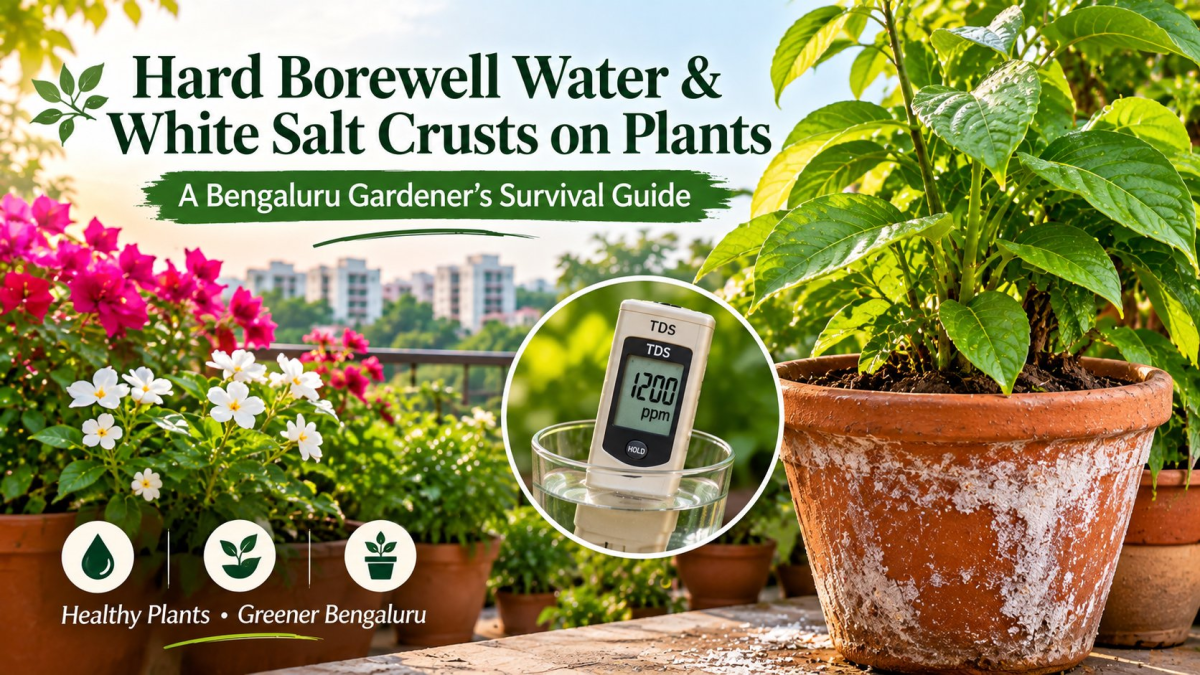
Every year around November, as the South-West and North-East monsoon showers taper off across Karnataka, thousands of plant parents across Bengaluru notice a troubling transformation on their balconies and terraces.
The exterior walls of their terracotta planters turn chalky white with a stubborn crust. The top layer of red potting soil develops a powdery, brittle film. More alarmingly, once-lush tropical plants start exhibiting brown, crispy leaf margins, stunted new growth, and pale yellowing leaves (chlorosis) despite regular watering.
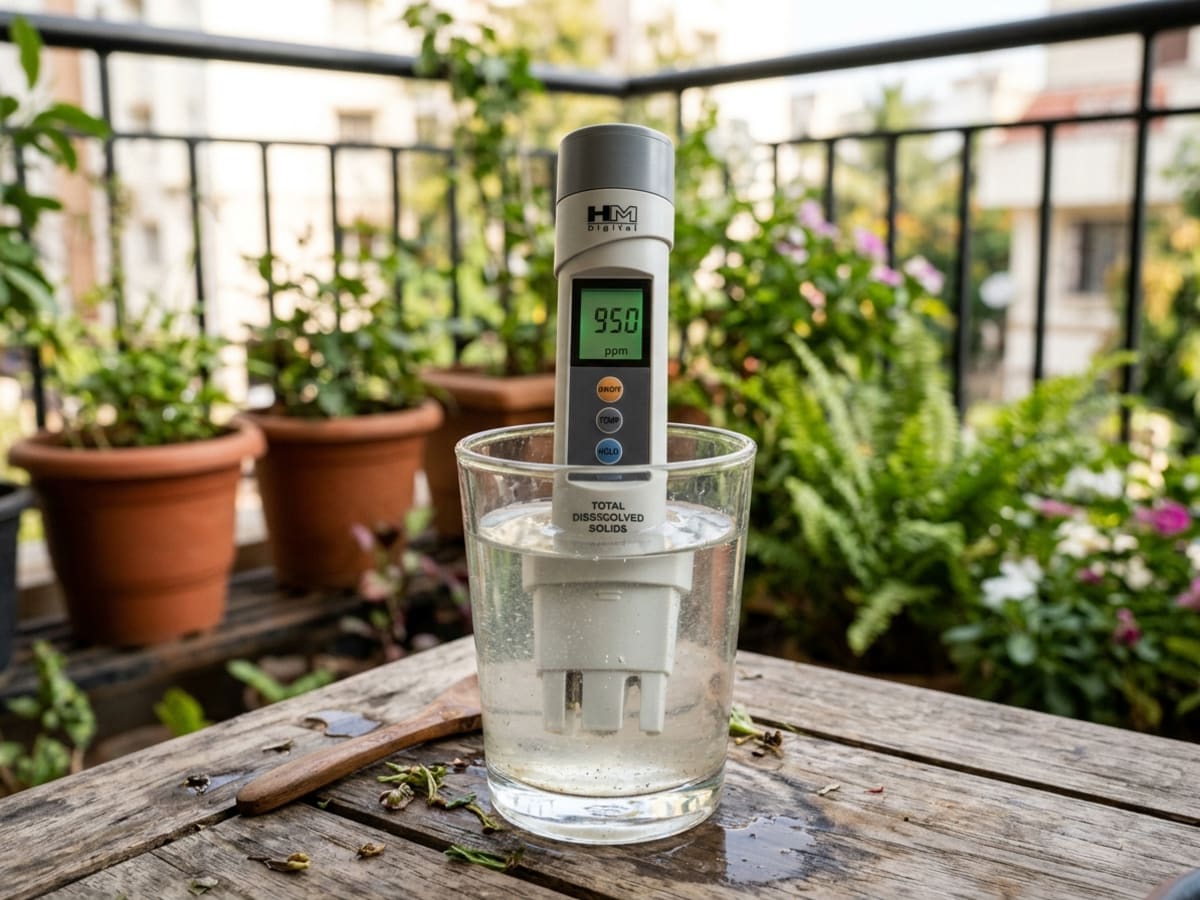
If you live in major high-density apartment belts such as Whitefield, Sarjapur Road, Bellandur, Electronic City, Kasavanahalli, or Devanahalli, you are intimately familiar with this challenge: hard borewell and commercial tanker water with TDS readings frequently exceeding 800 to 1,200 ppm.
1. The Science of White Crust: What Hard Water Does to Plant Roots
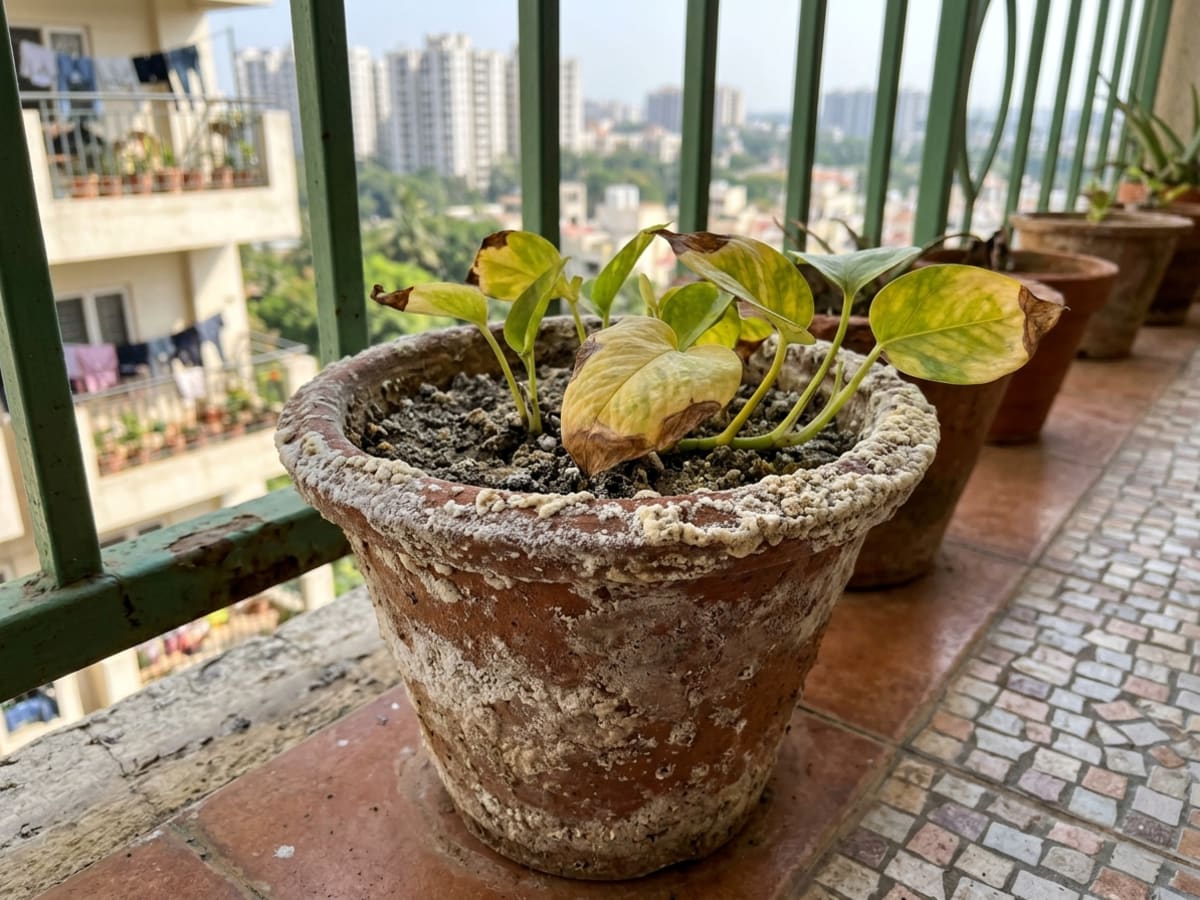
In porous containers like terracotta, water continuously evaporates through the clay walls. As pure moisture evaporates into Bengaluru's dry post-monsoon air, dissolved minerals are left behind, forming white efflorescence known as salt crust.
Inside the container, high mineral concentrations cause reverse osmosis: instead of roots drawing water inward, hypersaline soil draws moisture out of the root cells, producing leaf tip scorch. Simultaneously, alkaline carbonates drive soil pH above 8.0, locking out vital micronutrients like iron, zinc, and manganese.
2. Step 1: The Monthly 'Heavy Leach' Soil Flush
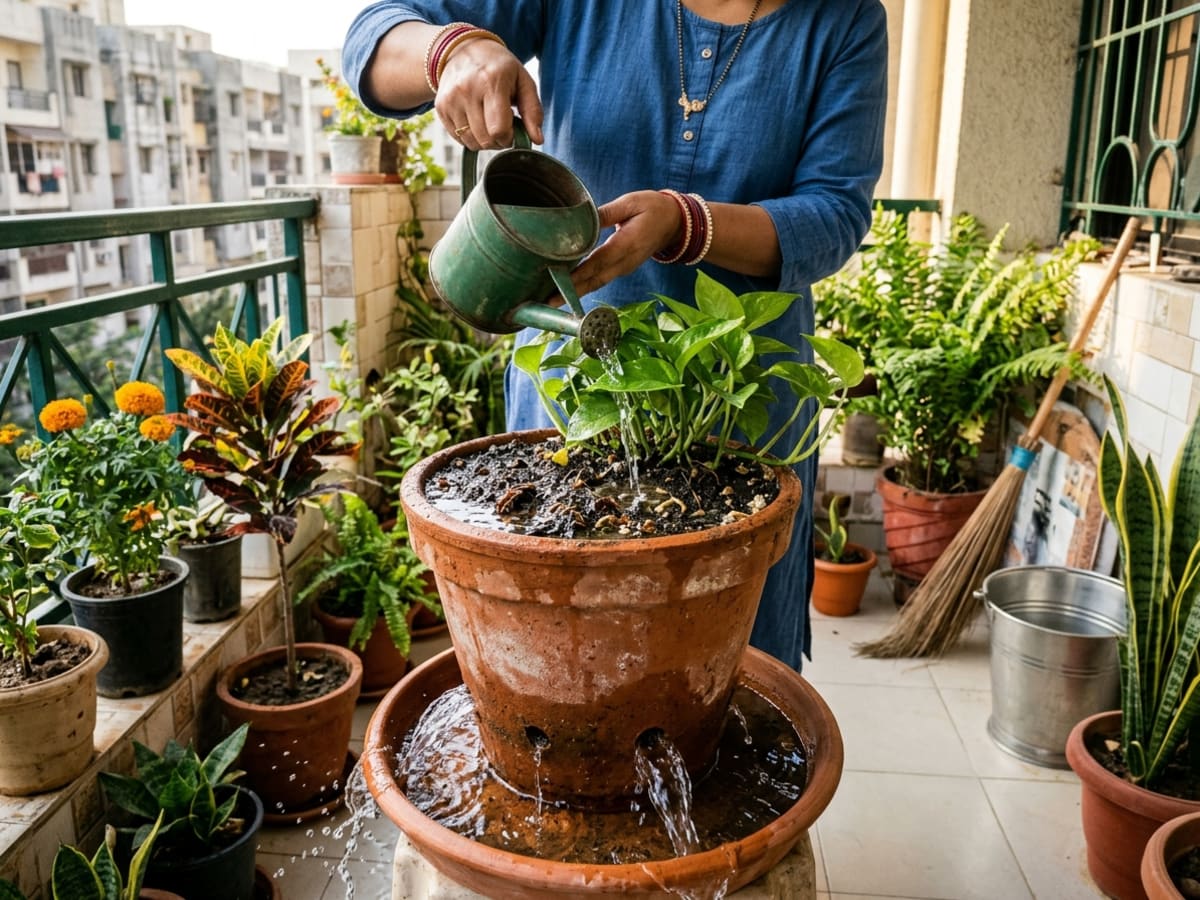
Avoid 'sip watering'—giving pots small daily splashes that never drain. This traps 100% of tanker salts inside the root ball forever. Once every 30 days, take potted plants to a drainage area and pour water equal to twice the container volume, letting it flush freely out the bottom holes to rinse away accumulated mineral salts.
3. Step 2: Neutralizing Alkaline pH (The Humic Acid & Vinegar Protocol)
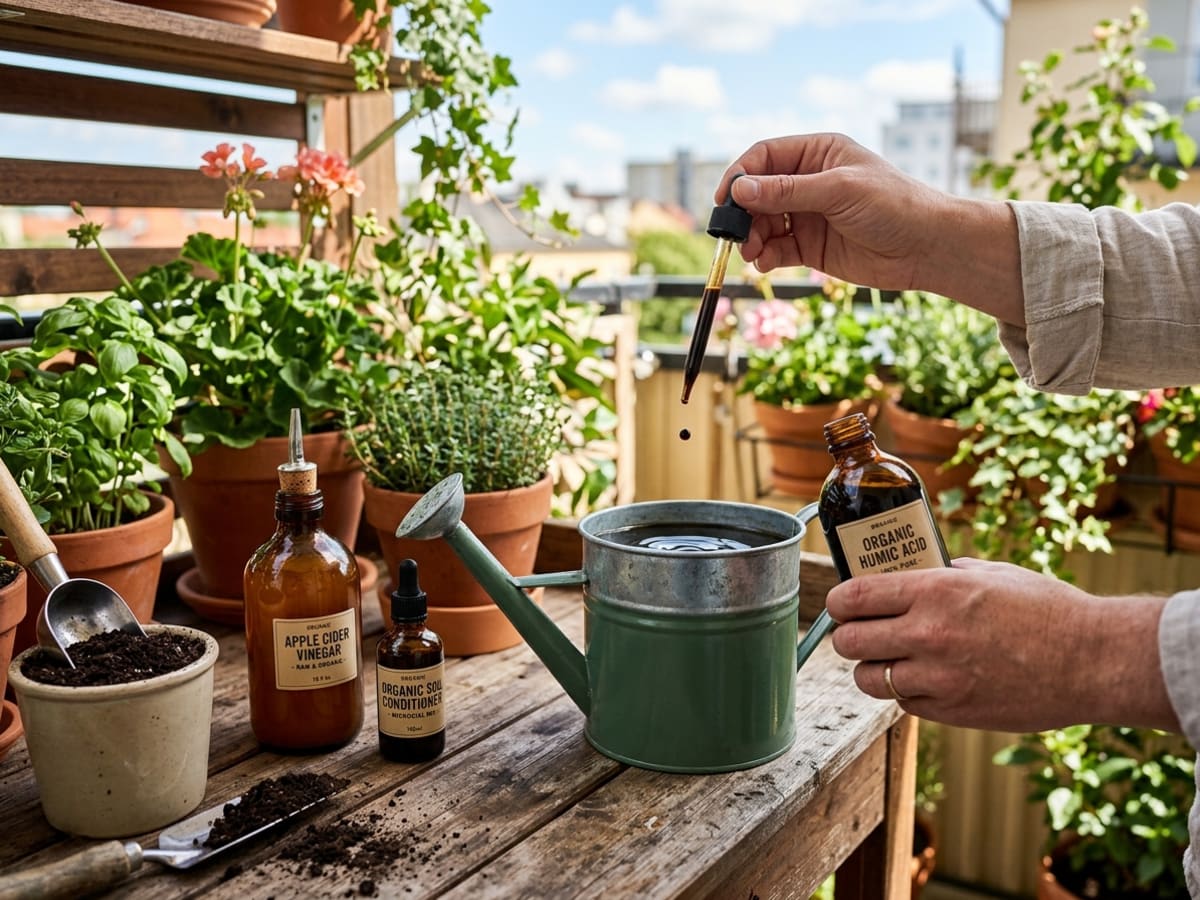
Acid Rinse: Add 1 teaspoon of apple cider vinegar per 5 liters of borewell water once every two weeks. The mild acetic acid gently reacts with calcium carbonates, buffering the water pH down to an optimal 6.5 and unlocking trapped iron. Pair this with monthly liquid humic acid applications to bind excess sodium and protect feeder roots.
4. Step 3: Rainwater & AC Condensate Harvesting
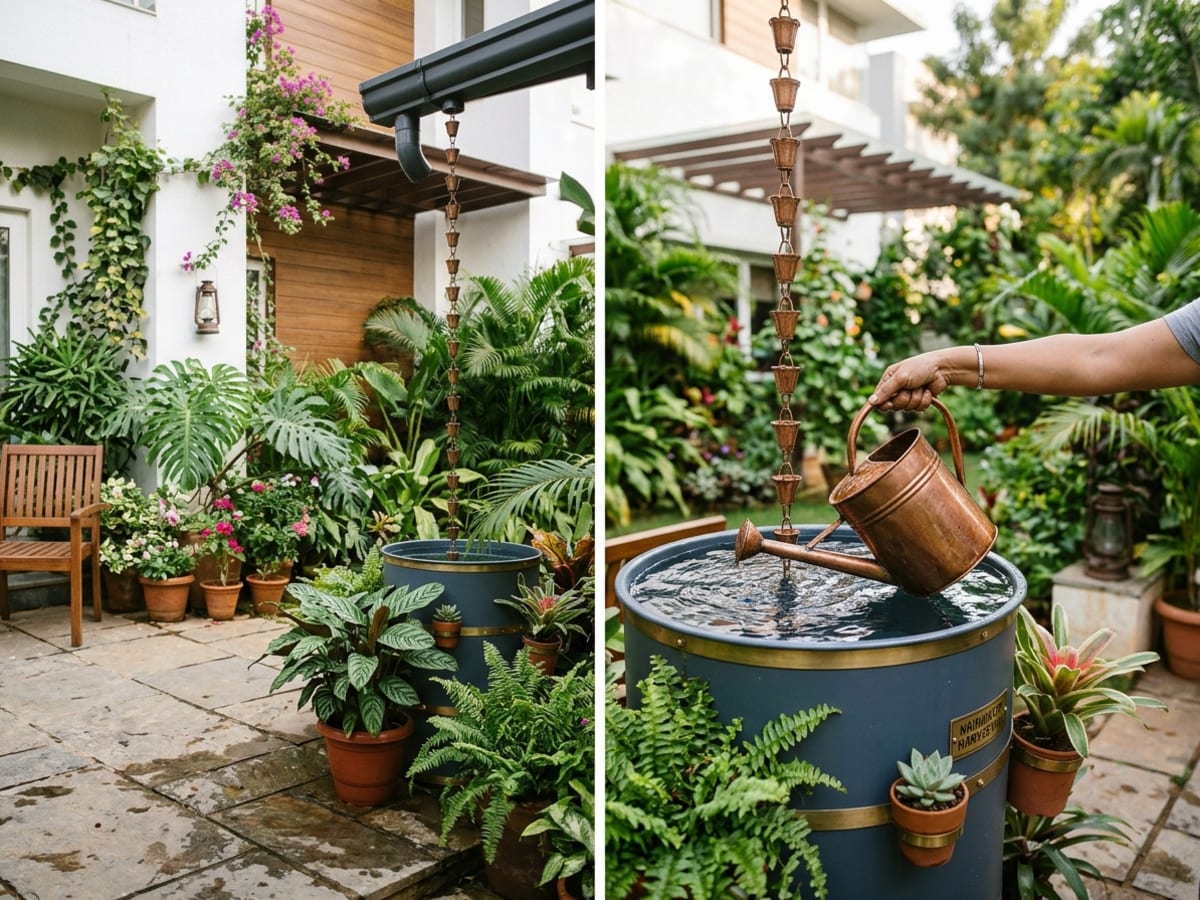
Don't let pure zero-TDS water go to waste. Modern Bengaluru apartment air conditioning units generate 5 to 15 liters of pure condensate daily on warm afternoons. Collecting this runoff provides pure mineral-free water ideal for sensitive plants like calatheas, ferns, and orchids.
5. Top Salt-Tolerant Plants for Bengaluru Homes
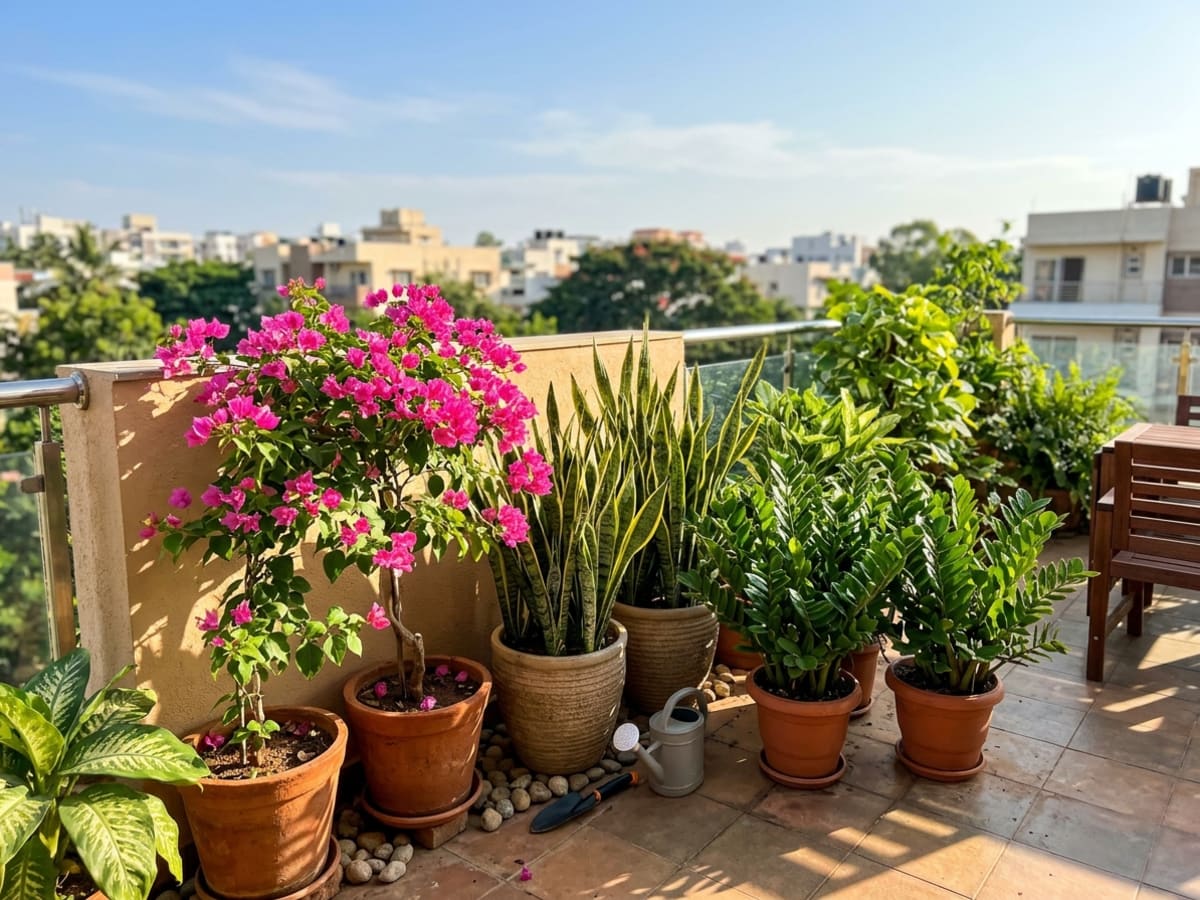
If your home relies entirely on high-TDS tanker water, choose naturally mineral-resilient plants: waxy Snake Plants (Sansevieria), bulbous ZZ Plants (Zamioculcas), Bougainvillea (which thrives on alkaline calcium minerals), leathery Rubber Trees (Ficus elastica), and native Vinca (Sadabahar).
Create a Resilient Sanctuary with Happy Greenery
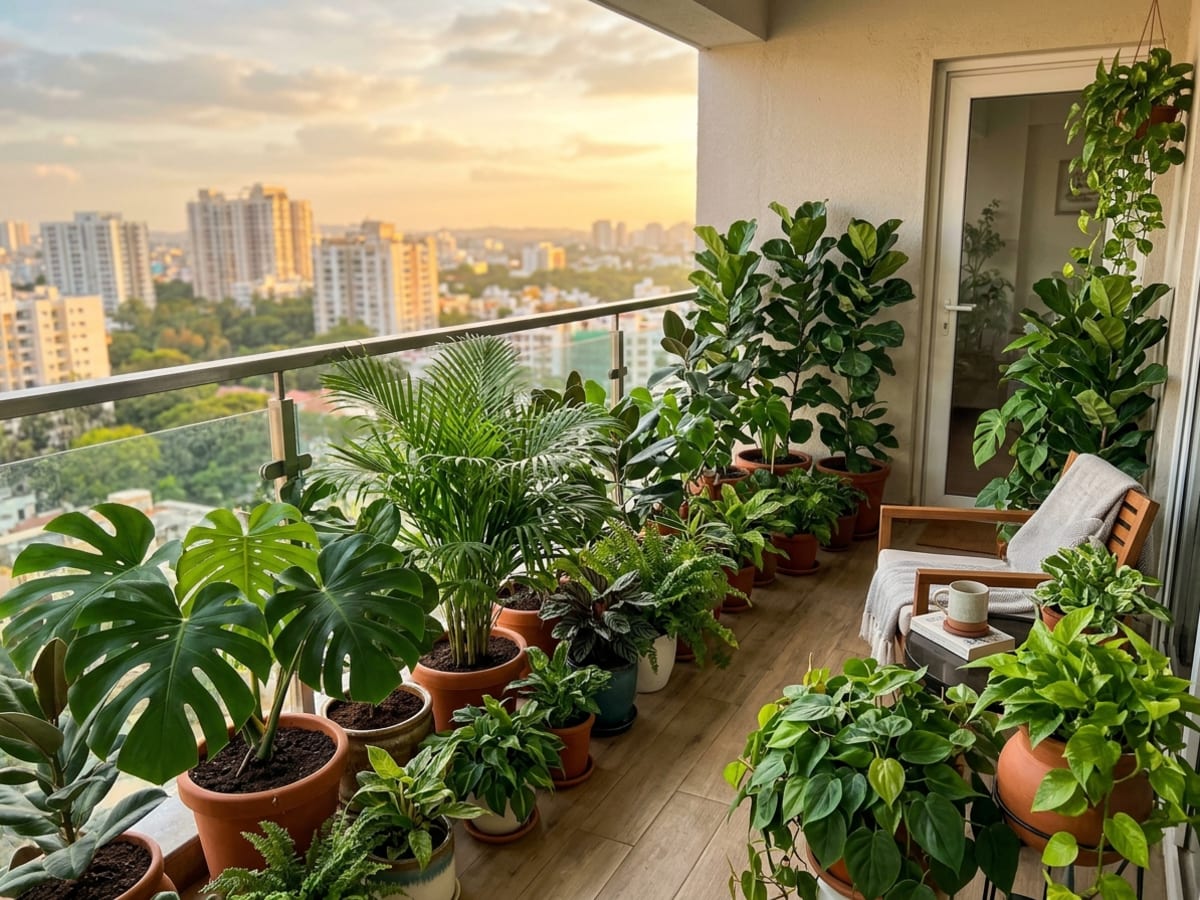
Gardening in Bengaluru shouldn't be an uphill battle against your water supply. Happy Greenery delivers mineral-resilient plant varieties, custom-aerated perlite potting soils, and organic soil conditioners across all Bengaluru localities.
Explore Hard Water Resilient Plants & Soil Conditioners at Happy Greenery Store →
Looking for healthy indoor & outdoor plants in Bengaluru?
Explore our curated nursery collection delivered safe and fresh to your doorstep across Bangalore.
Explore Plant Shop →
Comments
Join the Conversation
Sign in with Google to post comments, ask questions, or reply to other readers.
No comments yet. Share your thoughts!