10 Best Ornamental Trees for Terrace Gardens in Bengaluru (2026 Rooftop Guide)
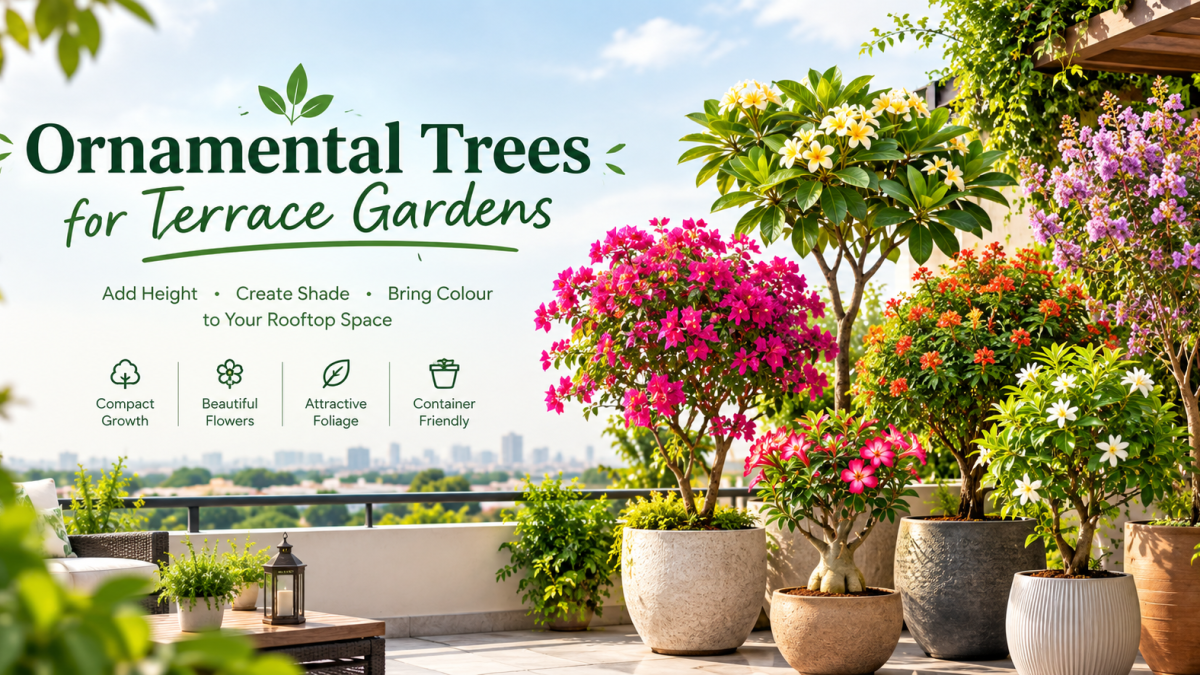
A rooftop terrace garden is more than just a collection of potted plants — it is an open-air sanctuary where concrete urban living gives way to fresh breezes, golden sunshine, and birdsong. While flowering shrubs, climbers, and succulents are popular additions, planting ornamental trees elevates a terrace from an ordinary garden into a magnificent miniature landscape.
In a fast-growing metropolis like Bengaluru, where ground-level space is at a premium and high-rise apartments, villas, and independent penthouses dominate neighborhoods like Indiranagar, HSR Layout, Whitefield, and Jayanagar, the rooftop is our canvas for private green living. With the right selection of container-friendly, compact ornamental trees, your terrace can flourish with vibrant flowers, sweet fragrances, and soothing shade throughout the year.
🏗️ Crucial Considerations for Terrace Tree Gardening in Bengaluru
Growing trees on a rooftop requires thoughtful planning compared to open-ground gardening. Keep these Bengaluru-tested engineering and botanical essentials in mind:
1. Roof Weight & Load-Bearing Points: Mature trees in water-saturated soil can become heavy. Use lightweight potting media (50% cocopeat + 30% vermicompost/perlite + 20% red loam) and place your largest planters directly above structural load-bearing beams or perimeter parapet columns.
2. High Wind & Rooftop Sunlight Exposure: Terraces experience intense UV radiation and brisk wind speeds that dry out potting mix rapidly. Choose sturdy FRP (fiberglass) or terracotta planters, stake young trees firmly, and consider grouping companion shrubs around tree bases to shield root zones.
3. Waterproofing & Drainage Management: Ensure planters have ample drainage holes and are elevated on rubber risers or clay feet. This prevents moisture from trapping beneath the pot and protects your terrace waterproofing membrane during Bengaluru intense monsoon downpours.
4. Root Restriction & Canopy Pruning: In containers, trees naturally dwarf. Annual root pruning (trimming 20% of outer roots every 2 years) combined with regular post-monsoon canopy shaping will keep your trees thriving happily between 4 to 7 feet.
🌸 Top 10 Ornamental Trees for Bengaluru Rooftop Gardens
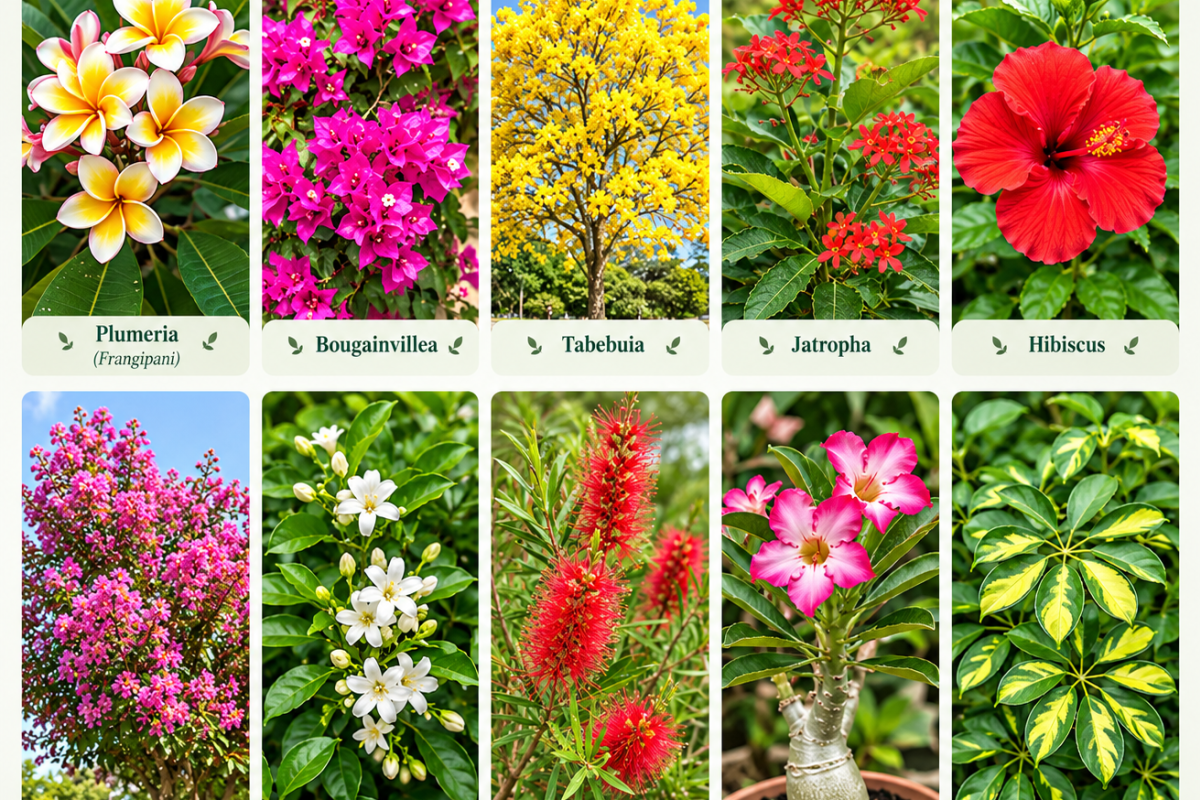
Here are the 10 most resilient, beautiful, and container-friendly ornamental trees tailored specifically for Bengaluru terrace gardens, complete with care instructions and links to order pre-acclimatized plants.
1. Plumeria / Frangipani (Plumeria rubra / obtusa) – Sculptural Branches & Intensely Fragrant Tropical Blooms
Plumeria (commonly known as Frangipani or Champa) is the undisputed star of sunny Indian rooftop gardens. Its thick succulent branches, dark leathery leaves, and heavenly fragrant spiralled petals evoke a luxury resort ambience. Because Plumeria stores water inside its fleshy branches, it tolerates intense rooftop heat and drying winds with remarkable ease.
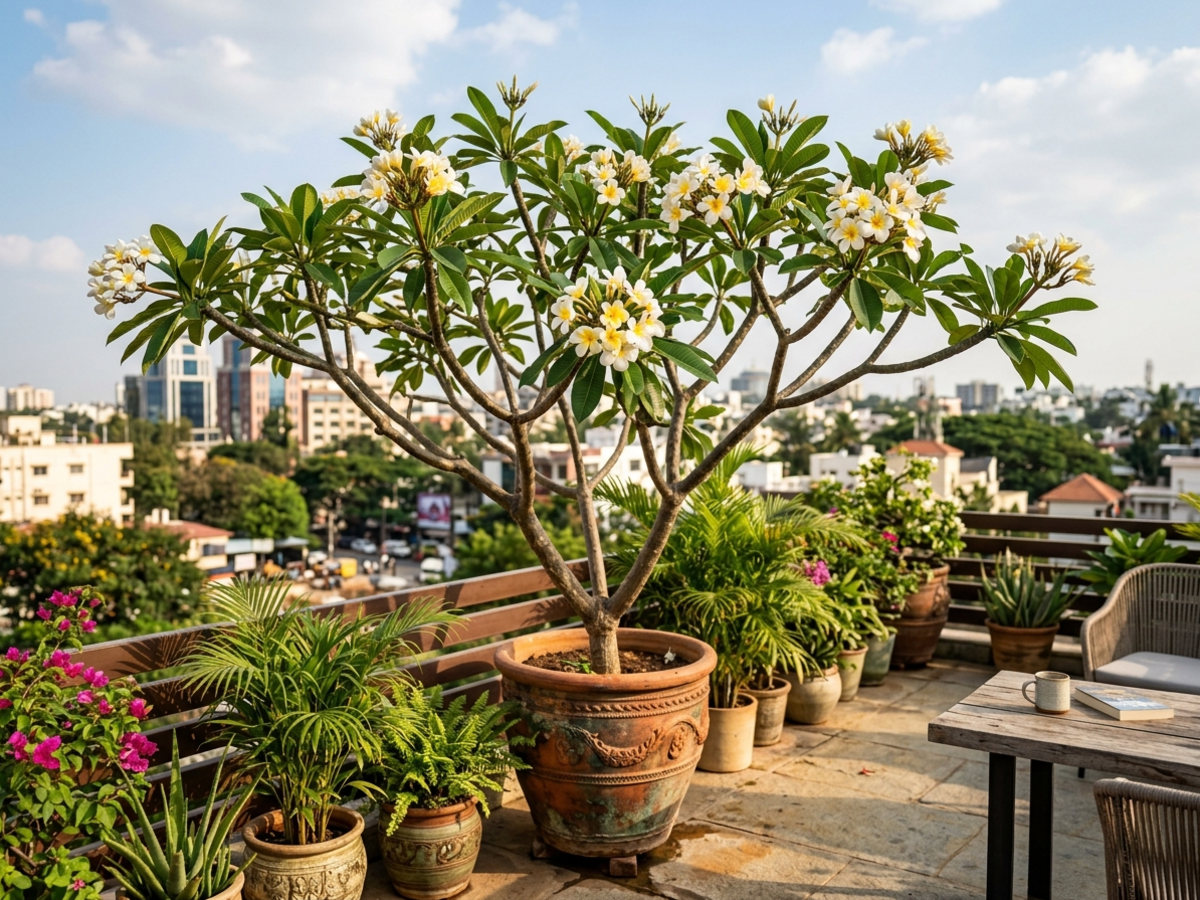
Bengaluru Terrace Care: Needs 6+ hours of direct rooftop sun to trigger abundant blooming from April through November. Potting: Plant in a 18–24 inch terracotta or FRP planter using a porous mix of red soil, cocopeat, and perlite. Watering: Water deeply when the top 3 inches dry out; reduce watering during winter dormancy. Pruning: Prune tip cuttings in February to maintain a compact, sculptural 5–6 foot canopy.
Explore Plumeria & Flowering Terrace Trees at Happy Greenery
2. Bougainvillea (Bougainvillea spectabilis – Standard Tree Form) – A Dazzling Floral Showstopper for High-Sun Rooftops
Few plants on earth can rival the breathtaking floral spectacle of Bougainvillea under the Bengaluru sun. While naturally a vigorous climber, dwarf and standard varieties trained on a single woody trunk produce a lush floral lollipop crown that transforms bare rooftop parapets into vibrant explosions of magenta, fuchsia, orange, and white.
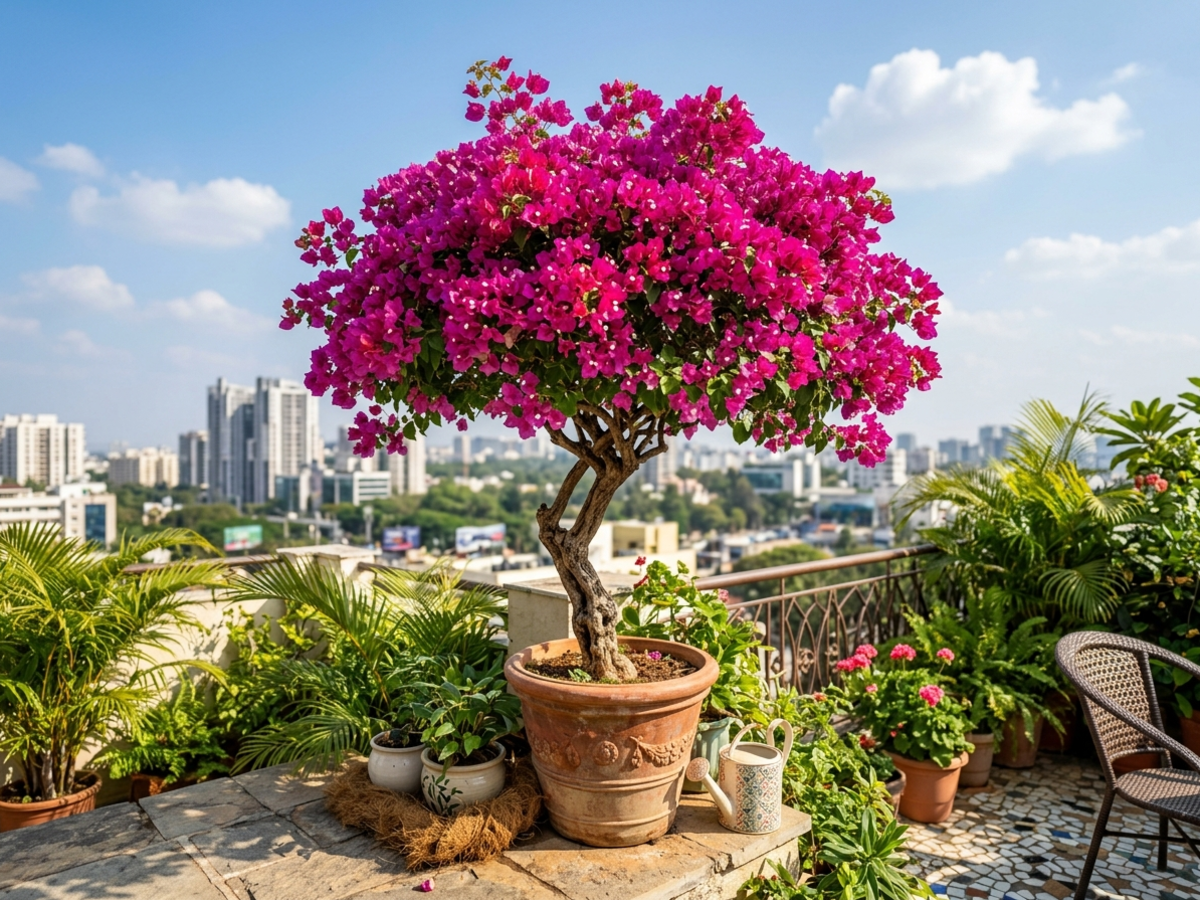
Bengaluru Terrace Care: Unstoppable in full, blazing rooftop sun. The more sunlight it receives, the heavier it flowers. Watering: Water sparingly. Slight moisture stress encourages heavy flowering rather than excessive green vine growth. Fertilizer: Feed with high-potassium organic fertilizer or bone meal once monthly during spring and monsoon.
Shop Bougainvillea Standards & Terrace Plants at Happy Greenery
3. Tabebuia / Pink Trumpet Tree (Tabebuia rosea / aurea – Dwarf Selection) – Bengaluru's Iconic Spring Sensation for Containers
Every spring between January and March, Bengaluru streets turn into a dreamy pink wonderland courtesy of blooming Tabebuia rosea. You can replicate this iconic Garden City drama right on your rooftop terrace with grafted, dwarf container selections. When in full bloom, the tree sheds most of its leaves and replaces them with a glorious canopy of pastel pink or sunny yellow trumpet-shaped blossoms.
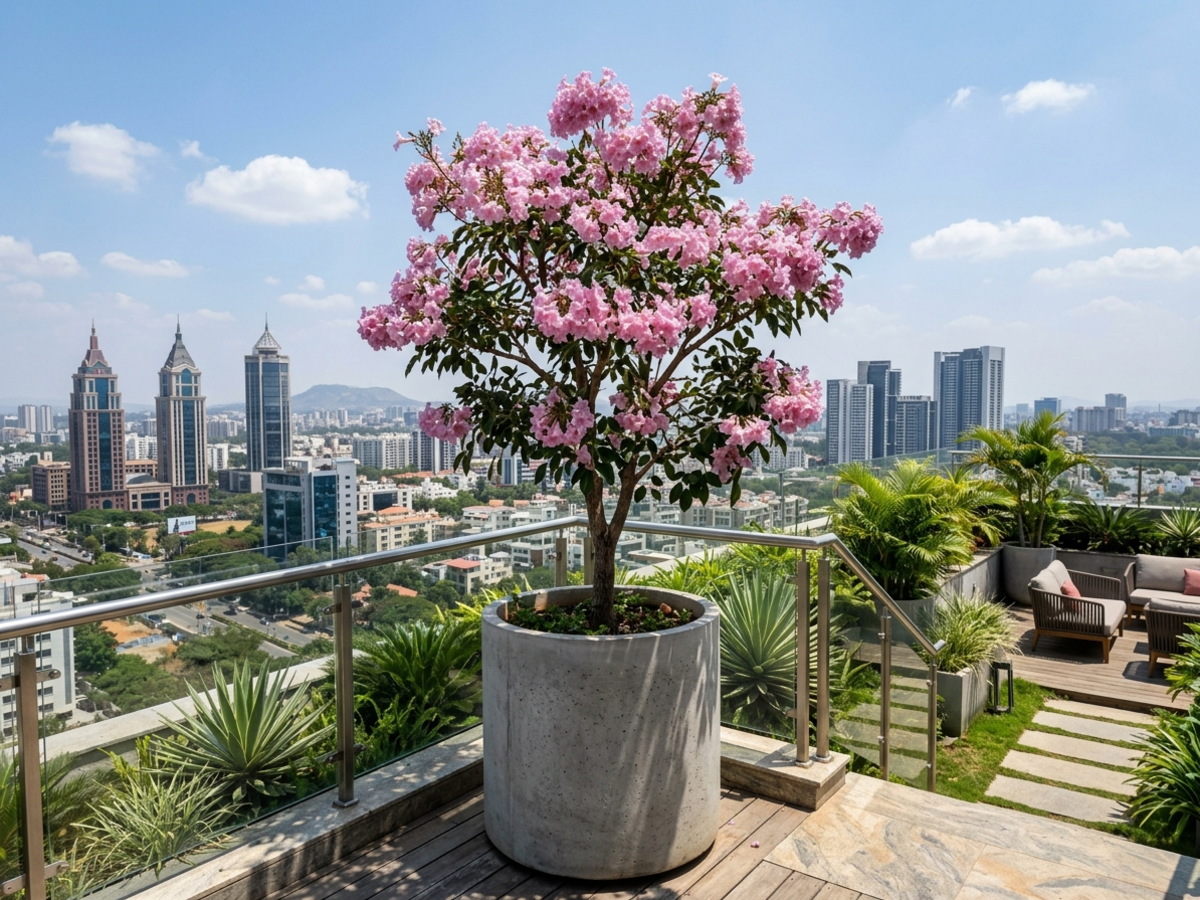
Bengaluru Terrace Care: Best placed against an open south- or west-facing terrace corner with unrestricted sunlight. Potting: Requires a sturdy 24-inch lightweight composite planter with robust drainage. Watering: Water moderately; allow the soil to dry out between waterings to encourage flowering buds. Bangalore Tip: Stake the main stem firmly during monsoon winds.
Explore Flowering Trees & Terrace Planters at Happy Greenery
4. Jatropha / Peregrina (Jatropha integerrima) – Non-Stop Scarlet Floral Clusters All Year Round
If you want consistent, year-round floral color without seasonal downtime, Jatropha integerrima (Peregrina) is an outstanding candidate. Trained as a compact standard tree, it displays unique fiddle-shaped leaves and terminal bouquets of bright star-like crimson flowers that continually attract butterflies, sunbirds, and honeybees to your terrace.
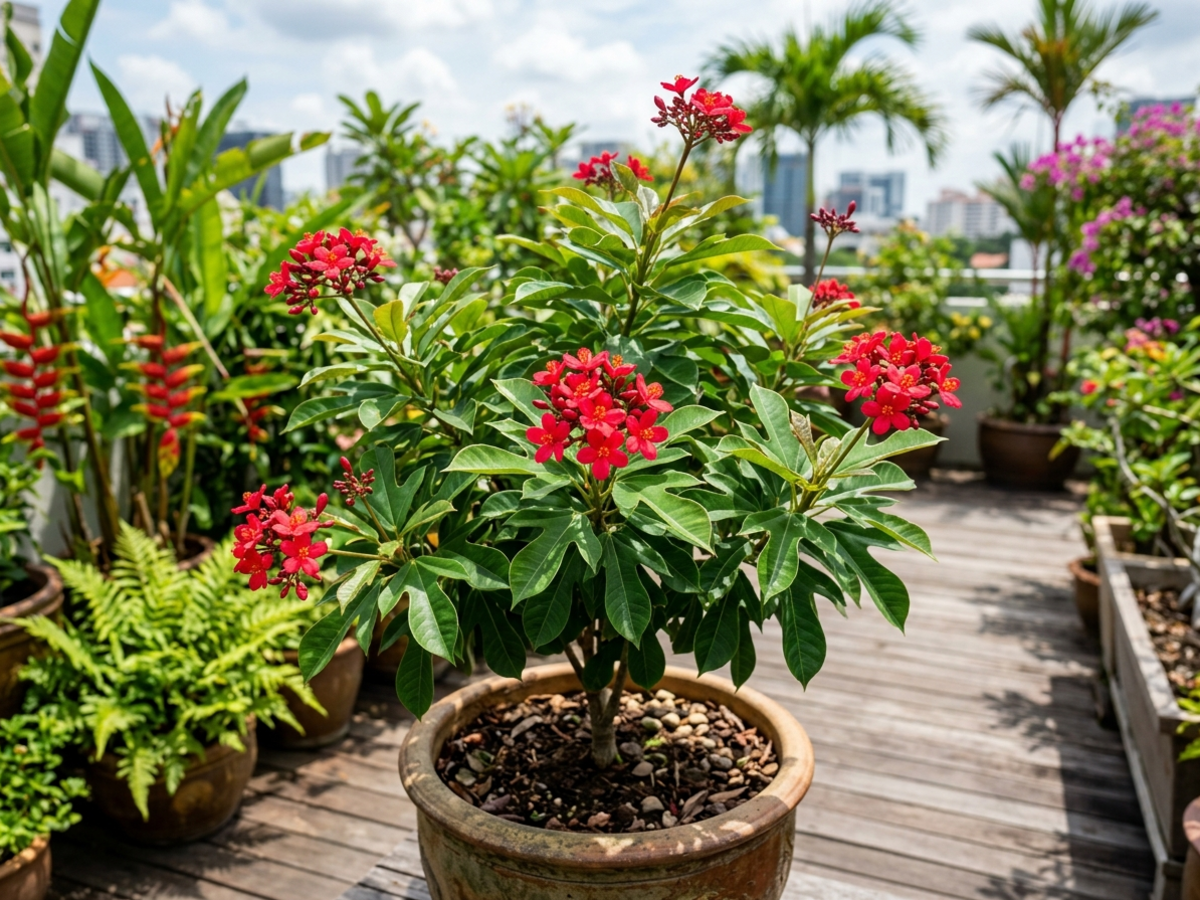
Bengaluru Terrace Care: Flourishes in full sun to partial afternoon shade. Highly resistant to urban pests and pollution. Watering: Water when the top 2 inches of soil feel dry. Pruning: Responds exceptionally well to regular tip pinching, which keeps its crown dense, bushy, and rounded under 5 feet.
Shop Butterfly-Attracting Terrace Plants at Happy Greenery
5. Tropical Hibiscus (Hibiscus rosa-sinensis – Tree Form) – Exotic Giant Blossoms with Royal Mediterranean Charm
Traditionally grown as a shrub across South Indian homes, tropical Hibiscus can easily be trained into an elegant single-stem standard tree. Its dinner-plate sized blooms in blazing crimson, peach, lemon-yellow, and double-petal varieties provide a continuous tropical celebration against Bengaluru skyline.
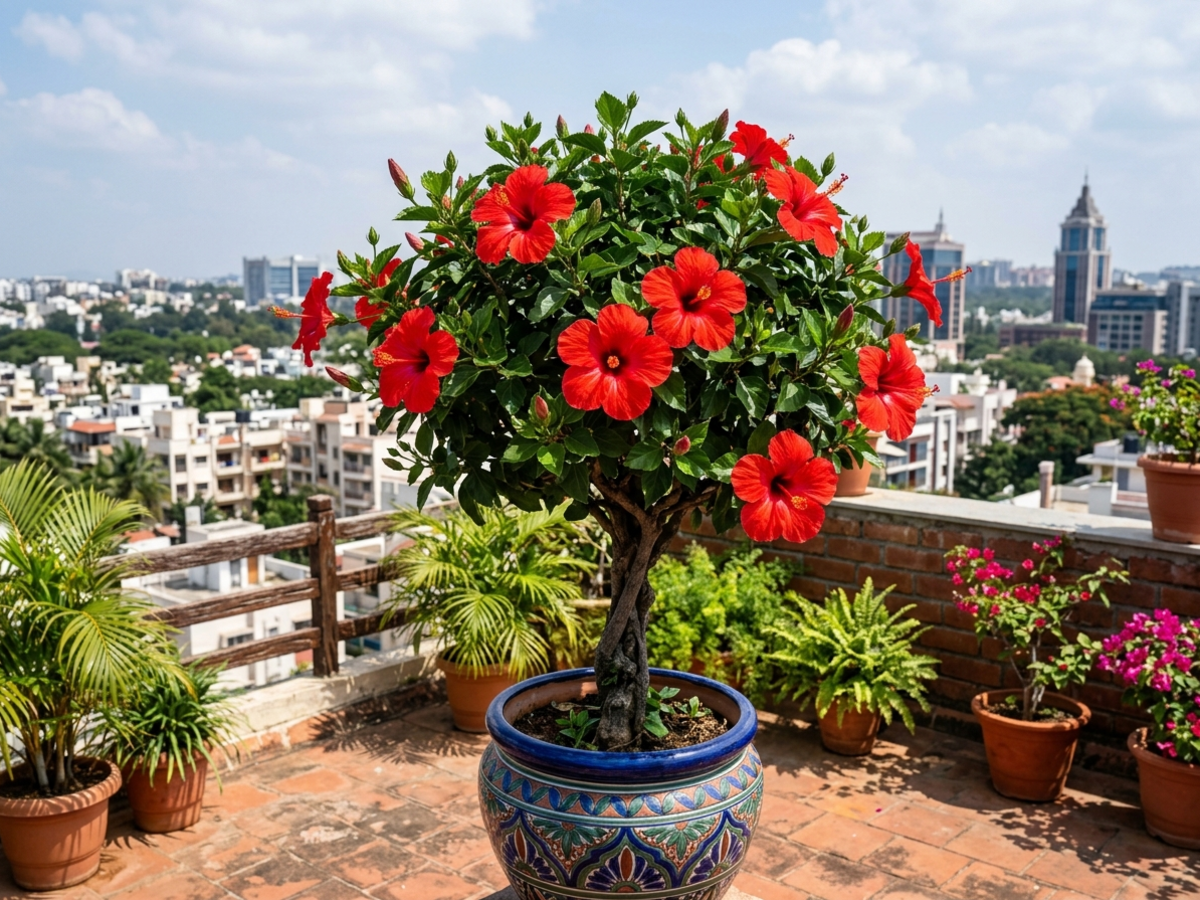
Bengaluru Terrace Care: Requires 4–6 hours of direct morning sun. Avoid scorching midday heat by placing near partial shading or companion trees. Watering: Keep soil evenly moist; never let the root ball dry out completely during summer. Bangalore Tip: Spray neem oil solution monthly to prevent rooftop mealybug infestations.
Shop Flowering Hibiscus Varieties at Happy Greenery
6. Crape Myrtle / Pride of India (Lagerstroemia indica) – Delicate Crinkled Floral Panicles & Sculptural Mottled Bark
Known as the Pride of India or Saoni, Crape Myrtle is celebrated for its crepe-paper-like crinkled petals in breathtaking shades of purple, lavender, pink, and pure white. Even during brief winter leaf-drop, its smooth, satin-like mottled trunk and elegant branching structure provide immense architectural appeal on contemporary terraces.
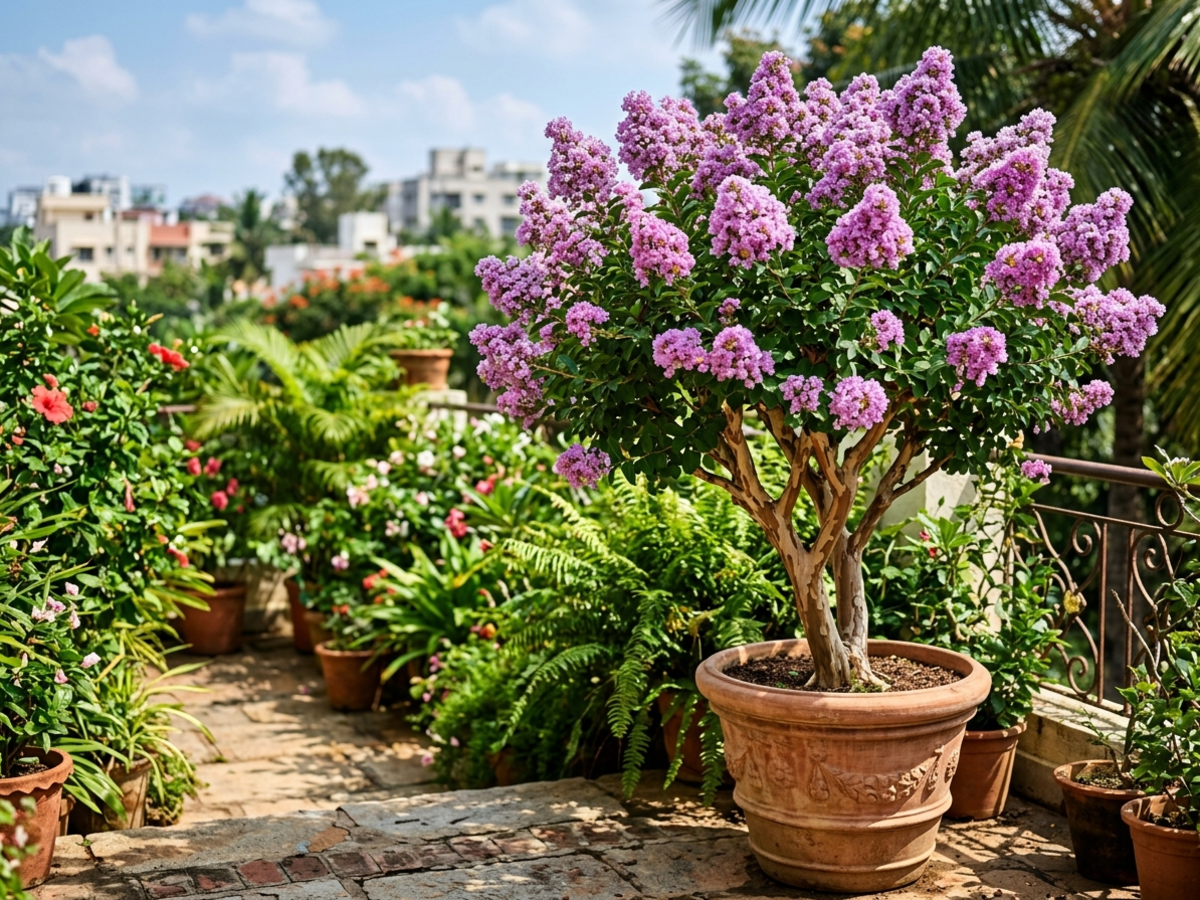
Bengaluru Terrace Care: Thrives in bright, sunny terrace locations. Extremely drought-hardy once root system establishes. Watering: Water weekly during summer; cut back during monsoon rains. Pruning: Perform hard pruning in late winter (January) to spur vigorous new blooming branches for spring.
Shop Ornamental Flowering Trees at Happy Greenery
7. Orange Jasmine / Kamini (Murraya paniculata) – Lush Evergreen Canopy with Intoxicating Night Fragrance
Murraya paniculata (popularly known as Kamini or Madhukamini) is a beloved classic in Bangalore gardens. With dense, glossy teardrop foliage and recurring flushes of citrus-scented starry white flowers, it turns any rooftop sitting area or swing corner into an aromatic paradise, especially on cool Bengaluru evenings.
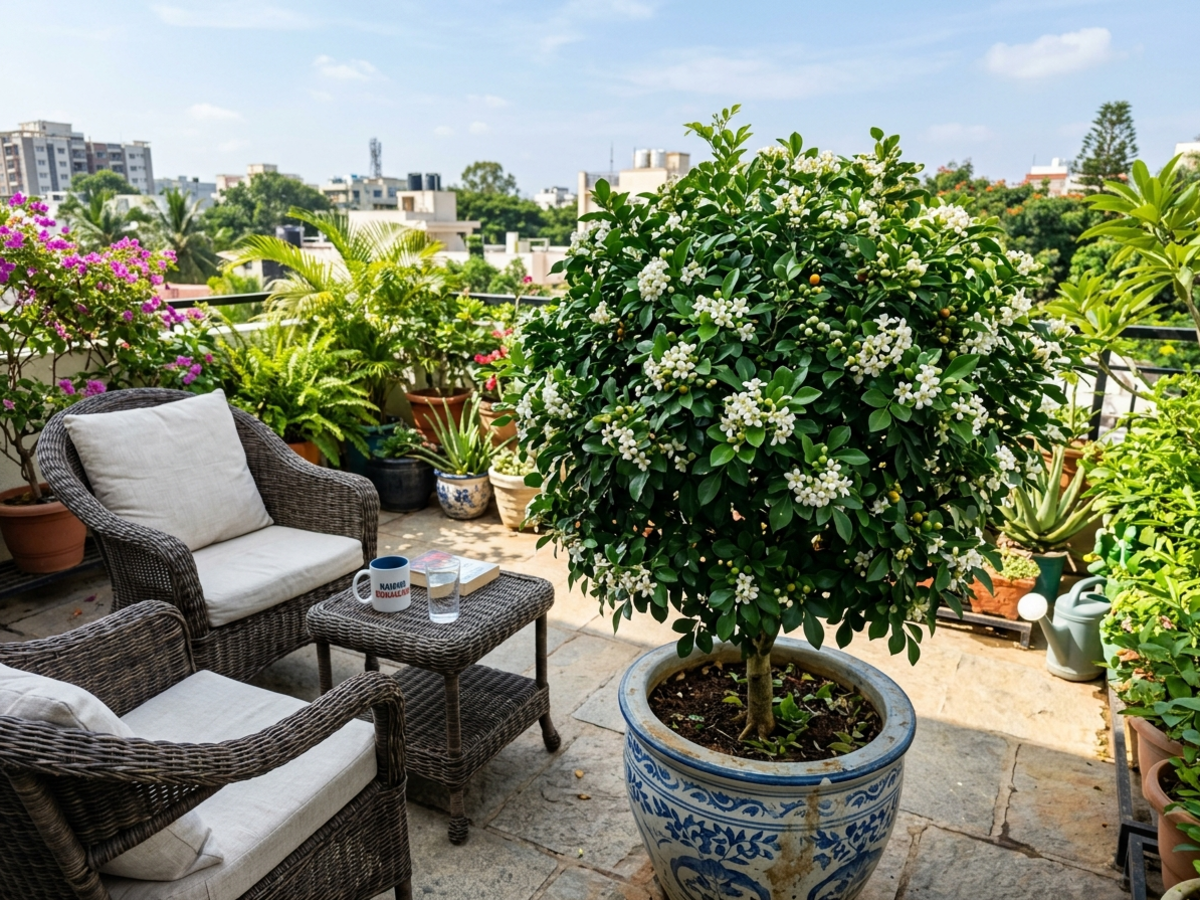
Bengaluru Terrace Care: Best in full sun or bright indirect light; protected from strong wind gusts. Potting: Plant in a 16–20 inch container with rich, well-draining soil mixed with leaf compost. Pruning: Easily clipped into neat topiary spheres or formal compact tree crowns.
Shop Fragrant Kamini & Outdoor Plants at Happy Greenery
8. Bottlebrush (Callistemon lanceolatus / viminalis) – Distinctive Weeping Architectural Form with Crimson Spikes
Callistemon brings an unmatched weeping silhouette to rooftop landscaping. Its narrow, willow-like aromatic leaves contrast dramatically against striking, brush-like crimson flower spikes. As the breeze blows across the terrace, the pendulous branches sway gracefully, adding movement and soft textures to structural concrete terraces.
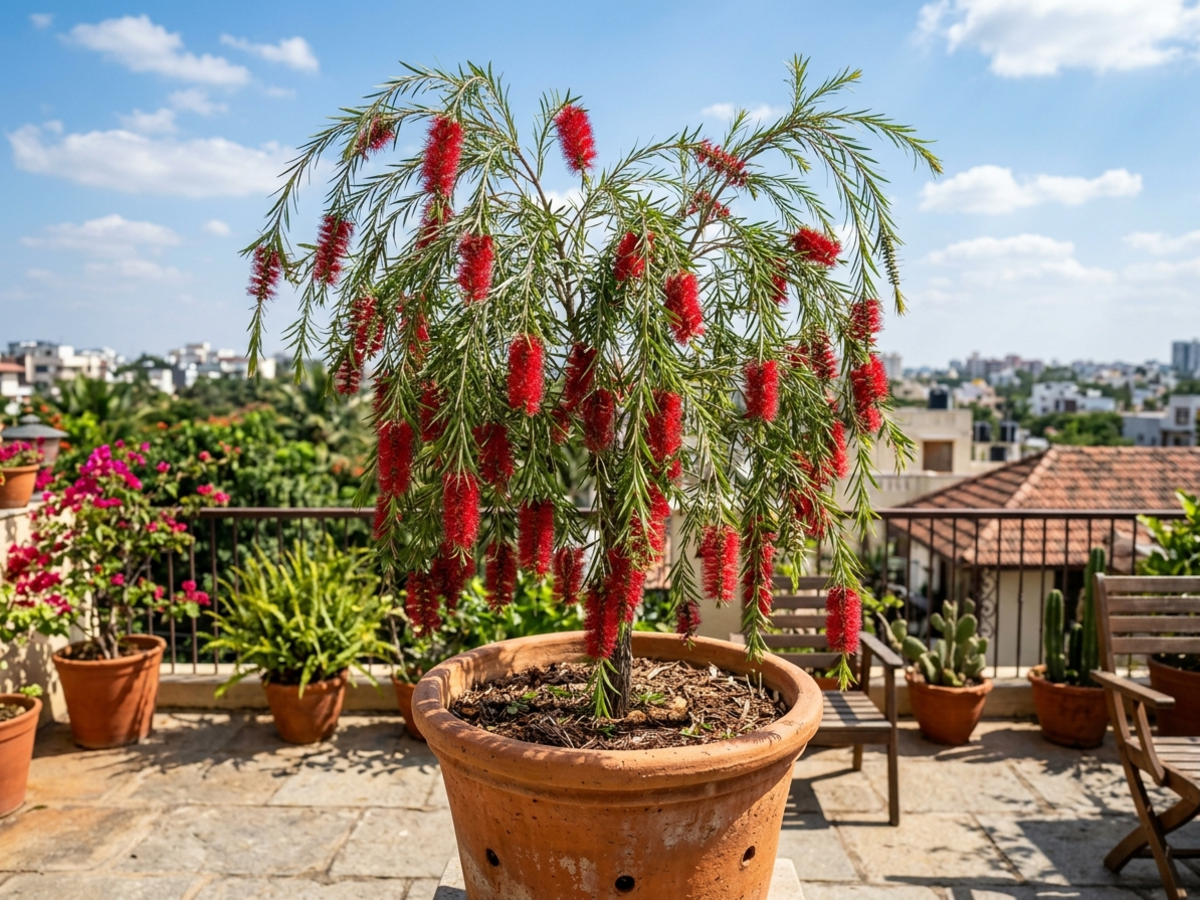
Bengaluru Terrace Care: Unfazed by full sun, high rooftop wind speeds, or hot spells. Watering: Moderate watering requirements; drought-resistant once rooted. Bangalore Tip: Prune behind the spent flower spikes to encourage multiple new flowering flushes throughout the year.
Shop Unique Architectural Trees at Happy Greenery
9. Adenium / Desert Rose (Adenium obesum) – Living Rooftop Sculpture with Bonsai Swollen Trunk
Adenium obesum may be compact, but its artistic presence rivals any large tree. With a bulbous, sculptural swollen trunk (caudex) and dazzling clusters of trumpet blooms in shades of crimson, pink, bi-color, and pure white, it behaves like an ancient, miniature bonsai tree that demands very little maintenance.
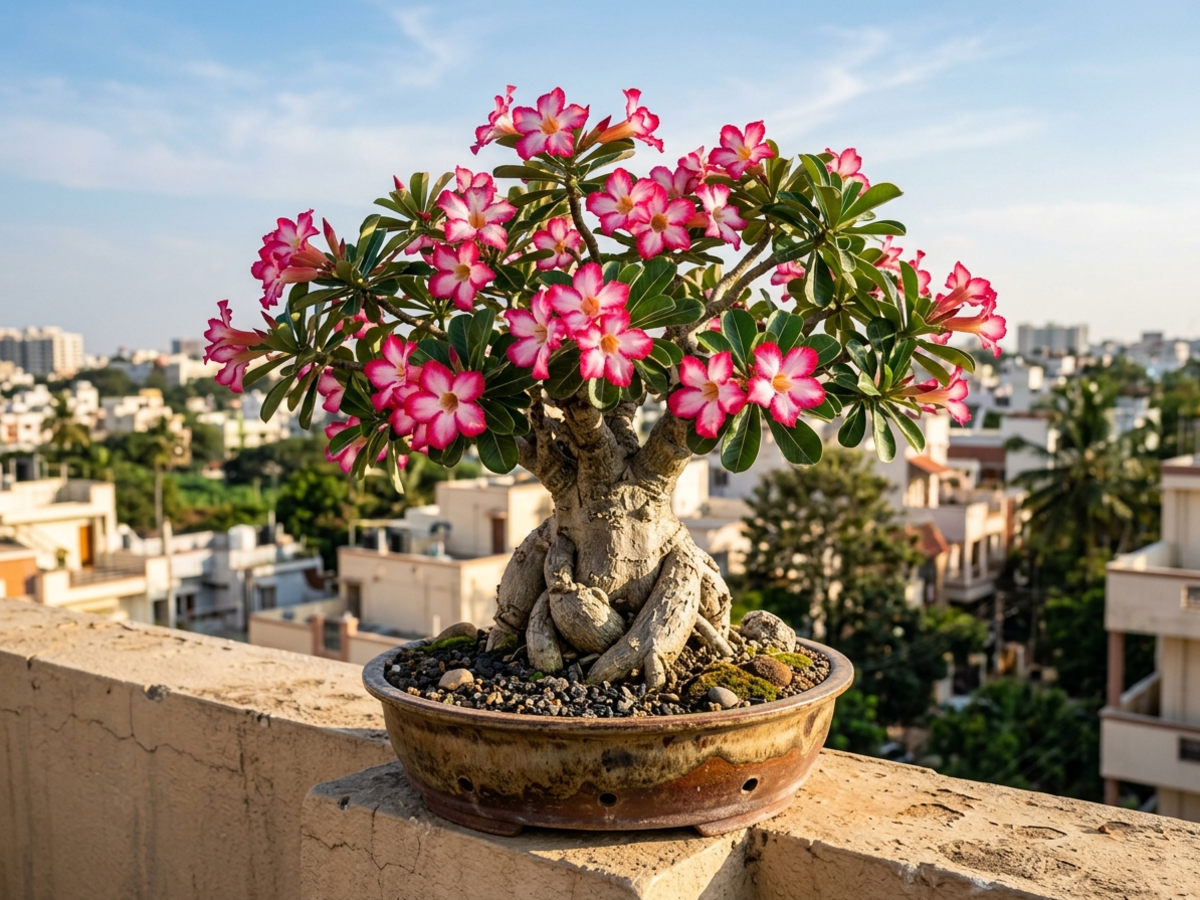
Bengaluru Terrace Care: Loves the hottest, sunniest rooftop ledges and parapet walls. Soil: Crucial to use a fast-draining gritty mix (pumice, perlite, gravel, and minimal soil). Watering: Water sparingly every 10–14 days. Avoid water stagnation during heavy Bengaluru monsoon downpours.
Shop Adenium Bonsai & Succulents at Happy Greenery
10. Dwarf Schefflera / Umbrella Tree (Schefflera arboricola) – Lush Variegated Evergreen Foliage for Contemporary Patios
For terrace gardeners who prefer year-round architectural foliage over seasonal flowers, the Dwarf Schefflera is unbeatable. Its umbrella-like whorls of glossy green and golden-yellow leaves create a dense, verdant privacy screen or an elegant backdrop around outdoor dining furniture and pergolas.
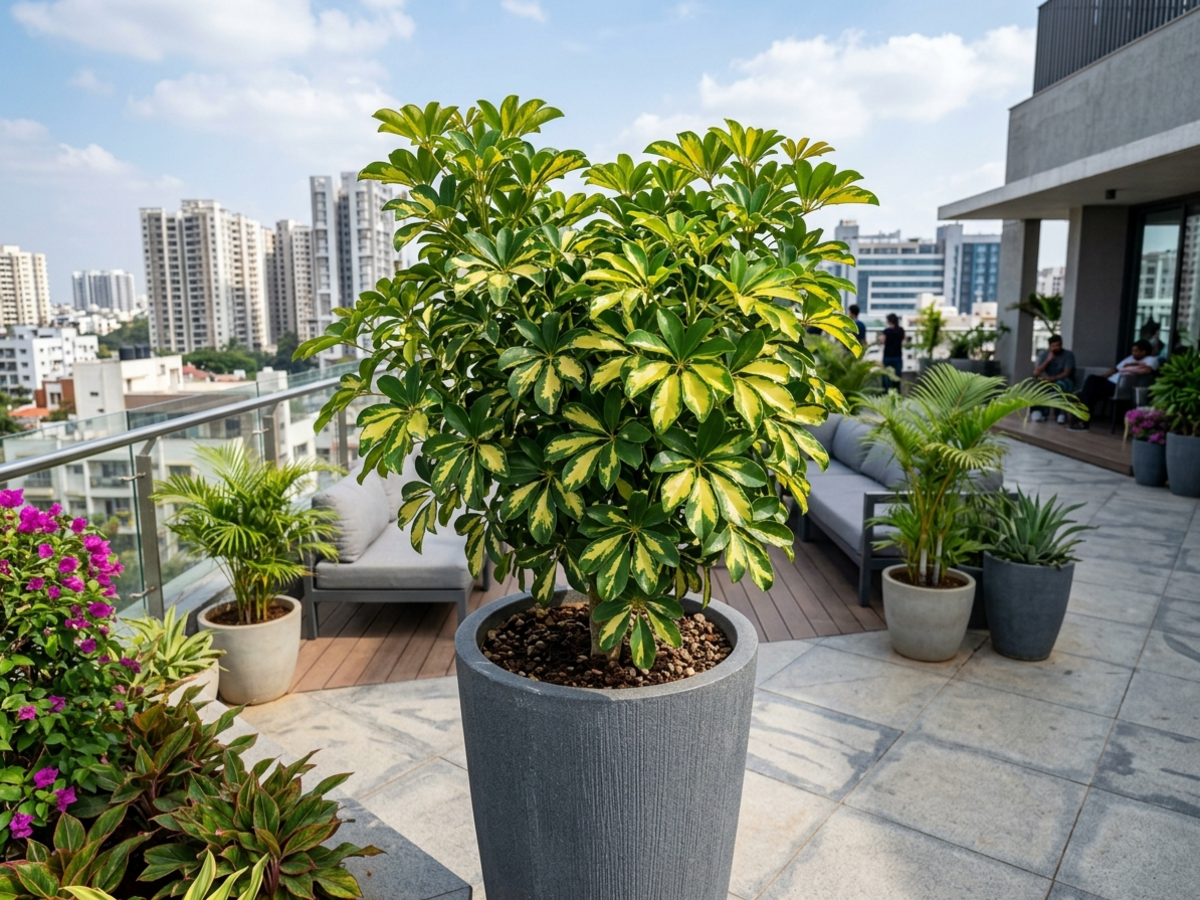
Bengaluru Terrace Care: Thrives in bright indirect sunlight or partial rooftop sun; protects well under shade nets or pergola canopies. Watering: Allow the top 2 inches of soil to dry out between waterings. Pruning: Clip the central leader to keep it dense, bushy, and compact at 4–6 feet.
Shop Evergreen Foliage & Planters at Happy Greenery
📐 Terrace Landscape Styling & Placement Tips
Thoughtful placement transforms individual container trees into a cohesive, resort-style rooftop retreat:
1. Framing Outdoor Seating: Place fragrant varieties like Orange Jasmine (Kamini) and Plumeria within 3–4 feet of your rooftop chairs, coffee tables, or wooden deck swings to savor their sweet evening aroma.
2. Layering for Visual Depth: Position taller architectural trees (Bougainvillea standard, Tabebuia, Bottlebrush) along boundary walls to act as natural privacy screens, and step down to mid-sized shrubs (Hibiscus, Jatropha) and low bonsai specimens (Adenium) in the foreground.
3. Underplanting Containers: Maximise green coverage by underplanting large tree pots with trailing Money Plants, Portulaca, or cascading Asparagus Ferns to create a living green mulch that keeps root soil cool in the summer heat.
❓ Frequently Asked Questions (FAQs)
Q: What size pot is ideal for growing ornamental trees on a terrace? A: Start young trees in 16–18 inch planters. For mature specimens (Plumeria, Tabebuia, Bougainvillea), an 18–24 inch container with a minimum soil depth of 45–60 cm provides plenty of room for stable root growth.
Q: Can terrace trees survive Bengaluru monsoons without root rot? A: Yes, provided your potting mix contains high porosity materials like perlite, pumice, and cocopeat, and the planter drain holes are never obstructed. Elevating pots on stands prevents waterlogging during continuous monsoon rains.
Q: Which terrace tree provides the best natural fragrance? A: Murraya paniculata (Kamini / Orange Jasmine) and Plumeria (Frangipani) are the undisputed fragrance champions, releasing enchanting sweet scents especially in the evening and night hours.
Q: How often should terrace trees in containers be fertilized in Bengaluru? A: Feed trees with a balanced organic slow-release compost or seaweed extract once every 4–6 weeks during the growing and flowering season (February to October). Avoid heavy fertilization during cold winter spells.
Create Your Dream Rooftop Sanctuary with Happy Greenery
A rooftop garden with living, flowering trees is one of the greatest joys of urban living in Bengaluru. Whether you are starting with a single fragrant Plumeria or planning a complete rooftop makeover, Happy Greenery delivers healthy, nursery-grown plants, designer planters, and premium potting mixes right to your home.
Explore Happy Greenery's Complete Outdoor & Terrace Plant Collection
Comments
Join the Conversation
Sign in with Google to post comments, ask questions, or reply to other readers.
No comments yet. Share your thoughts!