Parijatha: The Heavenly Tree That Brings Divine Fragrance, Beauty and Serenity to Bengaluru Gardens
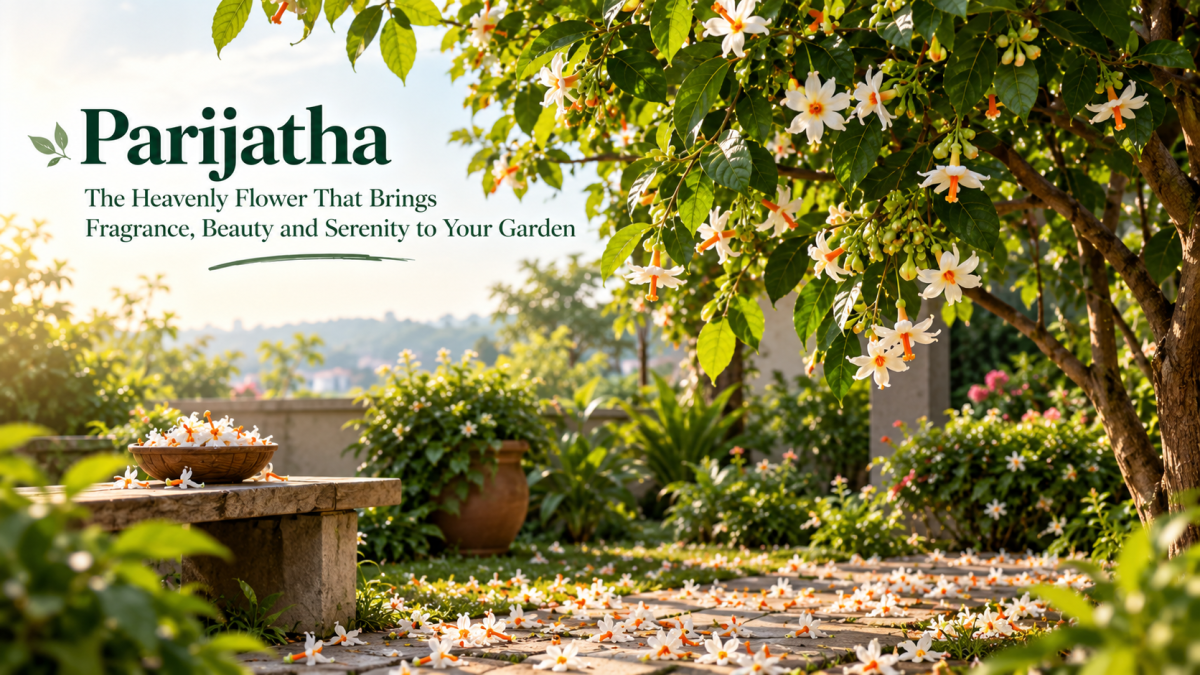
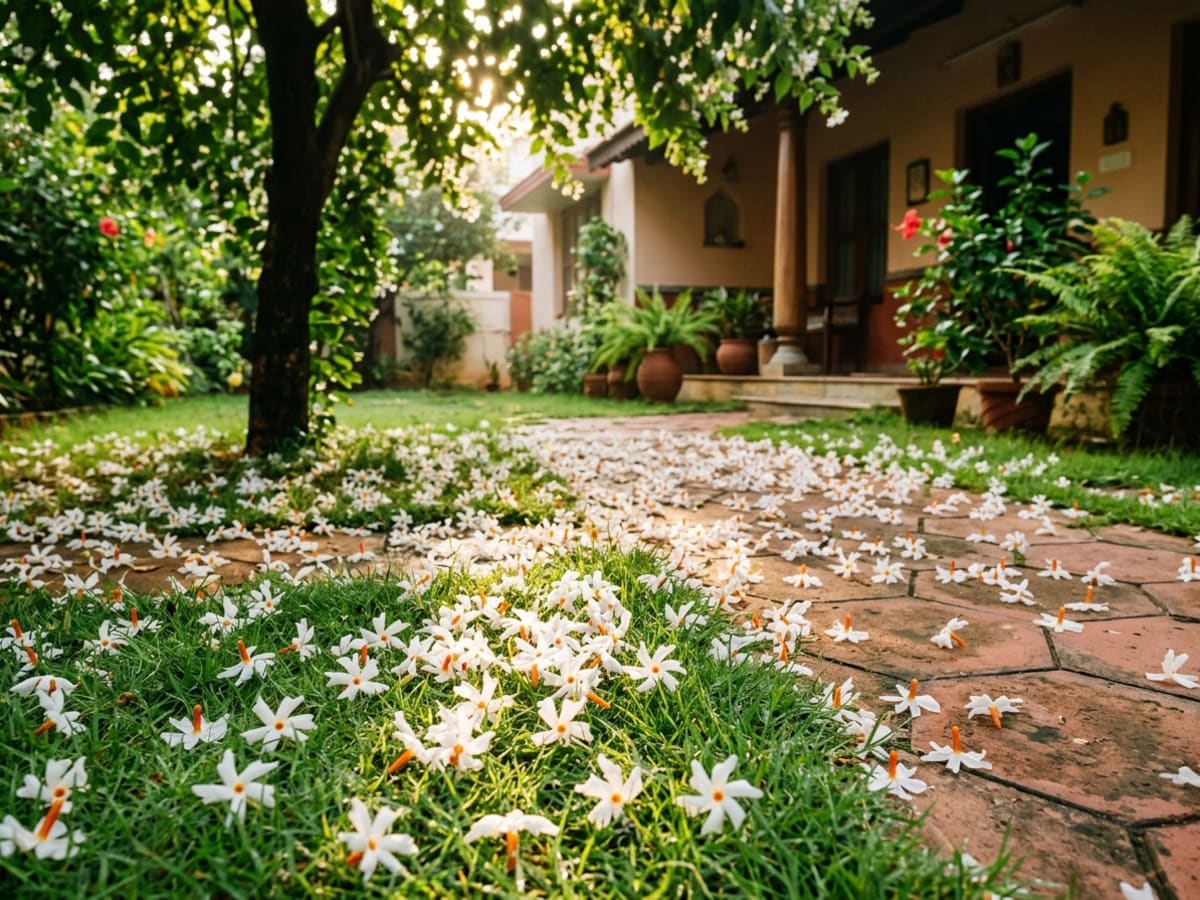
Imagine stepping out into your Bengaluru garden or balcony at the crack of dawn and finding a luminous carpet of star-shaped white blossoms with striking orange centers scattered softly over the green grass and terracotta tiles. The crisp morning air is rich with an intoxicating, honeyed fragrance, carrying a timeless sense of peace and sacred nostalgia.
This is the timeless magic of growing Parijatha (Nyctanthes arbor-tristis), celebrated across Karnataka and India as Harsingar, Paarijaata, Night-Flowering Jasmine, and the Tree of Sorrow (named botanically for its flowers that shed at the first touch of dawn). Admired for millennia in Indian cultural heritage, this hardy botanical marvel is far more than an ornamental tree—it is a spiritual centerpiece, a sensory evening sanctuary, and one of the finest climate-resilient flowering plants for Bengaluru homes.
Whether you live in an independent villa in Sadashivanagar or Whitefield with open courtyard space, or an apartment in Sarjapur Road or HSR Layout wanting a thriving potted flowering tree on your terrace, here is the complete expert horticulture guide to growing, nurturing, and enjoying Parijatha in Bengaluru.
1. What Makes Parijatha Botanically & Visually Unique?
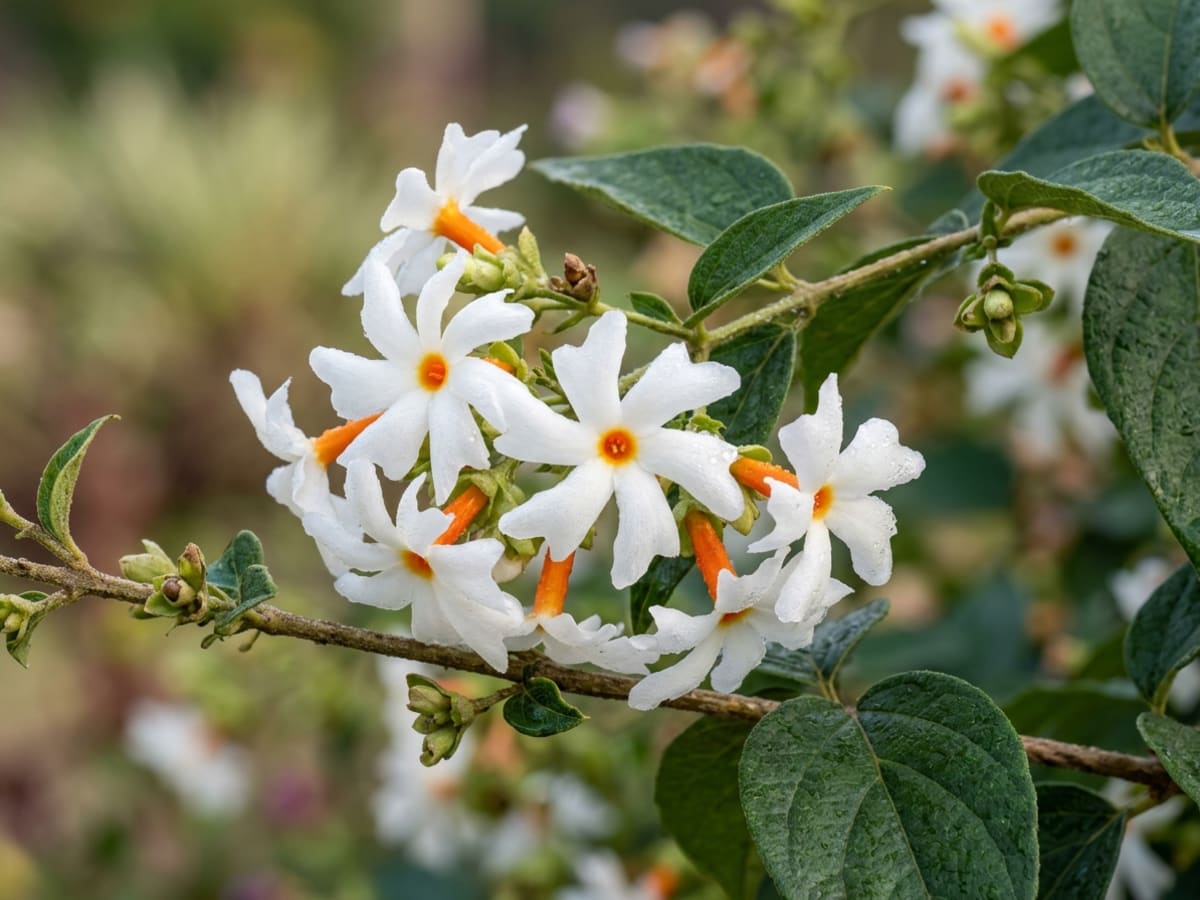
Botanically classified within the Oleaceae (olive) family, Parijatha is distinct from true jasmines (Jasminum spp.), although it shares their intense, sweet perfume. Under standard open-ground garden conditions in Bengaluru's moderate climate, Nyctanthes arbor-tristis grows as a large, multi-stemmed perennial shrub or a graceful small tree reaching 3 to 8 meters (10 to 25 feet) in height, featuring quadrangular branches and rough, sandpapery ovate leaves.
Each blossom measures 2 to 3 cm across, featuring 5 to 8 pure snow-white pinwheel corolla lobes radiating from an intense, saffron-orange cylindrical tube at its heart. Unlike diurnal flowers that seek the heat of the midday sun, Parijatha blossoms unfurl in late twilight as the sun sinks below the horizon, releasing their peak aromatic oils throughout the cool night hours.
With the very first rays of sunrise, the blossoms detach cleanly from the branches and drift to the earth. Rather than viewing fallen flowers as litter, traditional Indian garden design celebrates this natural carpet of blooms, which can be gathered cleanly from clean mats or grass beneath the canopy.
2. The Enchanting Fragrance & Ideal Garden Applications

The volatile essential oils of Parijatha produce an exotic, calming aroma—subtle during the heat of midday, but delightfully pervasive from dusk until dawn. In Bengaluru's breezy evenings (especially between August and December when ambient night temperatures hover pleasantly between 18°C and 22°C), placing a garden bench, swing, or veranda seating near a Parijatha tree creates an enchanting sensory retreat after a long workday.
In Bengaluru homes, Parijatha is ideally placed near outdoor patios where night breezes carry its aroma through open windows; in spiritual north-eastern courtyard zones; along sunny garden boundaries to support nocturnal pollinators like hawk moths; and in deep terrace planters forming a fragrant moon garden sanctuary.
3. Parijatha in Indian Heritage, Mythology & Sacred Pooja
Parijatha is revered in Hindu scriptures as one of the 14 celestial treasures (ratnas) that emerged from the churning of the cosmic ocean (Samudra Manthan). Lord Indra planted it in the heavenly gardens of Amaravati, from where Lord Krishna brought it down to earth to fulfill the wishes of both his consorts, Queen Satyabhama and Queen Rukmini.
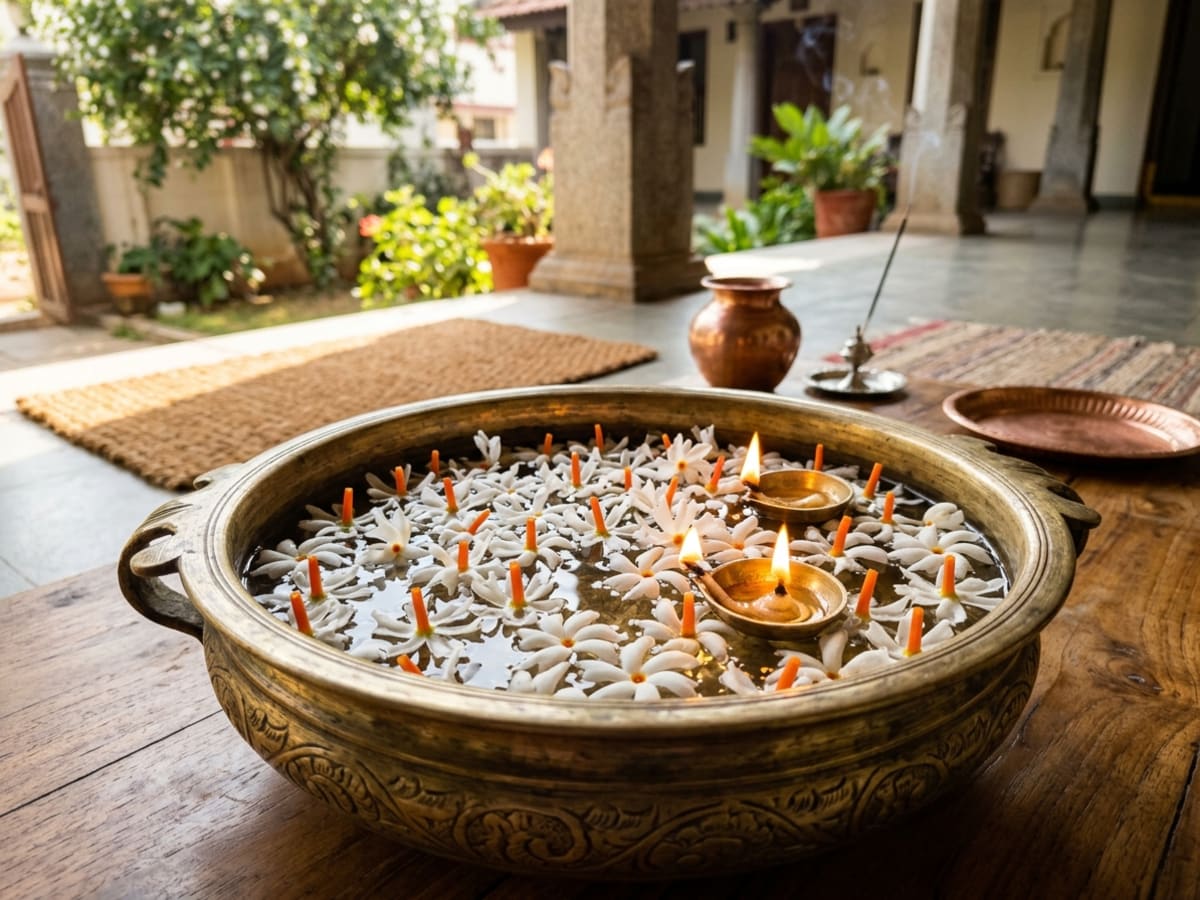
In Hindu puja traditions, flowers that have fallen onto the soil are strictly considered nirmalya (unfit for offering to deities). Parijatha is the sacred exception to this rule. Because its divine blossoms naturally detach at daybreak, devotees traditionally spread clean cotton sheets or freshly washed brass plates beneath the tree canopy to collect the fallen blooms for daily morning pooja to Lord Krishna, Lord Vishnu, and Goddess Lakshmi.
4. How to Grow Parijatha in Bengaluru: Sunlight, Soil & Nutrition
Parijatha thrives exceptionally well in Bengaluru's elevation-buffered climate. For best growth, choose a location receiving 4 to 6 hours or more of direct sunlight daily. Planting in shade results in sparse foliage, elongated leggy stems, and drastically reduced flower bud formation.
For Bengaluru soil preparation, mix 40% local red loam soil with 30% organic vermicompost, 20% coco peat, and 10% perlite or coarse river sand. This ensures optimum aeration and prevents the heavy red clay from packing hard around root balls during monsoons.
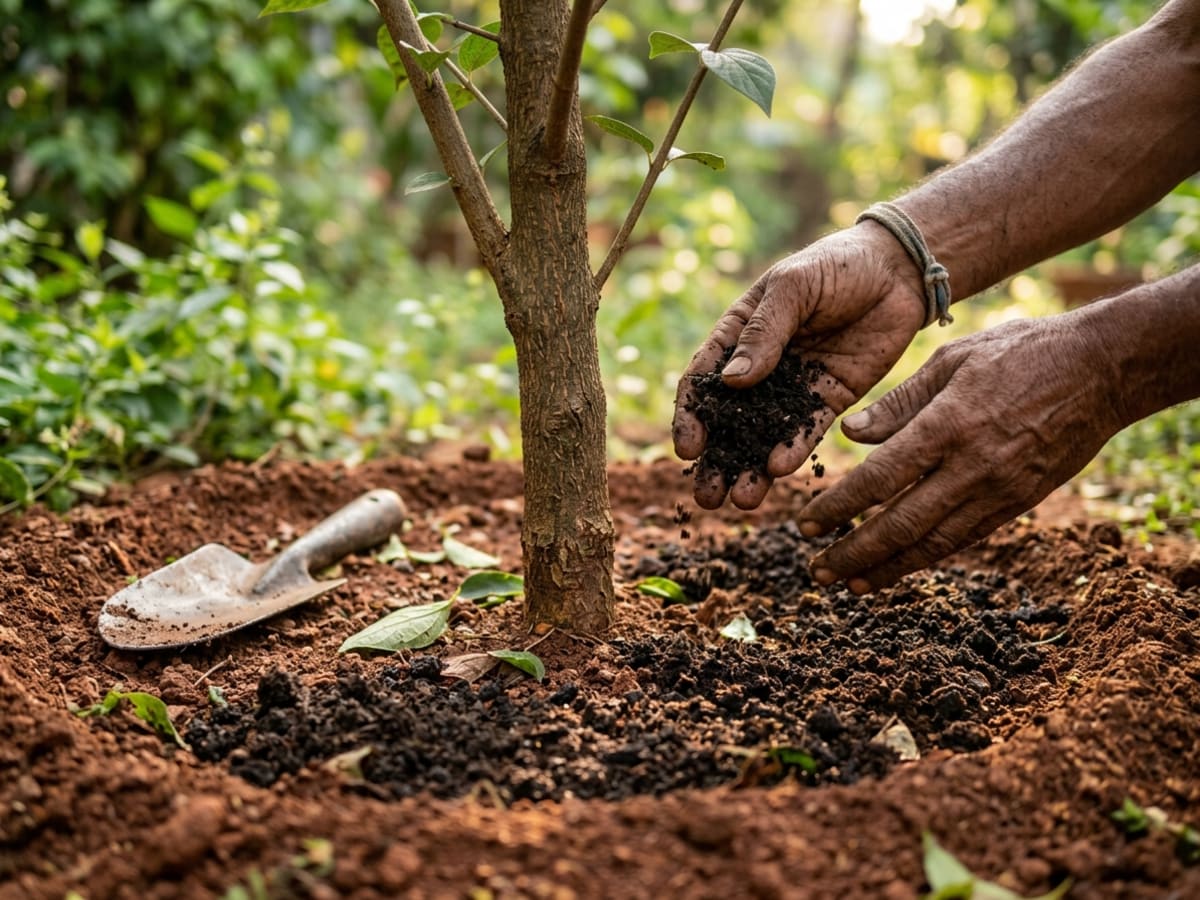
Fertilization routine: Mix 1 to 2 kg of aged farmyard manure or vermicompost into the planting pit. For young plants, topdress with 1 to 2 kg of compost every 6 months. For mature trees, apply 3 to 5 kg of well-decomposed organic manure around the drip line twice annually (May and October). Prune lightly in late winter (January–February) after the main flowering season to clear dead wood and stimulate healthy spring growth.
5. Growing Parijatha in Balcony Pots & Containers
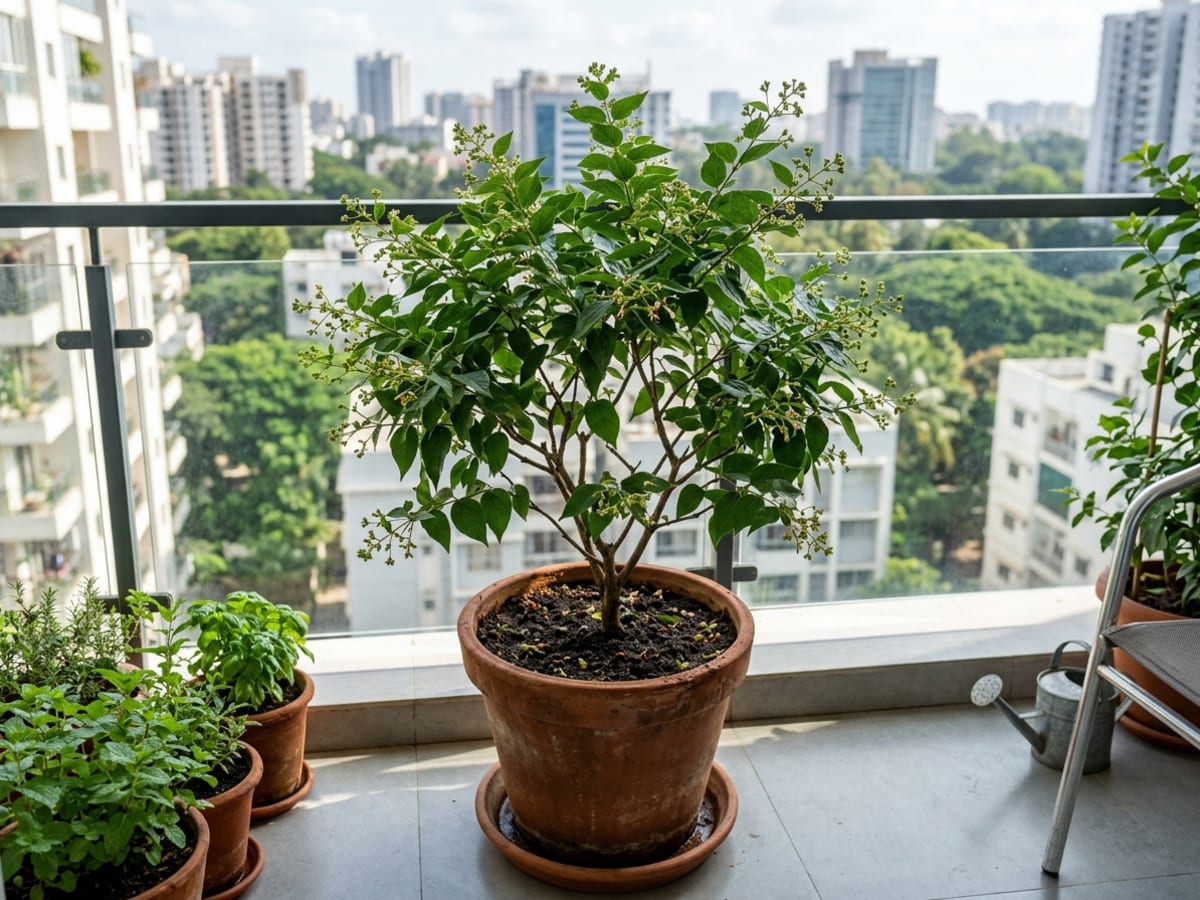
Parijatha adapts surprisingly well to container cultivation on Bengaluru apartment balconies. Select a large, sturdy terracotta or ceramic pot (at least 16 to 20 inches in diameter) equipped with ample drainage holes. Use a porous, well-aerated potting mix containing red soil, coco peat, and vermicompost.
Position the planter on an East or South-facing balcony receiving generous direct sun. Prune selectively after flowering to maintain a manageable compact shape, and repot every two years with fresh nutrient-rich soil to keep the root system vigorous.
6. When Does Parijatha Flower in Bengaluru?
In Bengaluru and across Karnataka, Parijatha typically begins budding in late July and flowers prolifically from August through November and December. Peak flowering occurs during the post-monsoon months (August–November) when pleasant night chills trigger dense clusters of aromatic star blossoms along all branch terminals.
Bring Home Sacred Parijatha with Happy Greenery
Bring home the celestial fragrance and timeless beauty of Parijatha, and let your Bengaluru garden tell a story of natural elegance, devotion, and peaceful evening charm. Happy Greenery delivers healthy, nursery-fresh Parijatha saplings and organic potting supplies directly to your doorstep across Bengaluru.
Explore Flowering & Sacred Plants at Happy Greenery Store →
Looking for healthy indoor & outdoor plants in Bengaluru?
Explore our curated nursery collection delivered safe and fresh to your doorstep across Bangalore.
Explore Plant Shop →
Comments
Join the Conversation
Sign in with Google to post comments, ask questions, or reply to other readers.
No comments yet. Share your thoughts!