Plants Suitable for Hospitals: Creating Healing, Calm and Healthy Green Spaces
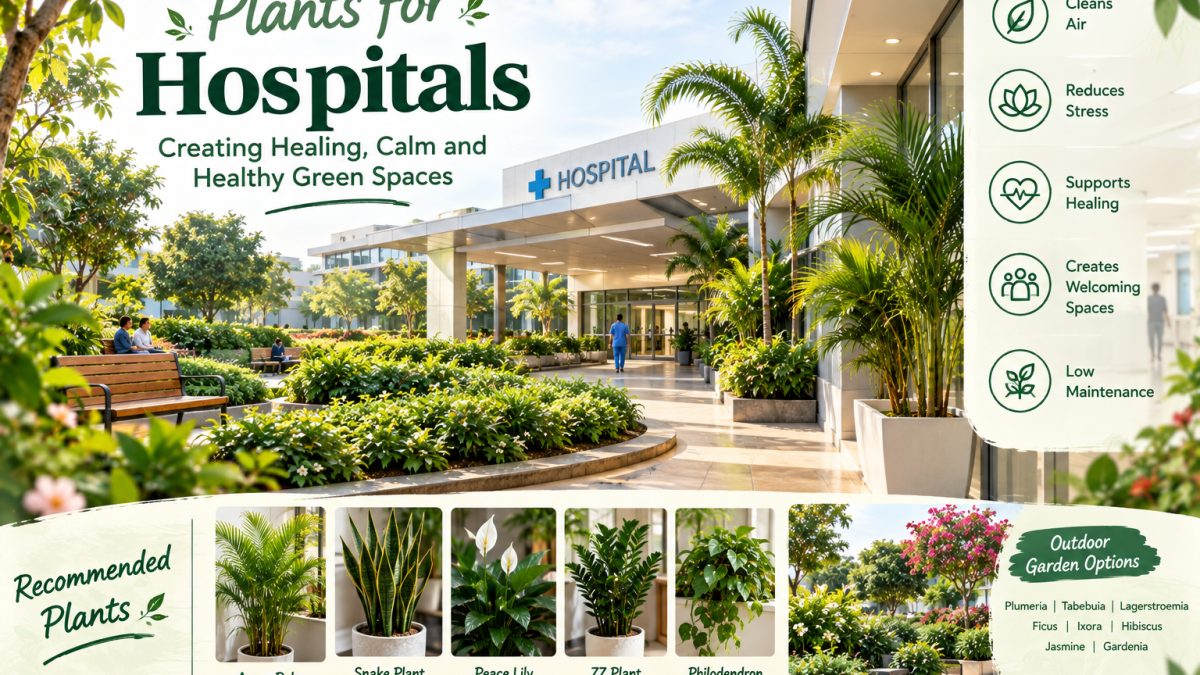
Hospitals are fundamentally places of healing, diagnosis, recovery, and deep human emotion. Patients, concerned family members, doctors, and nursing staff spend countless intense hours navigating sterile clinical environments often dominated by cold white tile, stainless steel equipment, and fluorescent overhead lights. In modern evidence-based healthcare architecture, biophilic design—the deliberate integration of living plants and natural elements into healthcare environments—has transitioned from an optional aesthetic luxury to a clinically proven therapeutic necessity.
Decades of clinical research, pioneered by environmental psychologist Roger Ulrich, demonstrate that patients with direct visual contact with living greenery experience measurably lower blood pressure, reduced post-operative stress hormone levels (cortisol), decreased need for potent pain analgesics, and shorter hospital stays. However, landscaping within healthcare facilities requires rigorous botanical discernment. Plants must be hygienic, low-pollen, non-toxic, thornless, non-shedding, and capable of thriving in air-conditioned microclimates without harboring pests or requiring standing water that could breed mosquitoes in tropical Bengaluru.
In this expert guide, we examine the best indoor and outdoor plants suited for hospitals, clinics, diagnostic centers, and wellness facilities across Bengaluru’s premier healthcare hubs—including Bannerghatta Road, Old Airport Road, Hebbal, and Whitefield.
Essential Criteria for Selecting Hospital Plants in Bengaluru
Before placing a single planter in a healthcare facility, landscape committees and hospital administrators must ensure that selections comply with medical-grade environmental standards:
• Zero or Low Airborne Pollen (Hypoallergenic): Respiratory wards, oncology units, and general patient lounges must be shielded from wind-borne pollen that could trigger asthma, allergic rhinitis, or immunocompromised reactions.
• No Thorns, Spines, or Toxic Sap: Paths navigated by elderly patients, children, and wheelchair users must be free of sharp spines (such as cacti or bougainvillea) and irritant milky latex sap.
• Sterile Soilless Growing Media: Indoor hospital plants should ideally be potted in pasteurized cocopeat, pumice, and LECA clay pebbles rather than untreated garden soil to eliminate mold spores (Aspergillus) and soil-borne microbes.
• Clean Foliage Without Leaf Drop: Deciduous trees or messy shedding shrubs create slip hazards on polished hospital floors and require excessive janitorial maintenance.
• Sub-Irrigation Self-Watering Pots: Prevent standing stagnant water in saucers to comply with BBMP dengue and mosquito control protocols.
1. Areca Palm (Dypsis lutescens) – Natural Humidifier for Grand Atriums & Entrances
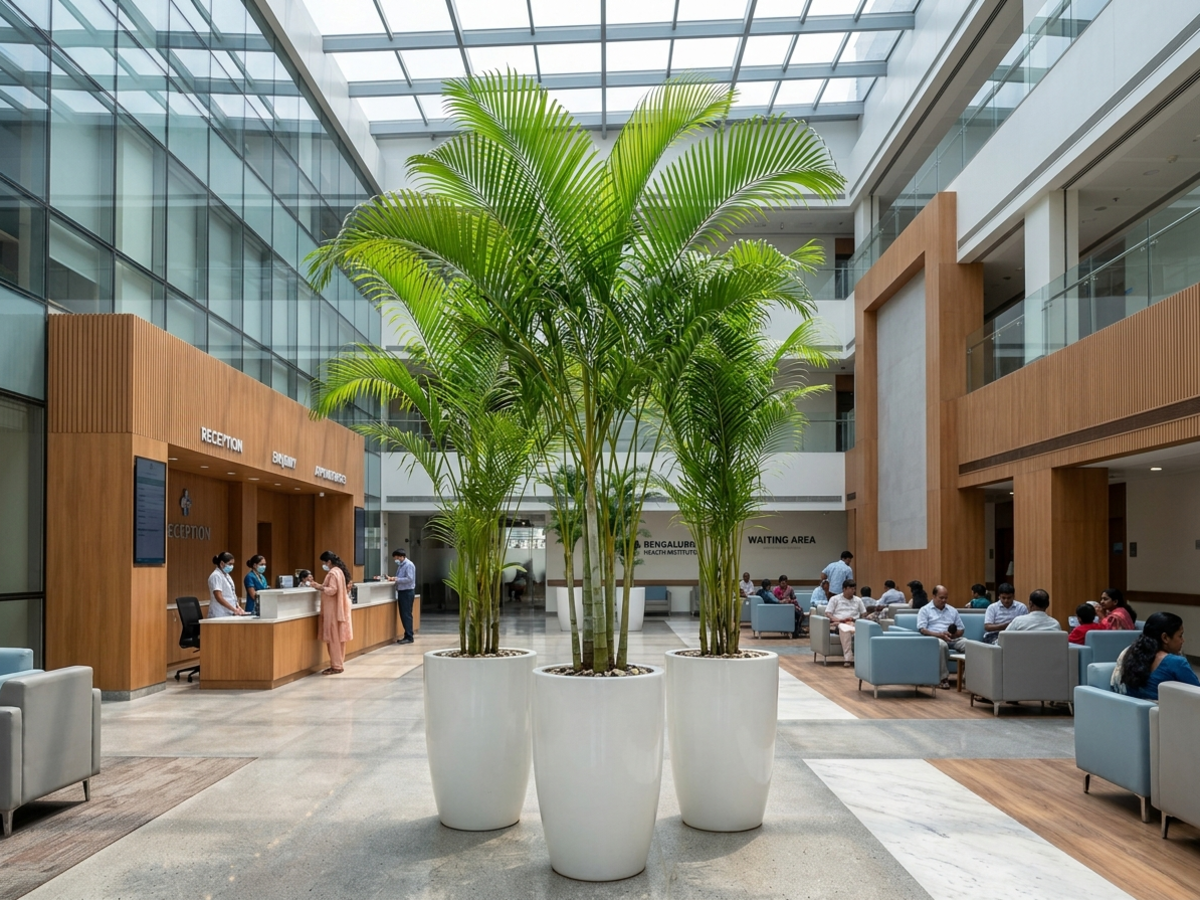
Botanical Name: Dypsis lutescens | Best Location: Multi-story hospital atriums, grand main reception lobbies, OPD waiting lounges
Hospital reception areas set the emotional tone for arriving patients and anxious families. Areca Palm is celebrated worldwide for its lush, feather-shaped arching fronds that introduce immediate warmth, natural dignity, and biophilic reassurance without obstructing pedestrian flow or security sightlines.
From a physiological standpoint, Areca Palm is one of the highest-rated natural plant humidifiers. Continuous central air conditioning in Bengaluru hospitals tends to dry out ambient indoor air, causing dry eyes, throat irritation, and vocal fatigue for medical personnel. A mature 6-foot Areca Palm transpires nearly 1 liter of pure moisture vapor into the atmosphere every 24 hours, naturally stabilizing indoor humidity and settling airborne dust particles.
• Light Requirement: Bright, filtered natural daylight through skylights or large facade windows.
• Air Quality Benefit: Filters airborne xylene, toluene, and formaldehyde commonly emitted by cleaning disinfectants and synthetic building carpets.
2. Snake Plant (Dracaena trifasciata) – The Indestructible, Sterile Air Purifier
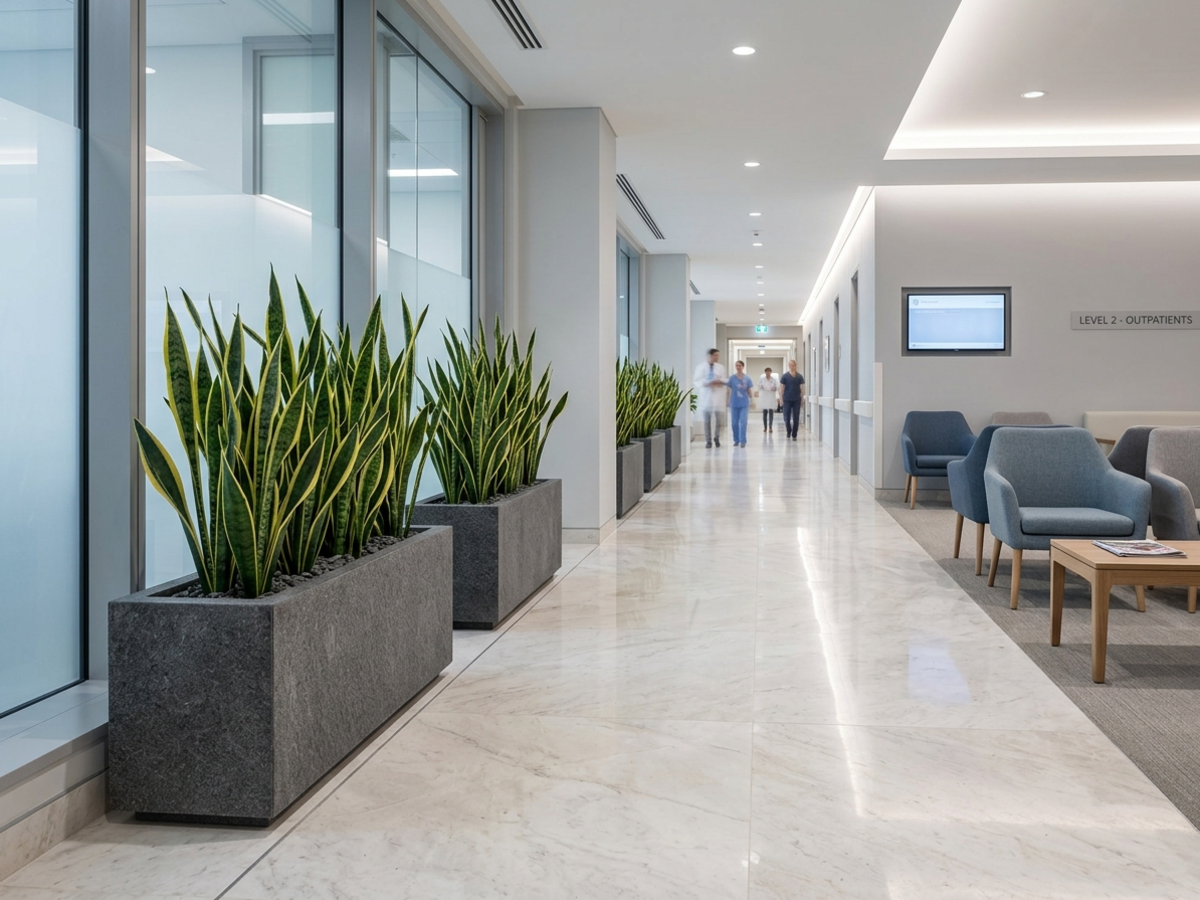
Botanical Name: Dracaena trifasciata (formerly Sansevieria trifasciata) | Best Location: Corridors, nursing stations, diagnostic waiting zones, doctor consultation chambers
When space is at a premium and hygiene is non-negotiable, Snake Plant is the gold standard for healthcare facilities. Its rigid, sword-like vertical foliage grows strictly upright within a narrow footprint, ensuring that gurneys, wheelchairs, and portable medical carts can pass unimpeded down busy clinical hallways.
Unlike many leafy houseplants that shed foliage when stressed, Snake Plants retain their waxy, pristine leaves for years without dropping debris. They thrive effortlessly under continuous fluorescent hospital lighting and endure weeks of dry conditions without wilting. Crucially, Snake Plants perform Crassulacean Acid Metabolism (CAM)—absorbing carbon dioxide and releasing fresh oxygen during the night—making them safe and restorative around 24-hour nursing stations.
• Light Requirement: Extremely adaptable; tolerates low artificial fluorescent lighting up to bright filtered sun.
• Maintenance: Minimal; requires light watering only once every 14 to 20 days.
3. Peace Lily (Spathiphyllum) – Gentle Serenity & Clinical White Blooms
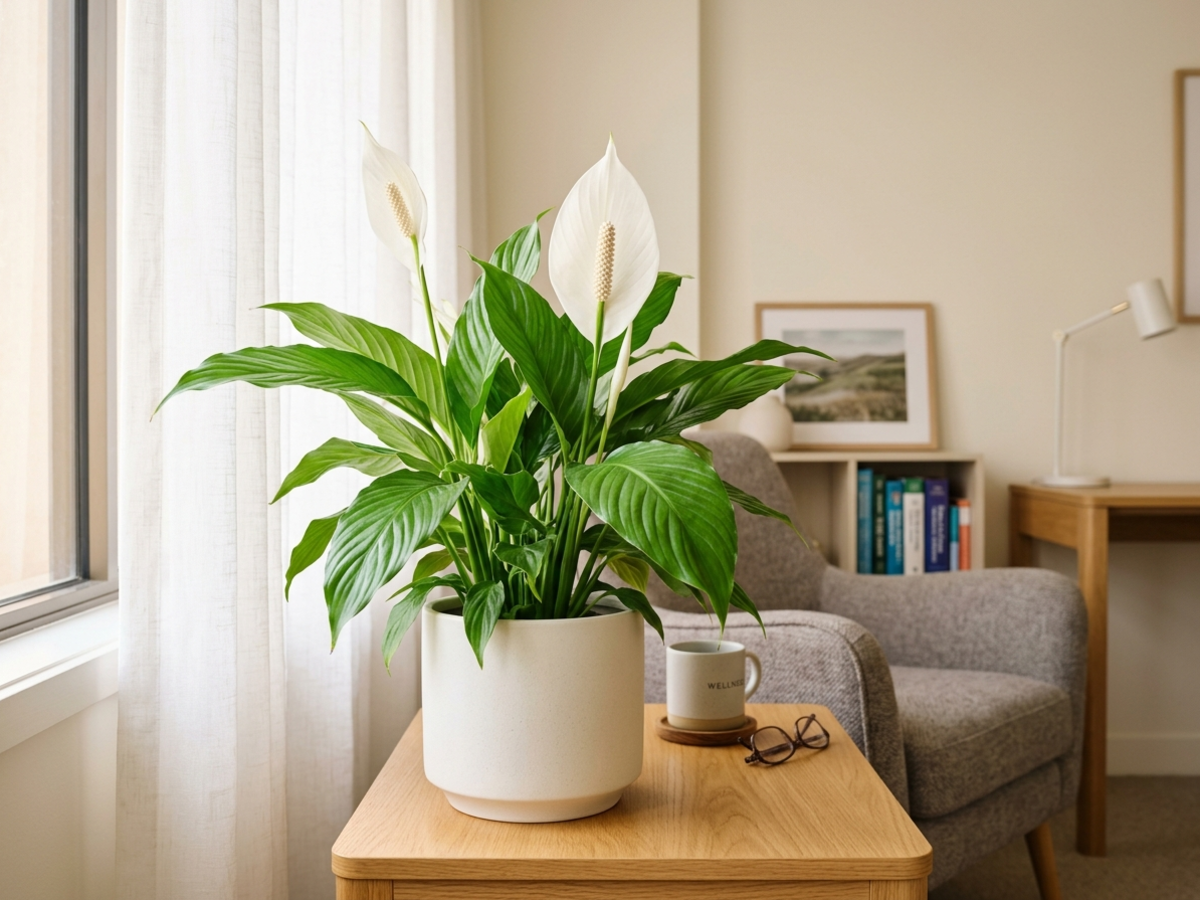
Botanical Name: Spathiphyllum wallisii | Best Location: Doctor consultation suites, executive wellness lounges, patient counseling rooms, quiet recovery corners
Few plants embody peace, purity, and solace as gracefully as the Peace Lily. Its deep emerald-green arching foliage is crowned with distinctive, sculpted white spathes that bring gentle floral elegance into clinical settings without releasing heavy perfumes or loose, messy pollen dust.
In medical consulting rooms where emotionally challenging health conversations frequently occur, the soft organic presence of a Peace Lily creates a calming psychological anchor. NASA’s landmark Clean Air Study recognized Spathiphyllum as one of the most powerful natural purifiers of benzene, trichloroethylene, and ammonia—compounds often associated with commercial hospital sanitizers.
• Light Requirement: Moderate indirect light; never place in direct harsh sunlight.
• Watering: Water when the top layer of potting medium dries; leaves provide a clear visual cue by drooping slightly when thirsty.
4. ZZ Plant (Zamioculcas zamiifolia) – Ultra-Clean, Indestructible Administrative Greenery
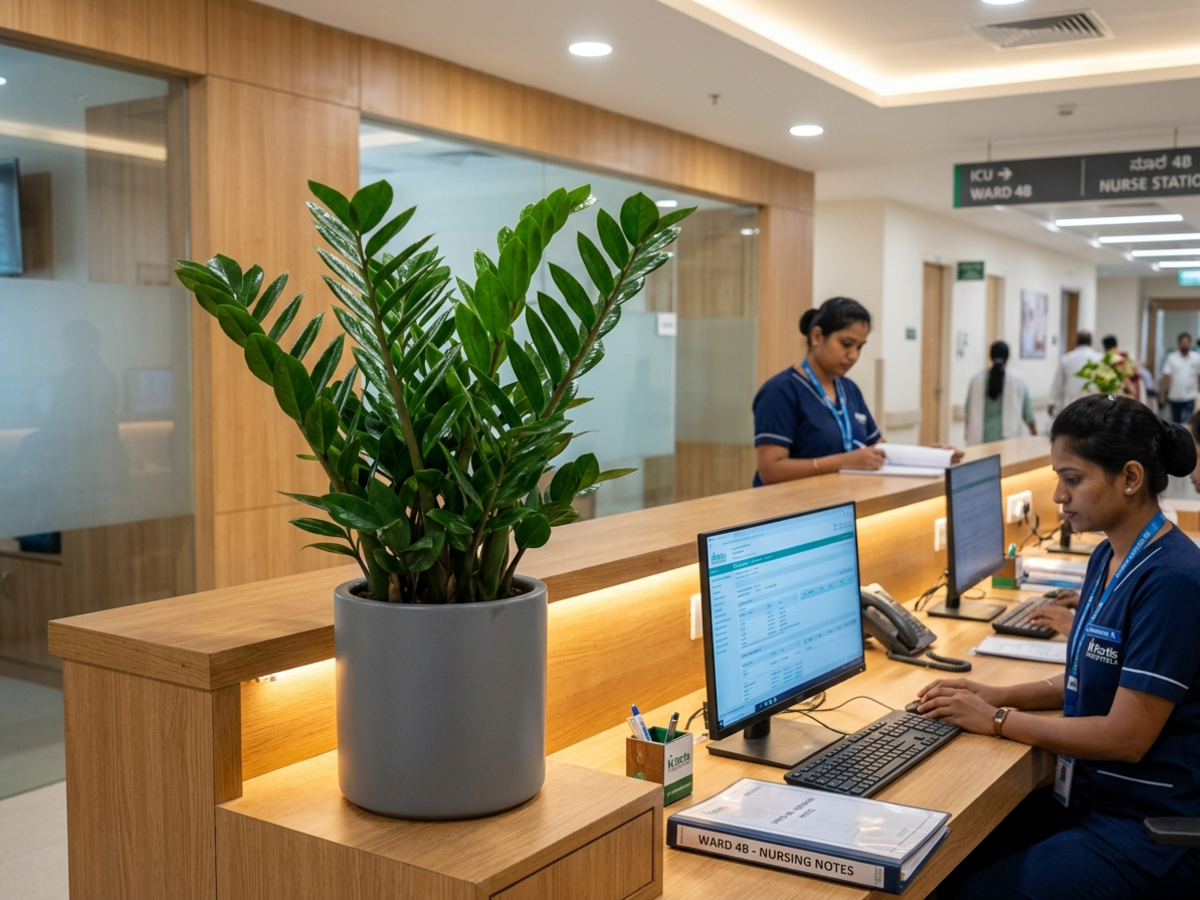
Botanical Name: Zamioculcas zamiifolia | Best Location: Nurse stations, administrative reception desks, pharmacy counters, windowless basement diagnostic clinics
The ZZ Plant looks so immaculate and waxy that visitors often touch its leaves to verify whether it is real. Its thick, glossy deep-green leaflets reflect ambient light, infusing life into windowless diagnostic imaging centers (MRI/CT suites), billing counters, and pharmacy waiting lines where natural light is scarce.
Equipped with large underground potato-like rhizomes that store water, the ZZ Plant is virtually bulletproof against irregular maintenance. It produces zero airborne allergens, sheds no leaf litter, and maintains a disciplined, architectural silhouette that fits effortlessly on countertops and reception dividers.
• Light Requirement: Low to bright indirect artificial lighting; flourishes even in windowless zones.
• Watering: Extremely low; allow soil to dry out completely between waterings.
5. Philodendrons (Xanadu & Ceylon) – Non-Shedding Tropical Foliage for Courtyards
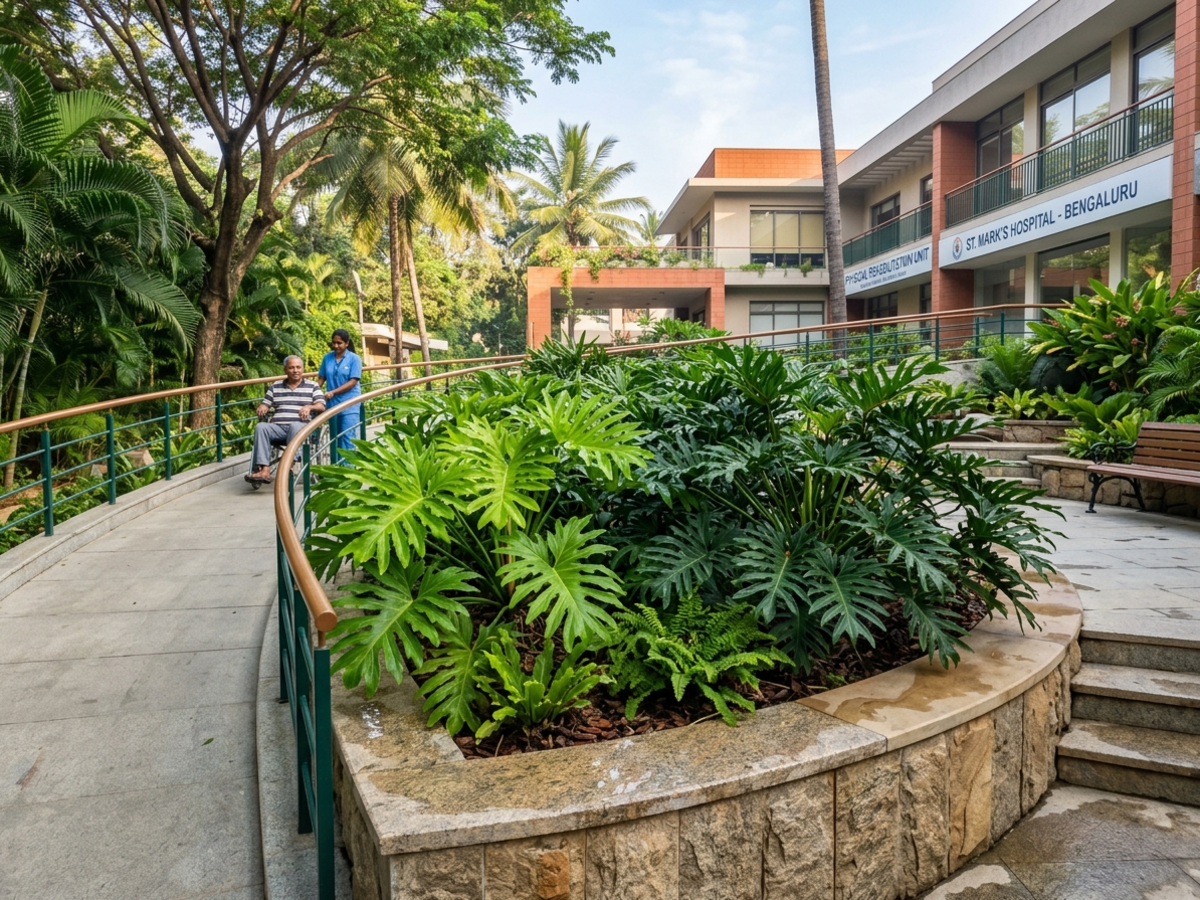
Botanical Names: Thaumatophyllum xanadu (Philodendron Xanadu) & Philodendron erubescens | Best Location: Internal landscaped courtyards, rehabilitation ramps, covered terrace gardens
For central lightwells, semi-open courtyards, and physical rehabilitation terraces, Philodendron Xanadu provides rich, lush rainforest character without aggressive climbing habits. Its deeply dissected, glossy scalloped leaves form broad, mounding clumps that soften the rigid, monolithic concrete walls common to large hospital complexes.
Unlike invasive species with aggressive roots that disrupt masonry, Philodendrons have compact root zones that thrive in raised stone planter beds. In Bengaluru’s year-round temperate climate, they remain evergreen, lush, and completely free of seasonal bareness.
• Light Requirement: Dappled morning sunlight to bright partial shade.
• Landscape Function: Groundcover shrub layer in raised therapeutic hospital garden beds.
6. Plumeria & Tabebuia – Gentle Flowering Canopy Trees for Healing Gardens
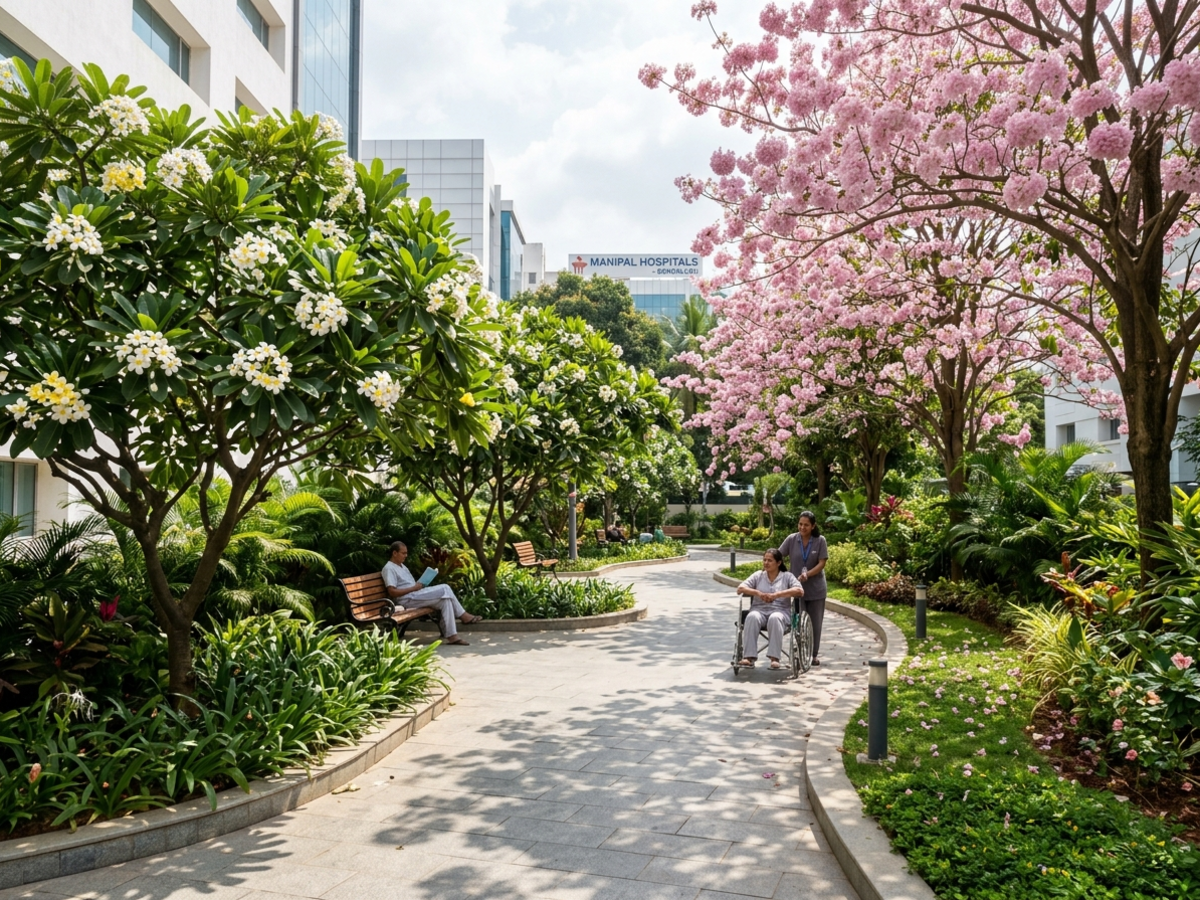
Botanical Names: Plumeria alba (White Frangipani / Champa) & Handroanthus chrysotrichus / Tabebuia rosea | Best Location: Outdoor healing gardens, patient walking tracks, perimeter lawns, quiet seating gazebos
Outdoor hospital spaces should provide solace, fresh air, and an escape from clinical sounds. Plumeria (Champa) is deeply rooted in Indian cultural serenity, offering sculptural branches topped with spiral white-and-yellow petals that carry a delicate, calming fragrance. Its canopy casts light, non-stifling shade that encourages post-operative mobility and gentle outdoor rehabilitation walks.
Paired alongside Bengaluru’s iconic Pink Tabebuia (*Tabebuia rosea*), which erupts in breathtaking candy-pink floral clouds between January and March, these ornamental trees elevate hospital campuses into uplifting botanical parks, providing visual joy to patients gazing down from multi-story recovery ward windows.
• Canopy Form: Non-invasive root systems safe near underground medical gas lines and paved walkways.
• Maintenance: Highly drought-resilient once established in Bengaluru’s native red loam.
7. Dwarf Ixora (Ixora coccinea) – Compact Sensory Color Without Pungent Scent
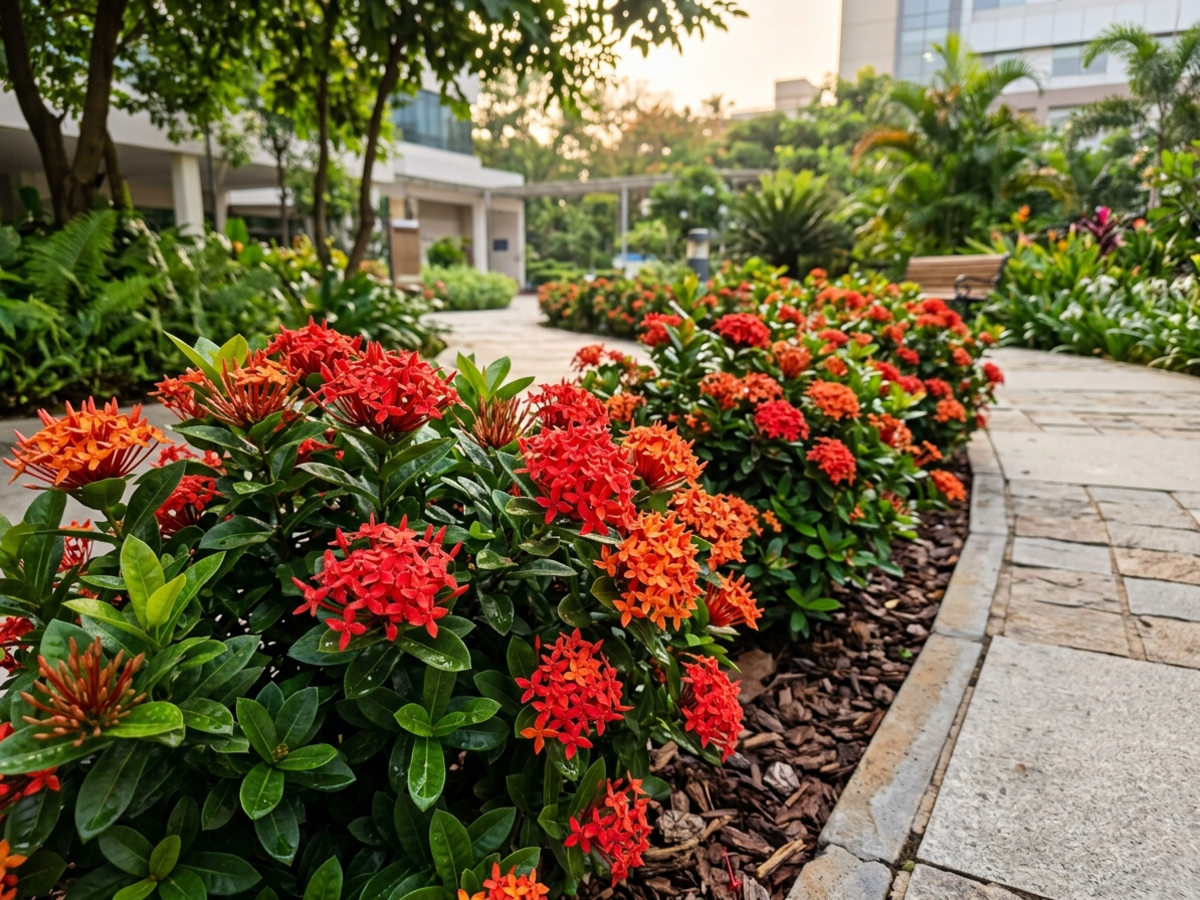
Botanical Name: Ixora coccinea (Dwarf cultivars) | Best Location: Pathway edging, sensory rehabilitation courtyards, chemotherapy day-care garden borders
While color therapy is critical for lifting spirits, heavily fragrant flowers can trigger severe nausea in oncology patients receiving chemotherapy or individuals recovering from anesthesia. Dwarf Ixora is the ideal botanical solution: it produces dense, spherical clusters of brilliant scarlet, orange, coral, and canary yellow florets that are completely fragrance-free.
Its compact, glossy evergreen foliage stays neat and tidy at 2 to 3 feet in height without spreading wildly. It tolerates frequent pruning into structured hedge borders along wheelchair walkways and flowers virtually year-round in Bengaluru.
• Light Requirement: Full Bengaluru sun to light afternoon shade.
• Clinical Advantage: Odor-free, non-allergenic nectar blooms safe for chemotherapy and geriatric recovery wings.
8. Lady Palm (Rhapis excelsa) – Acoustic Buffer & Traffic Noise Shield
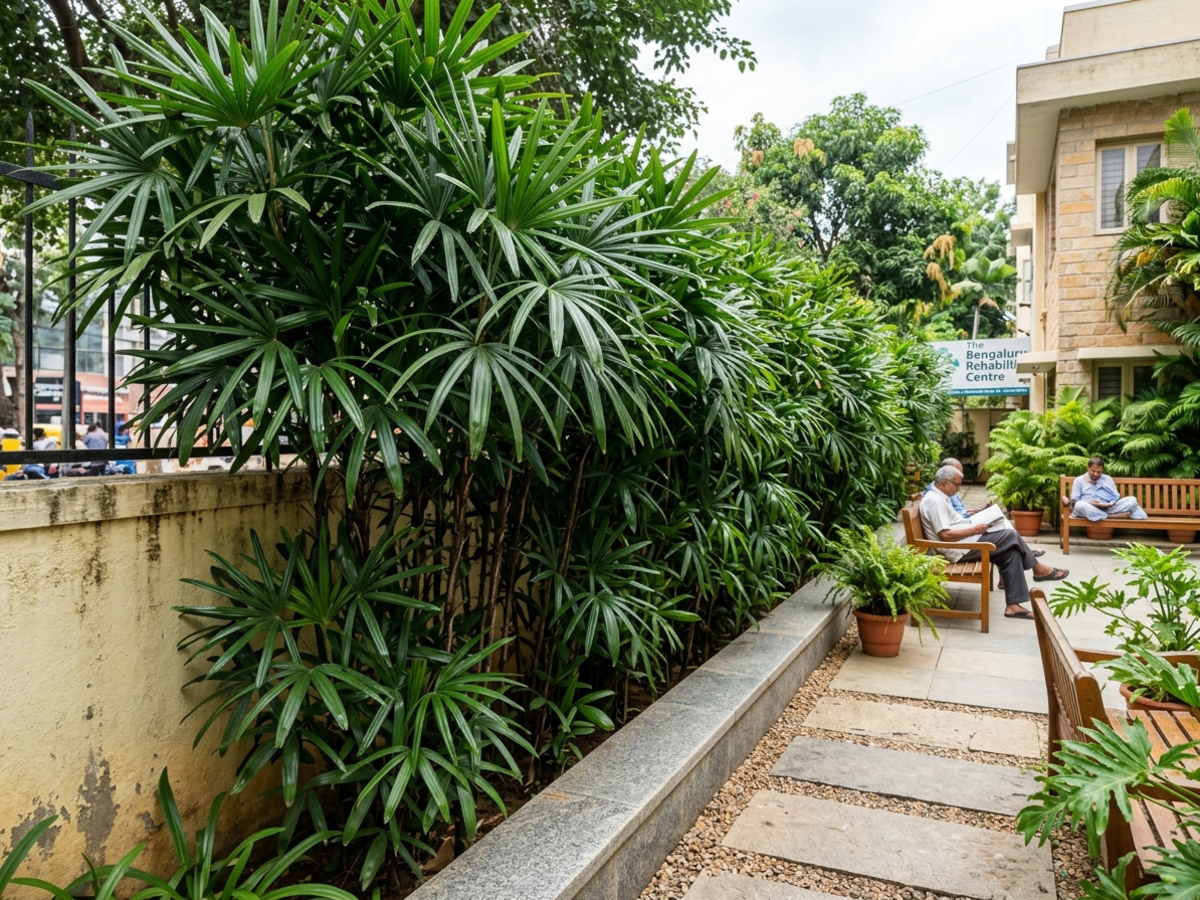
Botanical Name: Rhapis excelsa | Best Location: Boundary walls facing busy arterial roads, outdoor dining pavilions, quiet reflection alcoves
Major hospitals in Bengaluru are typically positioned along heavily congested arterial roads—such as Hosur Road, Bannerghatta Road, or Outer Ring Road—where continuous siren blares, honking, and engine roar generate acoustic distress. Rhapis excelsa (Lady Palm) is an exceptional biological sound barrier.
Its multi-stemmed bamboo-like canes produce dense fans of dark emerald, ribbed foliage from ground level up to 8 feet high. When planted in continuous linear rows along boundary walls, the overlapping leaf layers scatter and absorb high-frequency street noise while screening out passing traffic views, establishing an oasis of acoustic tranquility.
• Light Requirement: Partial shade to bright indirect light.
• Growth Rate: Slow and disciplined; requires trimming only once or twice a year.
Designing Therapeutic Healing Gardens: Guidelines for Healthcare Architects
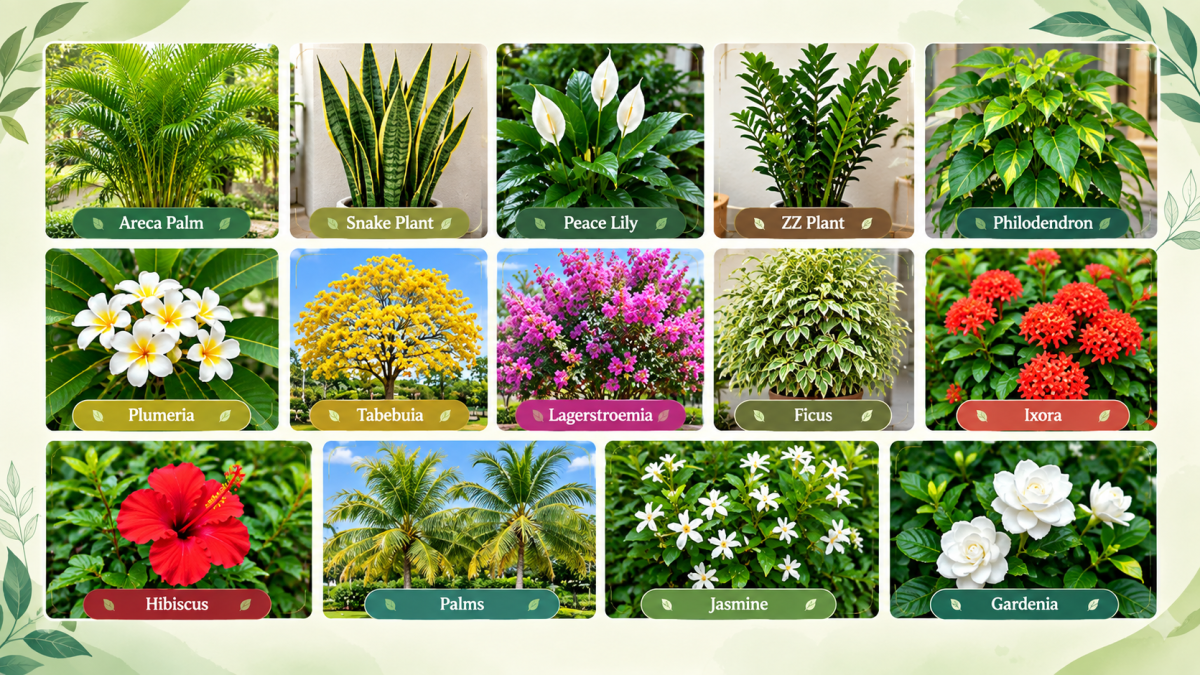
A truly successful hospital landscape is not simply an ornamental garden—it is a functional medical asset designed to support holistic recovery:
1. 100% Universal Wheelchair Accessibility: Pathway gradients should not exceed 1:20 (5%), surfaced with smooth, non-slip brushed Sadarahalli granite or pavers without open gaps that could catch IV drip wheels or walking canes.
2. High-Seat Benches with Backrests and Armrests: Benches must include sturdy armrests to assist frail and orthopedic patients when standing up, shaded under Tabebuia or Plumeria canopies.
3. Mindful Zoning for Fragrant Flora: Mildly scented plants like Star Jasmine (*Trachelospermum jasminoides*) or Dwarf Gardenia should be confined to open-air sensory meditation plazas rather than directly adjacent to inpatient ward windows.
4. Night-Time Glare-Free Illumination: Incorporate warm, low-level pathway bollards (3000K) to allow evening strolls without blinding glare affecting patients on sedative medications.
Hospital Plant Selection Guide for Bengaluru Facilities
Use this quick reference matrix when planning landscape improvements across hospital zones:
| Plant Name | Botanical Name | Zone / Placement | Light Needs | Healthcare Benefit | |---|---|---|---|---| | **Areca Palm** | *Dypsis lutescens* | Reception Atriums, Entrances | Bright Indirect | Natural air humidifier, filters VOCs | | **Snake Plant** | *Dracaena trifasciata* | Corridors, Nursing Stations | Low to Bright Light | Zero pollen, 24/7 oxygen, compact footprint | | **Peace Lily** | *Spathiphyllum* | Doctor Chambers, Lounges | Moderate Shade | Calming white blooms, high chemical filtration | | **ZZ Plant** | *Zamioculcas zamiifolia* | Nurse Counters, Basements | Low Light | Sterile waxy appearance, drought proof | | **Philodendron** | *P. xanadu / Ceylon* | Rehabilitation Courtyards | Dappled Shade | Non-shedding tropical canopy, non-invasive roots | | **Plumeria / Champa** | *Plumeria alba* | Recovery Walkways, Lawns | Full Sun | Gentle fragrant shade, cultural emotional solace | | **Dwarf Ixora** | *Ixora coccinea* | Sensory Garden Borders | Full Sun to Part Shade | Vibrant color, zero scent (chemo-safe) | | **Lady Palm** | *Rhapis excelsa* | Boundary Walls, Courtyards | Partial Shade | Dense acoustic sound buffer against traffic noise |
Source Medical-Grade Biophilic Plants with Happy Greenery
Whether you are designing a tranquil healing garden for a multi-specialty healthcare facility, refreshing a doctor's clinic waiting lounge, or introducing calming greenery into a wellness center, Happy Greenery provides healthy, acclimatized indoor foliage plants, outdoor landscape trees, and premium soilless substrates across Bengaluru.
Explore Healthcare & Biophilic Plants at Happy Greenery Store
Contact our horticulture specialists for institutional plant procurement, bulk planter installations, and ongoing landscape care services in Bengaluru!
Looking for healthy indoor & outdoor plants in Bengaluru?
Explore our curated nursery collection delivered safe and fresh to your doorstep across Bangalore.
Explore Plant Shop →
Comments
Join the Conversation
Sign in with Google to post comments, ask questions, or reply to other readers.
No comments yet. Share your thoughts!