10 Best Plants for Vertical Garden Walls in Bengaluru (Apartments & Villas Guide)
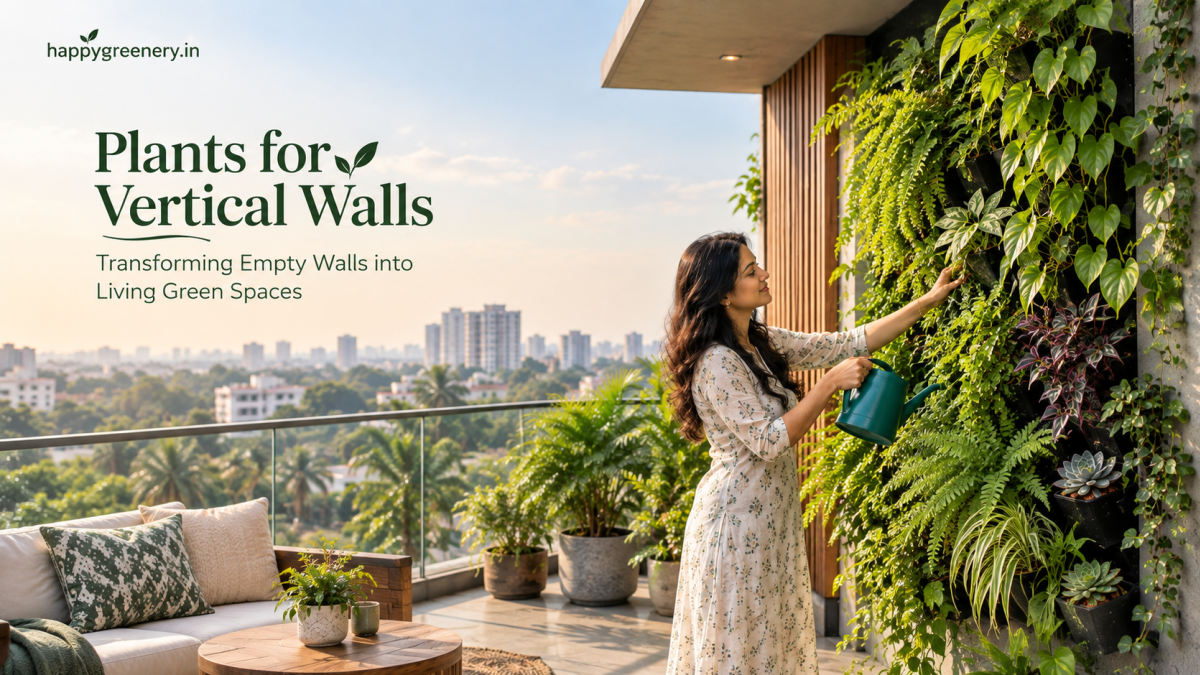
As urban Bengaluru continues its rapid vertical ascent—with sleek high-rise condominiums, gated villa communities, and compact studio apartments dominating neighborhoods from Whitefield and Bellandur to Indiranagar and Hebbal—garden space has become an ultra-precious luxury. Traditional horizontal gardening demands square footage that most modern city dwellers simply do not have. This space squeeze has sparked a green design revolution across Silicon Valley of India: the living vertical garden wall.
Vertical walls allow urban homeowners, cafes, boutique studios, and corporate offices to convert blank concrete partitions, balcony railings, and feature walls into lush, air-purifying botanical tapestries. Beyond undeniable visual elegance, living walls act as natural thermal insulators—cooling concrete surfaces during blistering Bengaluru summers—while dampening street traffic noise and infusing fresh oxygen into indoor living quarters.
However, succeeding with a vertical wall requires careful botanical curation. Unlike plants settled into deep garden earth, vertical wall specimens live within restricted root pockets (modular plastic cups, felt pouches, or geotextile panels), experience rapid moisture drainage, and encounter diverse microclimates ranging from breezy high-rise balconies to shaded interior corridors. In this comprehensive guide, we reveal the 10 best plants engineered by nature to thrive in Bengaluru’s vertical garden systems.
Key Factors for Vertical Wall Success in Bengaluru
Before selecting species, consider the three environmental pillars unique to Bengaluru living walls:
1. Light Orientation: East-facing balconies receive gentle morning sun ideal for foliage and ferns. West-facing balconies endure intense, baking afternoon heat requiring drought-hardy succulents or tough creepers. South-facing walls offer bright all-day light, while north-facing or interior walls demand shade-tolerant tropicals.
2. Lightweight Soil Mix: Heavy red garden soil will compact, suffocate roots, and overburden wall fixings. Always use an airy, porous growing medium composed of 40% cocopeat, 30% vermicompost, 15% perlite, and 15% coarse pumice/expanded clay balls.
3. Automated Drip Irrigation: Because vertical modules dry out rapidly from wind and drainage gravity, a simple automated drip line on a battery timer ensures consistent hydration without daily manual hauling.
1. Epipremnum aureum (Money Plant / Golden Pothos) – The Undisputed Vertical Champion
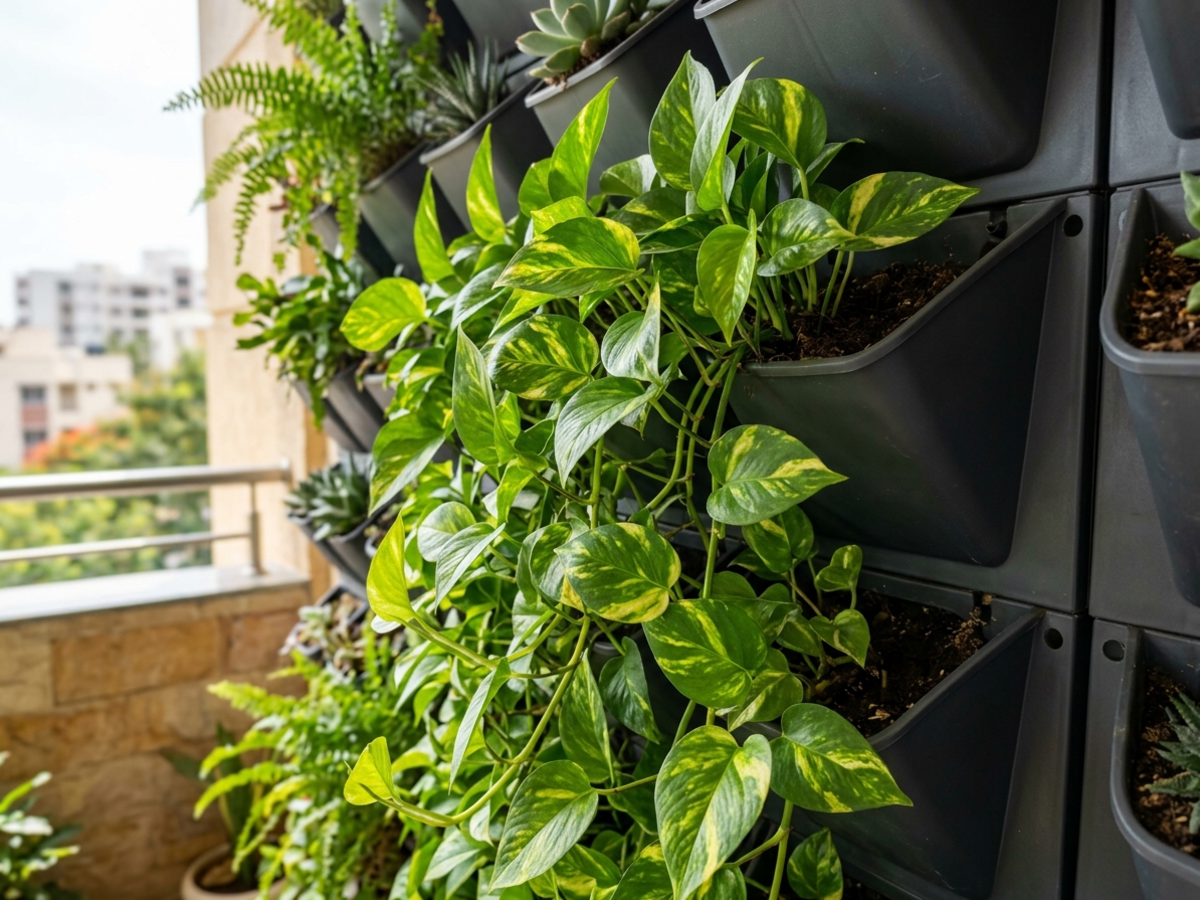
Botanical Name: Epipremnum aureum | Ideal Placement: Indoor living walls, shaded balconies, semi-shaded entryways
If there is one plant that guarantees instant confidence and rapid coverage for any beginner installing a vertical wall in Bengaluru, it is the Money Plant. Renowned for its vigorous creeping and trailing habit, Golden Pothos quickly knits modular plastic cups into an uninterrupted emerald-and-gold carpet. Its glossy heart-shaped leaves adapt effortlessly to restricted root pouches, tolerating occasional watering oversights with remarkable resilience.
Money plants thrive in bright indirect light and filtered courtyard shade, making them the absolute staple for interior green walls, covered apartment balconies, and corporate reception backdrops across Bengaluru.
• Light: Bright indirect light to moderate shade (avoid scorching direct afternoon sun).
• Watering: Moderate; allow the top layer of cocopeat to dry slightly between cycles.
• Maintenance: Occasional pinching back of long runner stems to stimulate bushy fullness.
2. Philodendron hederaceum & Brasil – Tropical Cascading Elegance
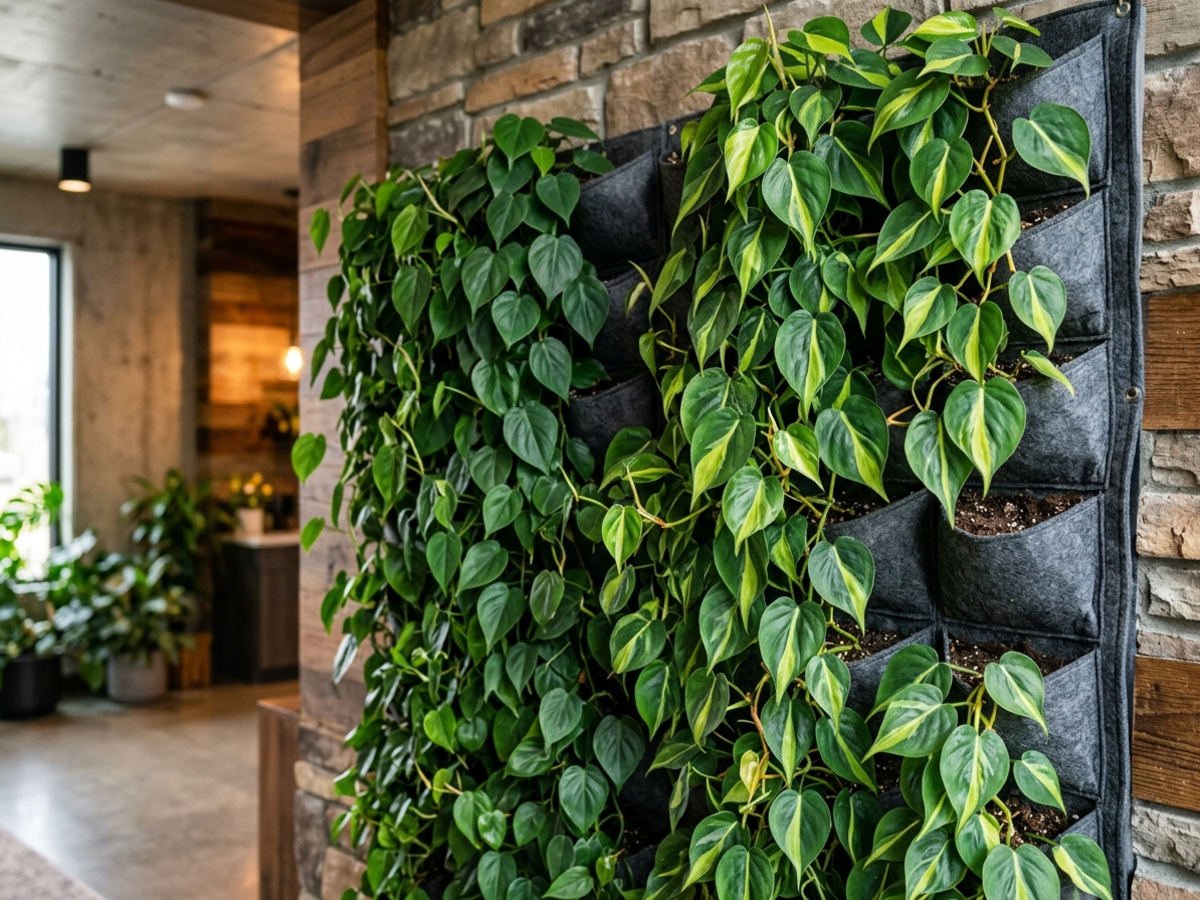
Botanical Name: Philodendron hederaceum (syn. Philodendron scandens) | Ideal Placement: Indoor vertical feature walls, shaded balconies
Trailing Philodendrons are a landscape architect's dream for vertical installations. With velvety, deeply saturated heart-shaped foliage, varieties like Heartleaf Philodendron and Philodendron 'Brasil' (featuring electric lime stripes down the center of each leaf) add lush, layered tropical luxury to living walls.
Unlike some demanding exotics, trailing Philodendrons are sturdy, forgiving, and naturally disease-resistant. In vertical wall pockets, their cascading stems spill gracefully downward, concealing wall frames and hardware with rich green drapes.
• Light: Medium to bright indirect light.
• Watering: Keep root zone evenly moist but never soggy.
• Benefit: Outstanding air purification, filtering indoor formaldehyde and benzene.
3. Syngonium podophyllum (Arrowhead Plant) – Vibrant Pastel Colors & Texture
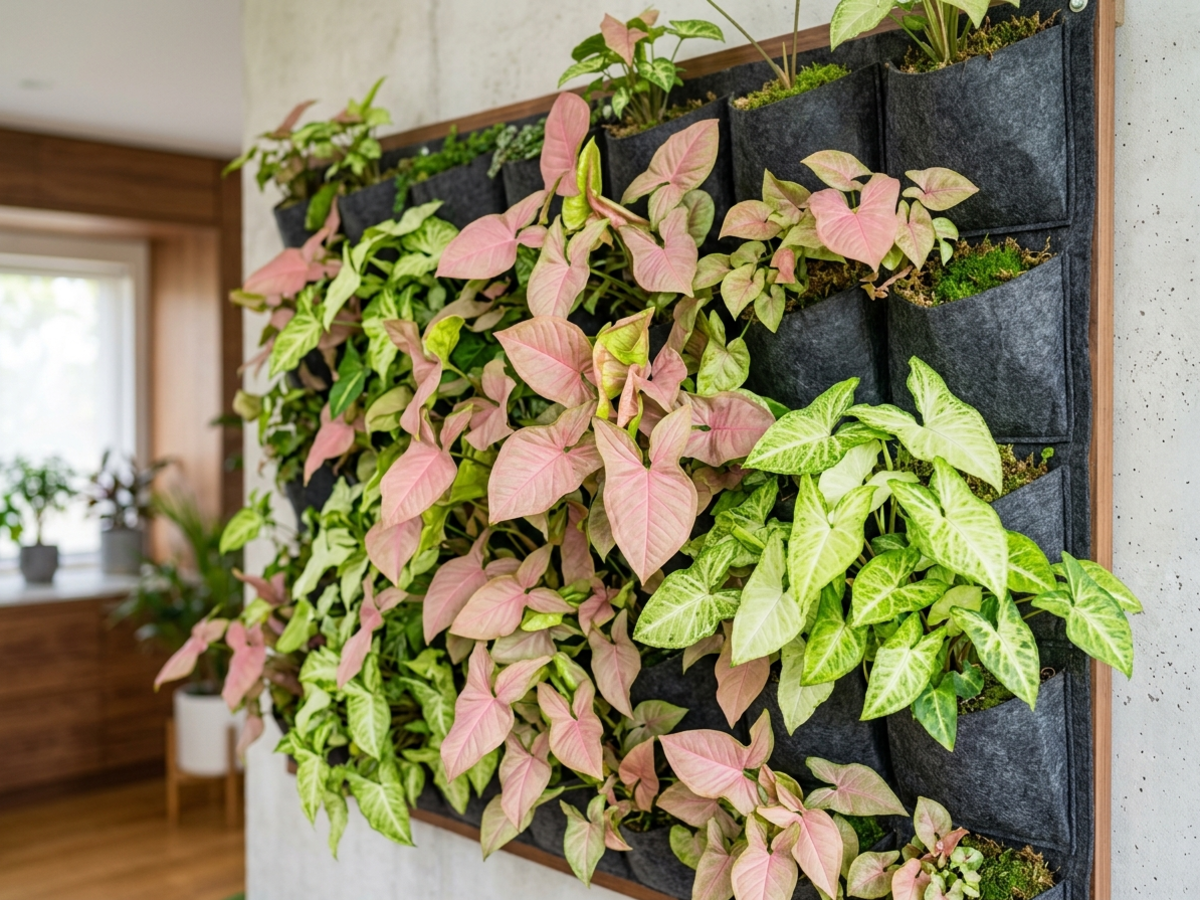
Botanical Name: Syngonium podophyllum | Ideal Placement: Bright indoor walls, semi-shaded balconies, courtyard atriums
One common visual mistake in living wall design is planting only monochromatic deep green foliage, resulting in a flat appearance. Syngonium solves this instantly. With arrow-shaped foliage available in creamy white, lime-green, and gorgeous blush pinks (such as 'Neon Robusta' and 'White Butterfly'), Syngonium brings striking chromatic contrast into vertical arrangements.
Syngonium thrives in Bengaluru's moderate humidity. It starts as a dense, upright clump that fills out its pocket, gradually developing semi-climbing runners that blend seamlessly with neighboring plants.
• Light: Bright, filtered indirect light (brighter light enhances pink leaf variegation).
• Watering: Water when the top inch of potting medium feels dry to the touch.
4. Boston Fern & Bird's Nest Fern – Soft Feathery Textures for Shaded Pockets
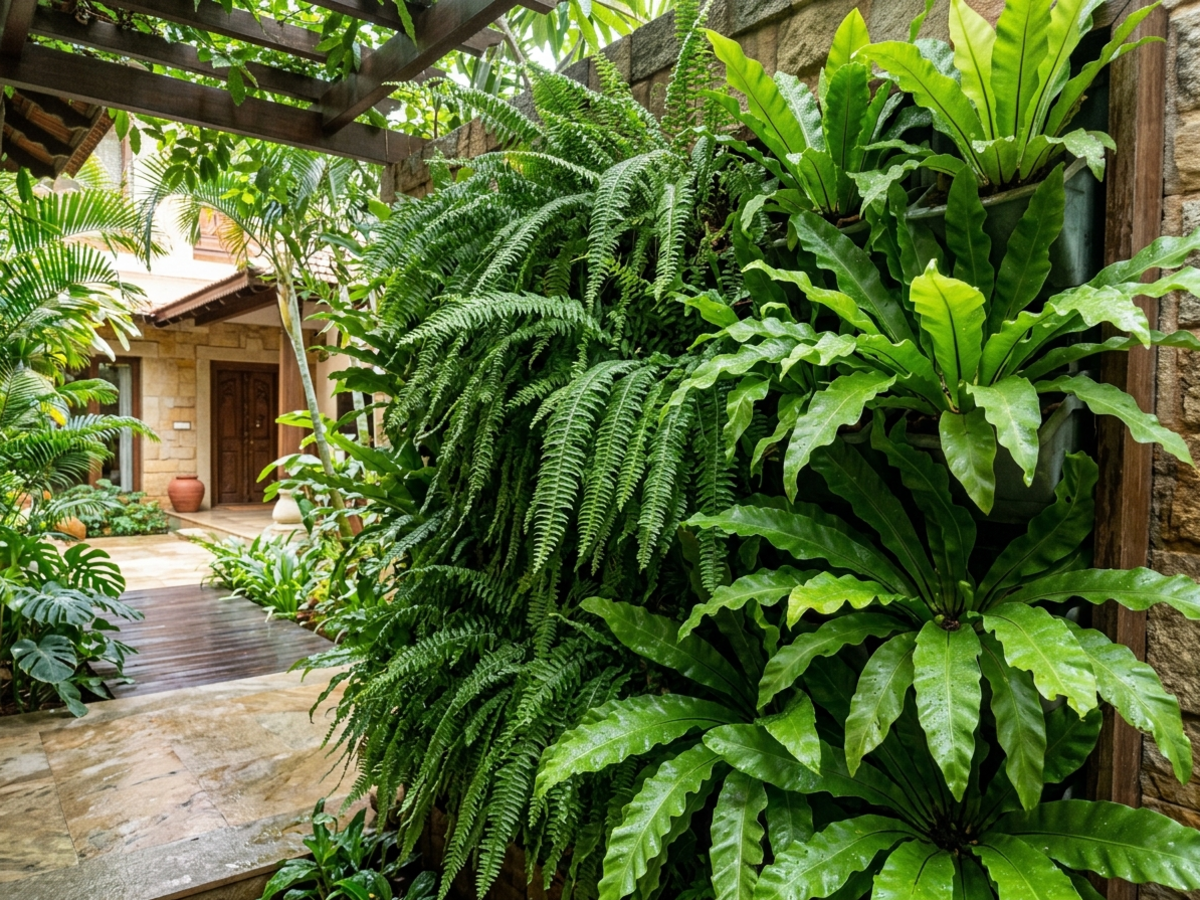
Botanical Names: Nephrolepis exaltata (Boston Fern) & Asplenium nidus (Bird's Nest Fern) | Ideal Placement: Shaded courtyard walls, bathroom atriums, covered north/east balconies
Nothing introduces tactile softness and primeval rainforest tranquility quite like ferns. Boston Ferns create billowing clouds of arching, finely divided fronds that soften harsh geometric planter edges, while Bird's Nest Ferns provide bold, rippled architectural leaves that anchor the composition.
Ferns thrive in Bengaluru’s monsoon season and perform wonderfully year-round provided they are sheltered from dry winds and midday sun. They are ideal for lower tiers of vertical walls where moisture naturally settles.
• Light: Dappled shade to bright indirect light; avoid direct sunlight.
• Watering: High moisture preference; benefit greatly from regular automated misting.
5. Chlorophytum comosum (Spider Plant) – Cascading Air-Purifier with Arching Offsets
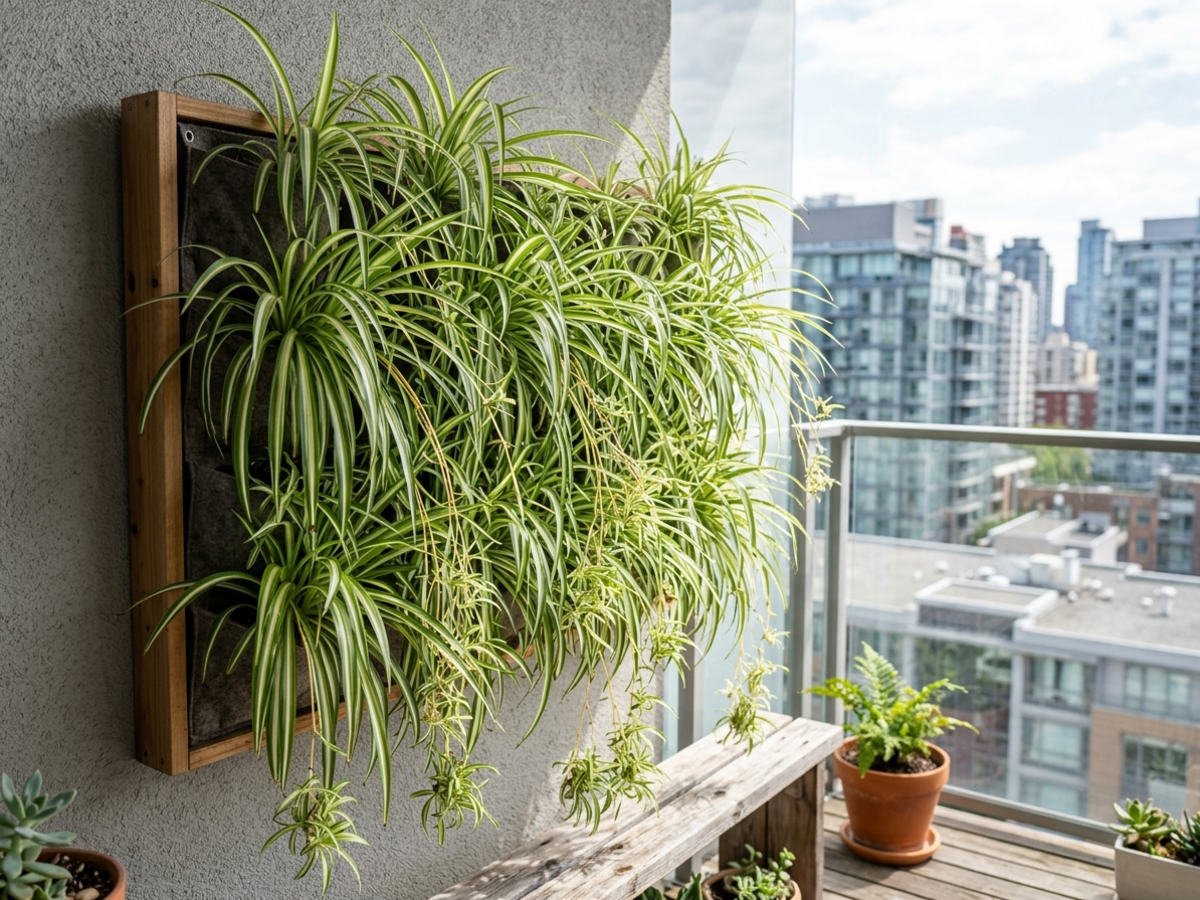
Botanical Name: Chlorophytum comosum | Ideal Placement: Balcony railings, upper living wall tiers, kitchen garden walls
Spider Plant is a proven botanical workhorse. Its variegated ribbon-like foliage arches fountain-like from vertical wall pockets, producing dozens of baby plantlets ('spiderettes') that dangle on slender stolons, introducing captivating multi-layered three-dimensional movement.
Equipped with thick, fleshy tuberous roots that store water reserves, Spider Plants can easily withstand intermittent irrigation delays. They are also ranked among NASA's top indoor air purifiers, making them an asset for urban city health.
• Light: Bright indirect light to gentle morning sunshine.
• Watering: Low to moderate; very forgiving of short dry spells.
6. Tradescantia zebrina & Purple Heart – Shimmering Purple & Silver Curtains
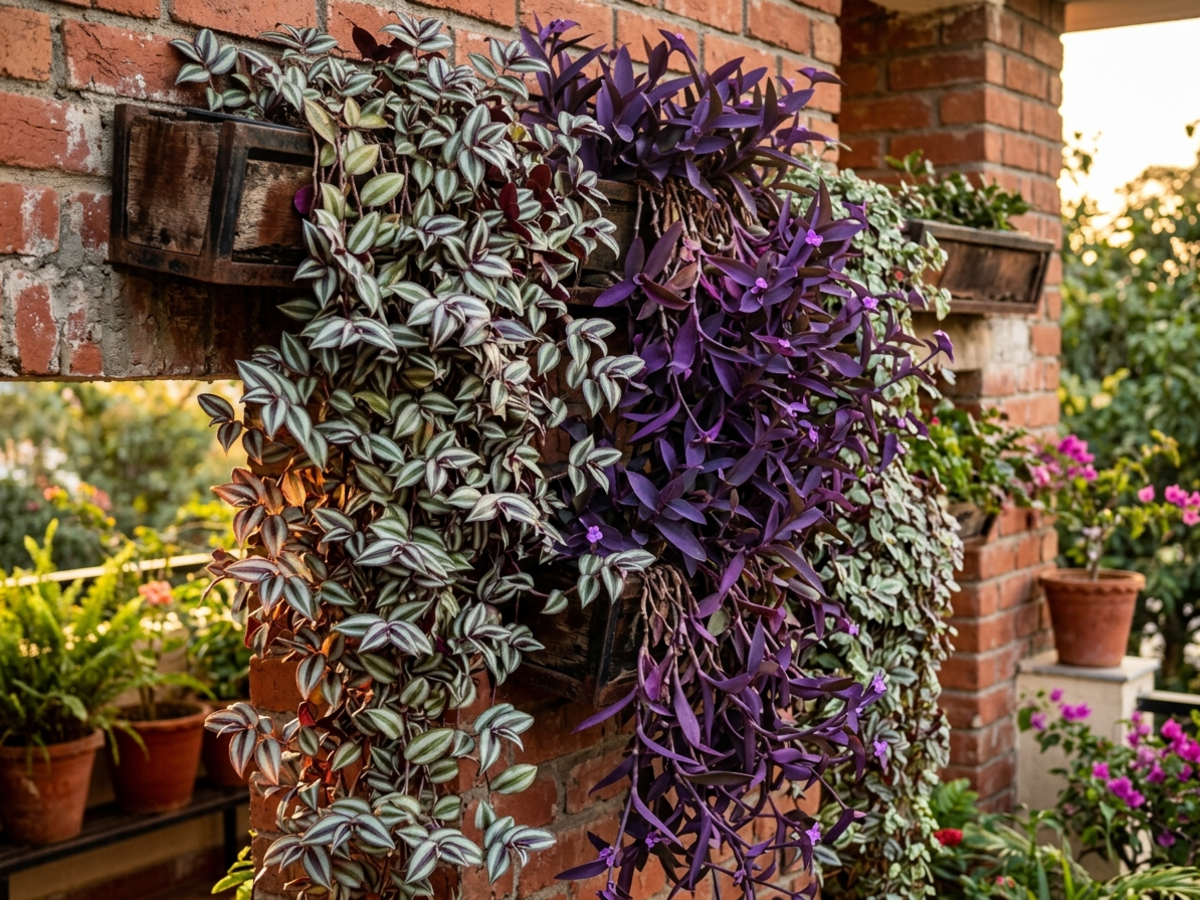
Botanical Names: Tradescantia zebrina (Wandering Jew) & Tradescantia pallida (Purple Heart) | Ideal Placement: Sunny to semi-shaded outdoor walls, terrace gardens
For homeowners looking to break up monochromatic greenery with striking royal violet, plum, and shimmering silver stripes, Tradescantia is an unbeatable selection. In vertical planter setups, Tradescantia grows with explosive speed, creating a cascading living curtain that can spill 40 to 60 cm below its planting cup.
Under Bengaluru's radiant sun, the foliage develops deep purple iridescence that glints in golden-hour light. They root effortlessly from cuttings directly in cocopeat, allowing you to multiply your living wall coverage with zero additional expense.
• Light: Moderate to bright direct/indirect sun (more sun deepens purple saturation).
• Watering: Moderate; allow topsoil to dry before watering.
7. Echeveria, Sedum & Crassula – Contemporary Low-Water Vertical Living Art
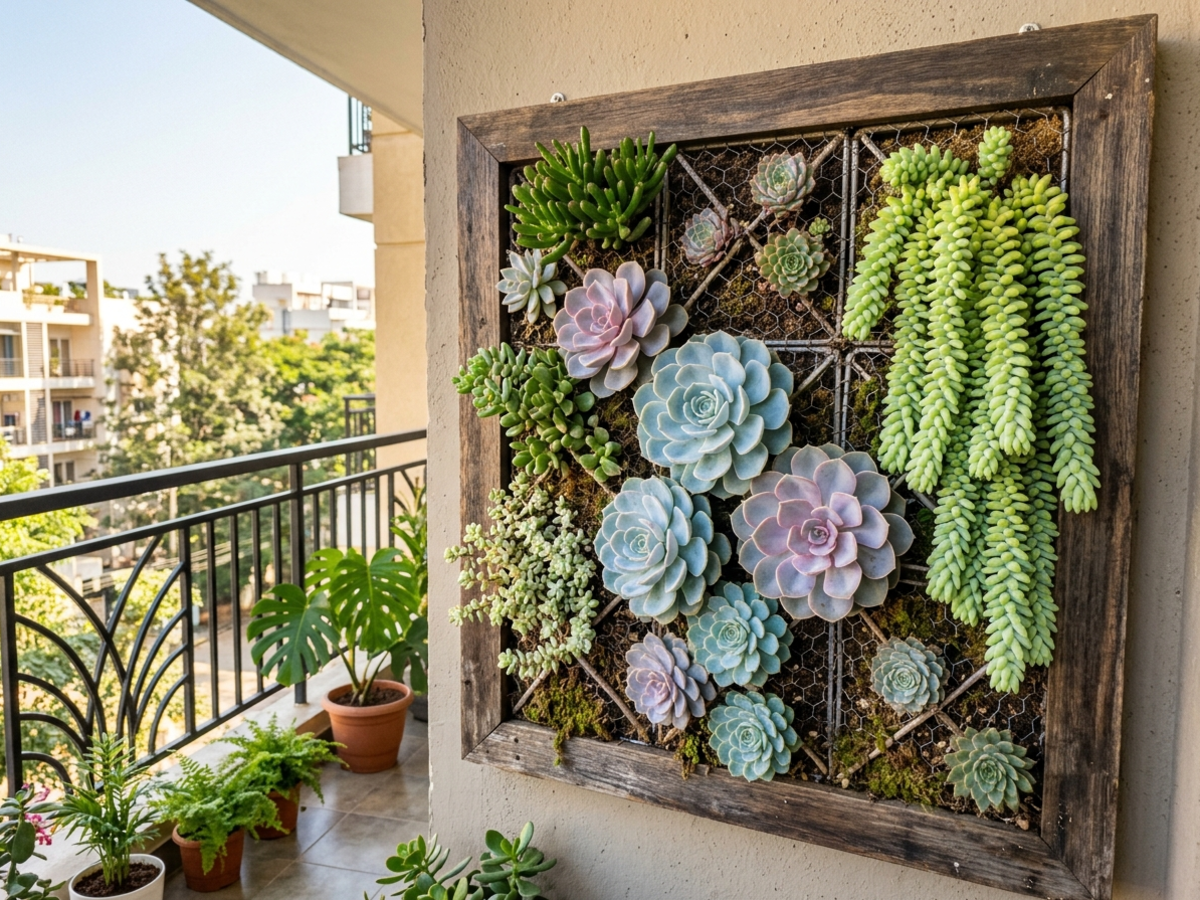
Botanical Families: Crassulaceae (Echeveria, Sedum morganianum, Crassula ovata) | Ideal Placement: Blazing west or south-facing balconies, open sunny terrace frames
If your apartment balcony receives scorching afternoon sun where delicate tropicals wilt and crisp, a vertical succulent living frame is the ultimate design solution. Compact geometric rosettes of pastel-blue Echeveria, golden Sedum, and trailing Burro’s Tail can be packed into vertical moss grid frames to create living, zero-spill botanical artwork.
Succulents possess shallow root systems naturally adapted to rock fissures, making them ideally suited for vertical modular pockets. They demand almost no water, needing only a light misting or deep soaking once every 10 to 14 days.
• Light: Full, unobstructed sun (minimum 4 to 6 hours daily).
• Watering: Extremely low; strictly well-draining gritty succulent mix.
8. Petunias, Begonias & Vinca – Spectacular Bursts of Seasonal Color
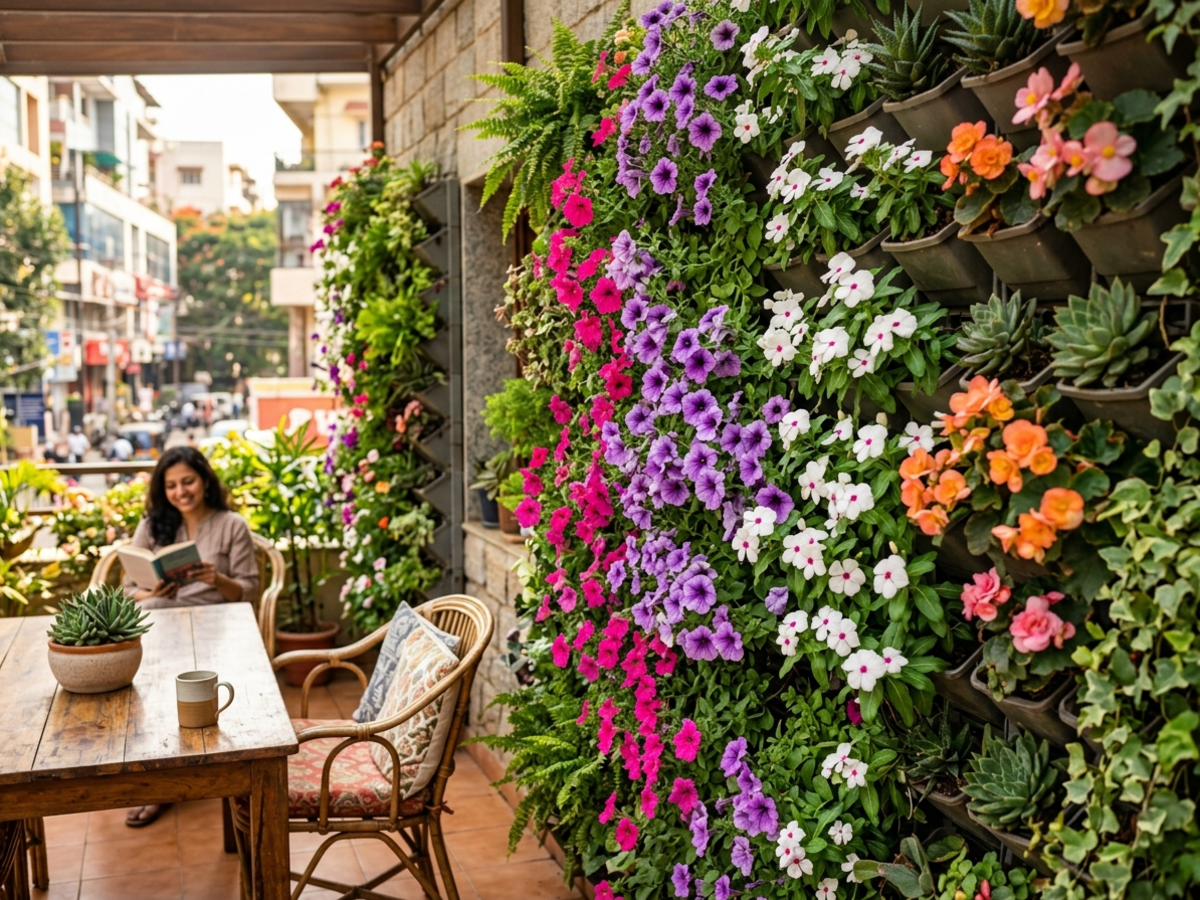
Botanical Names: Petunia x hybrida, Catharanthus roseus (Vinca), Begonia semperflorens | Ideal Placement: Sunny outdoor garden walls, facade planters, cafe patio accents
While foliage plants provide long-term perennial architecture, flowering species turn a vertical green wall into an eye-stopping showpiece. Cascading Petunias produce trumpet-shaped blossoms in violet, magenta, and candy pink that drape lavishly over modular planter lips from autumn through spring.
For heat-hardy, year-round flowering on sun-drenched Bengaluru balconies, dwarf hybrid Vinca (Madagascar Periwinkle) delivers unmatched stamina, blooming constantly in white, crimson, and lavender even during peak summer heatwaves.
• Light: Full sun to bright partial sun.
• Care Tip: Deadhead spent blossoms weekly and feed with mild organic liquid seaweed fertilizer twice a month.
9. Vertical Kitchen Herb Gardens – Fresh Mint, Basil, Oregano & Thyme at Arm's Reach
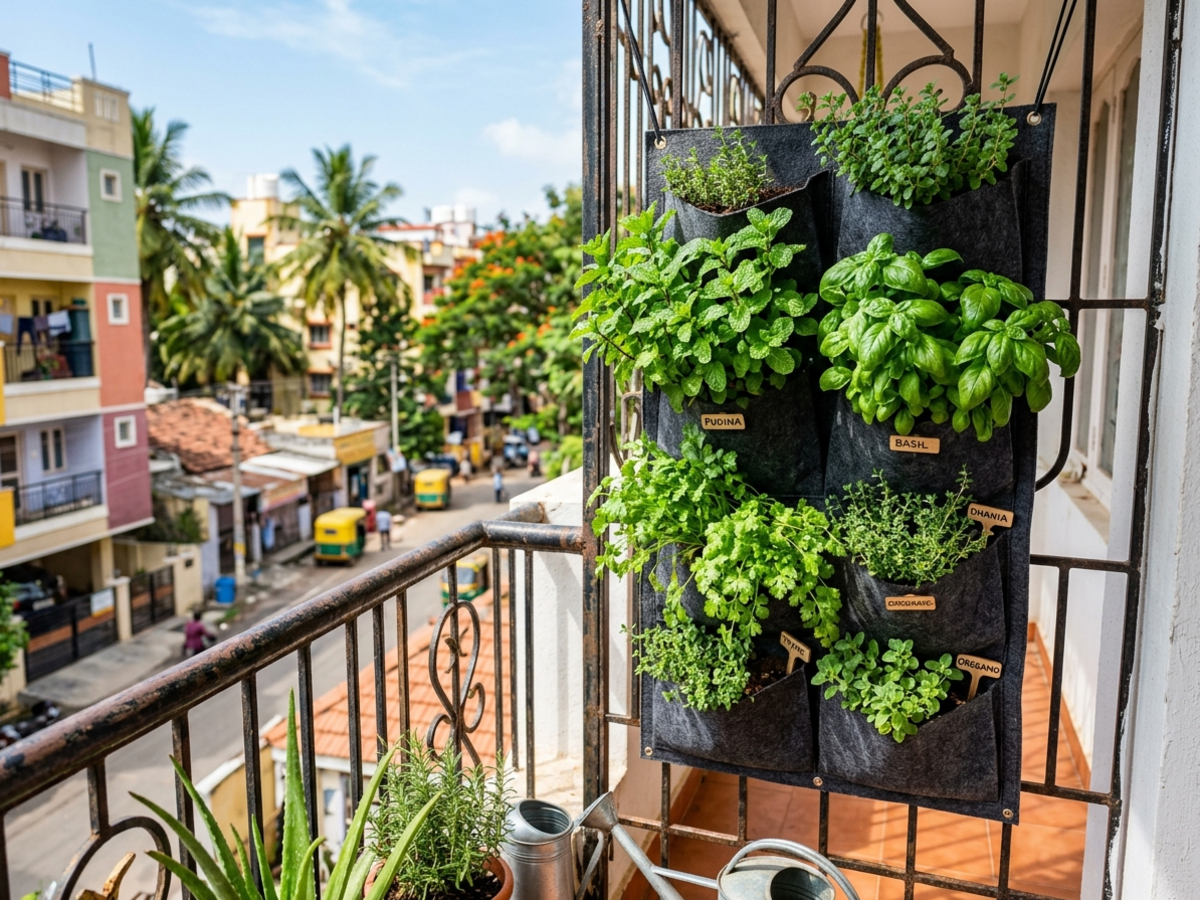
Botanical Varieties: Mentha spicata (Pudina / Mint), Ocimum basilicum (Sweet Basil), Origanum vulgare (Oregano), Thymus vulgaris (Thyme) | Ideal Placement: Kitchen balconies, utility balconies, sunny patio walls
Who says vertical walls are strictly ornamental? For cooking enthusiasts, dedicating a 4-by-3-foot modular wall panel right outside the kitchen door yields fresh, pesticide-free culinary seasonings daily. Vigorous Indian spearmint (Pudina) thrives in lower, moister wall pockets, while Mediterranean herbs like basil, oregano, and rosemary flourish in upper, sun-drenched tiers.
Herb vertical gardens combine daily functional utility with aromatic fragrances that deter mosquitoes and urban balcony pests naturally.
• Light: 4 to 5 hours of direct morning or midday sunlight.
• Harvesting: Snip top leaf clusters regularly to encourage bushy lateral growth.
10. Ficus pumila & Dwarf Mondo Grass – Architectural Fillers & Wall Clingers
Botanical Names: Ficus pumila (Creeping Fig) & Ophiopogon japonicus 'Nana' (Dwarf Mondo Grass) | Ideal Placement: Accent frames, boundary walls, courtyard perimeter dividers
To achieve a seamless, professional finish where no bare plastic frame or backing mesh is visible, landscape designers rely on specialized botanical fillers. Ficus pumila features tiny heart-shaped leaves with aerial rootlets that grip directly onto stone, brick, and concrete, creating a flat ivy-like veneer.
Meanwhile, Dwarf Mondo Grass forms compact, jet-green grassy tufts that act as visual anchors between flowering perennials and cascading pothos, imparting clean architectural elegance.
Modular Frameworks & Smart Drip Irrigation for Bengaluru Walls

Installing a durable living green wall in Bengaluru requires three essential structural components:
1. Modular Polypropylene Planter Frames: Interlocking modular plastic tiles with individual snap-in plant pots are the most reliable vertical systems for Bengaluru homes. Unlike felt pocket organizers that can retain excessive moisture against walls, modular frames maintain an essential 2-inch air gap between the plants and your wall plaster, completely preventing dampness and seepage.
2. Integrated Micro-Drip Irrigation: Vertical pots drain quickly due to gravity. Running a 16mm main line with 4mm micro-tubing and pressure-compensating 2 LPH drippers to each pot tier guarantees that top, middle, and bottom plants receive uniform hydration without manual garden hoses.
3. Drainage Gutters & Catchment Trays: Always install an aluminum or PVC drainage channel along the bottom of your vertical wall frame to route runoff directly into a balcony floor drain or collection basin, preventing stained tiles.
Styling Your Living Wall: Lighting, Seating & Urban Oasis Ambiance

A living green wall is not merely a collection of plants; it is an atmospheric architectural installation that redefines your living space:
• Accent Spotlighting: Install warm 3000K waterproof LED spotlights or upward uplights at the base of the wall to cast dramatic botanical shadows in the evening, transforming your balcony into a chic resort lounge.
• Natural Textures & Rattan Seating: Pair the vertical foliage wall with ergonomic wicker armchairs, Kadapa stone stepping pavers, and natural bamboo accents to create an inviting urban reading nook.
• Regular Care Routine: Prune overgrown runners monthly, inspect the undersides of leaves for mealybugs, and mist regularly during dry summer months to keep leaves dust-free and radiant.
Build Your Dream Vertical Garden with Happy Greenery
Ready to transform your empty balcony wall or living room into a breathtaking vertical paradise? Happy Greenery provides nursery-grown, healthy foliage plants, trailing creepers, vertical planter modules, and premium soil mixes delivered across Bengaluru.
Explore Vertical Garden Plants & Accessories at Happy Greenery Store
Enjoy prompt doorstep delivery and expert plant care advice tailored for Bengaluru gardeners!
Comments
Join the Conversation
Sign in with Google to post comments, ask questions, or reply to other readers.
No comments yet. Share your thoughts!