Succulents: Living Sculptures of the Plant World
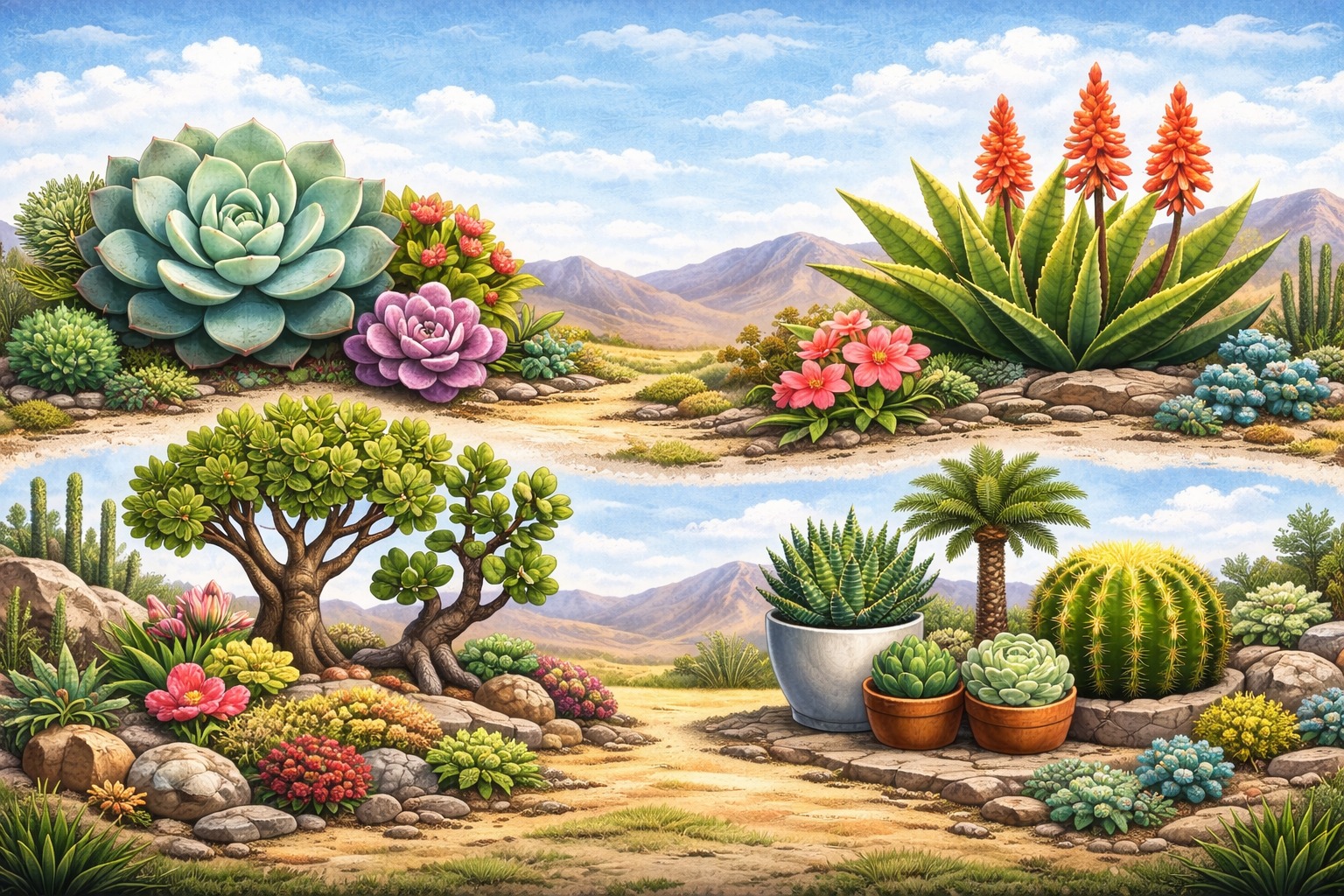
What are succulents?
Succulents are xerophytic plants that store water in leaves, stems, or roots, allowing them to survive dry, hot, or drought-prone conditions. The word succulent comes from the Latin word “sucus”, meaning juice or sap, referring to their juicy tissues.
Types of succulents
⦁ Leaf type succulents: Leaf-type succulents are plants in which water is stored mainly in the leaves. The stem is usually short, and leaves are often arranged in rosettes. Ex: Echeveria, Kalanchoe
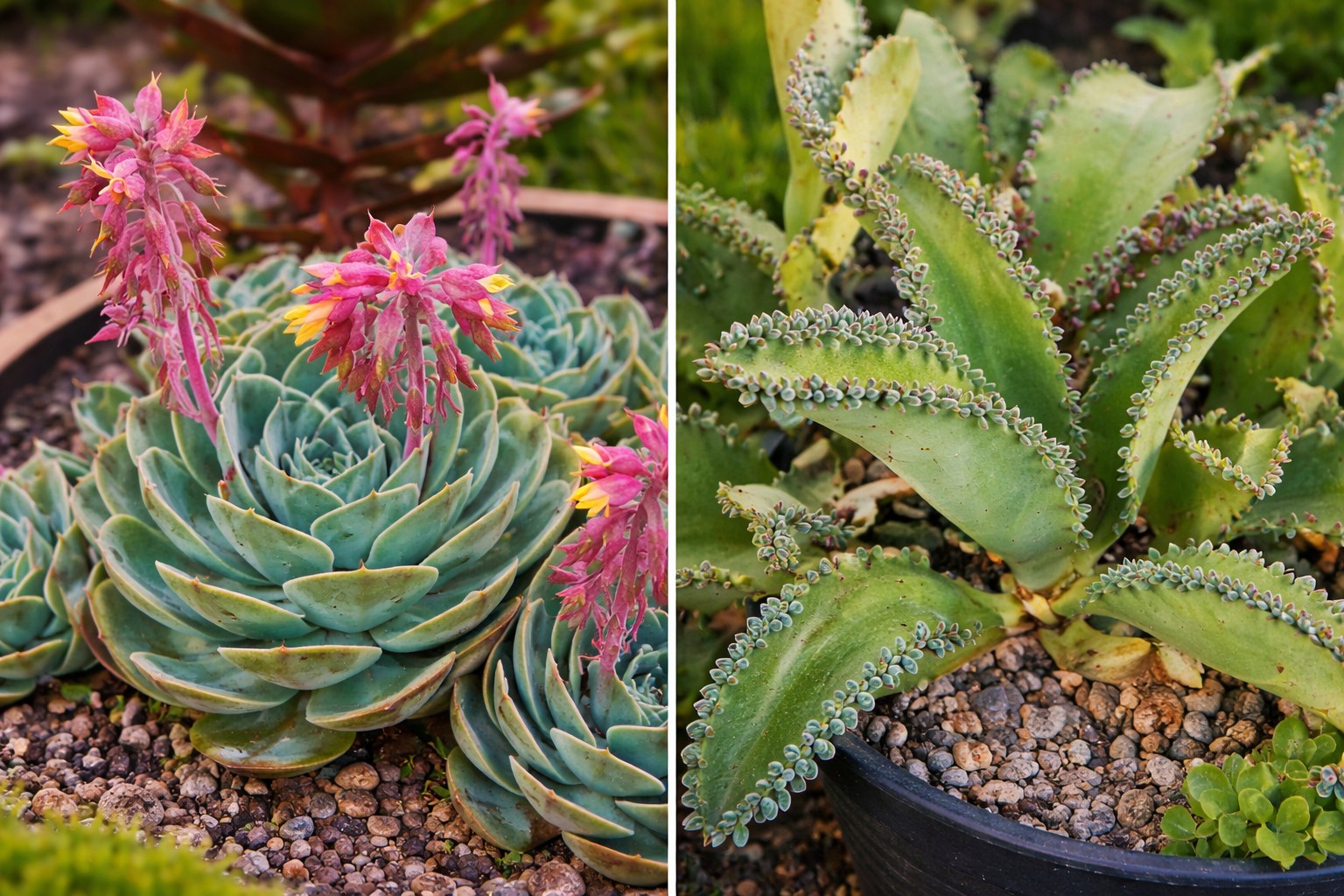
⦁ Flowering succulents: Flowering succulents are those plants that produce attractive bright, long-lasting, and showy flowers in addition to storing water in their fleshy leaves or stems. Flowers usually borne on long stalks or spikes, may be tubular, star-shaped, or clustered in nature, flowers during spring to summer in Echeveria, Aloe and Kalanchoe in winters
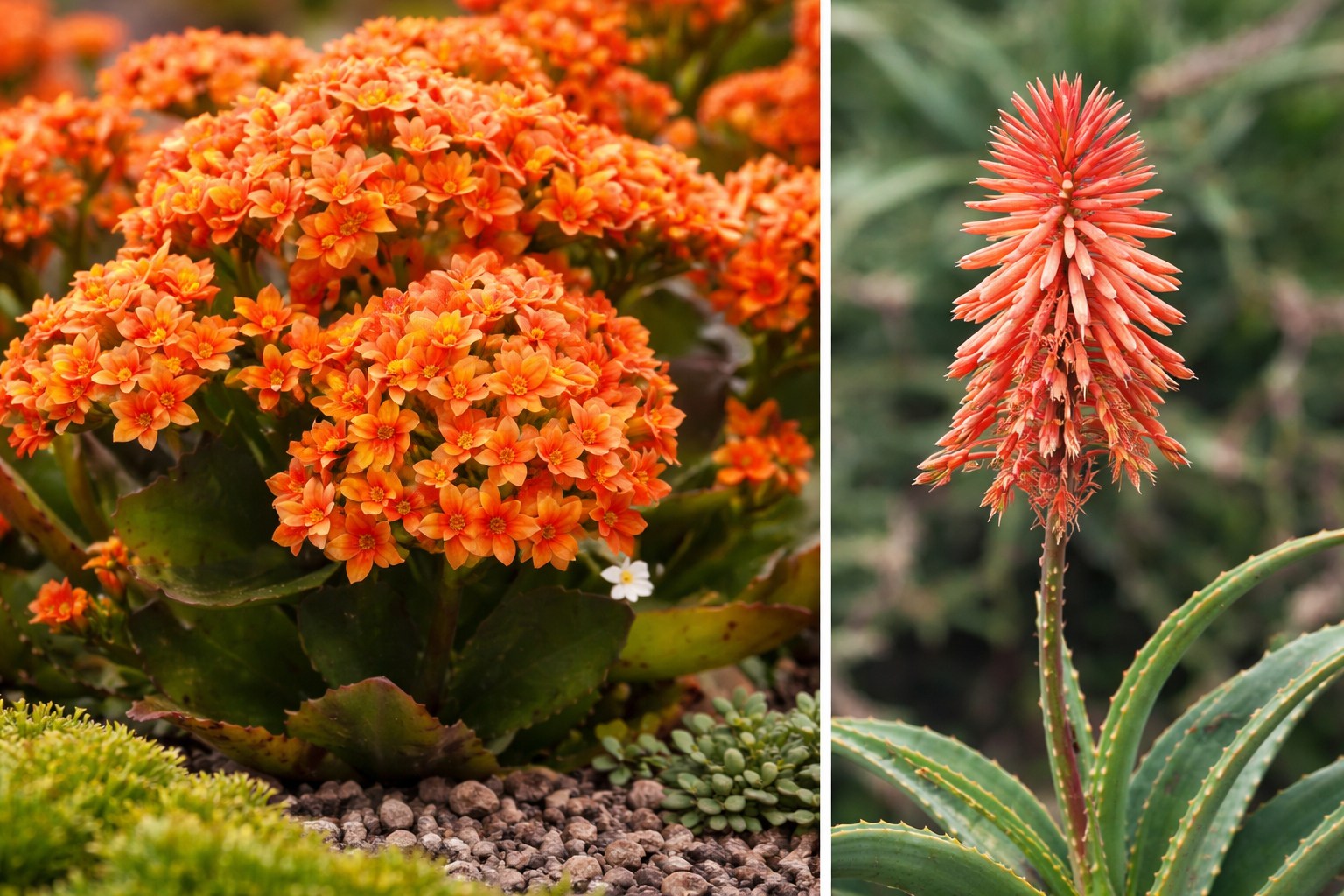
⦁ Woody succulents: Woody succulents develop hard, woody stems as they mature while still storing water in their stems, trunks, or leaves. They often look like miniature trees or shrubs. Ex: Pencil tree, Desert rose, Jade
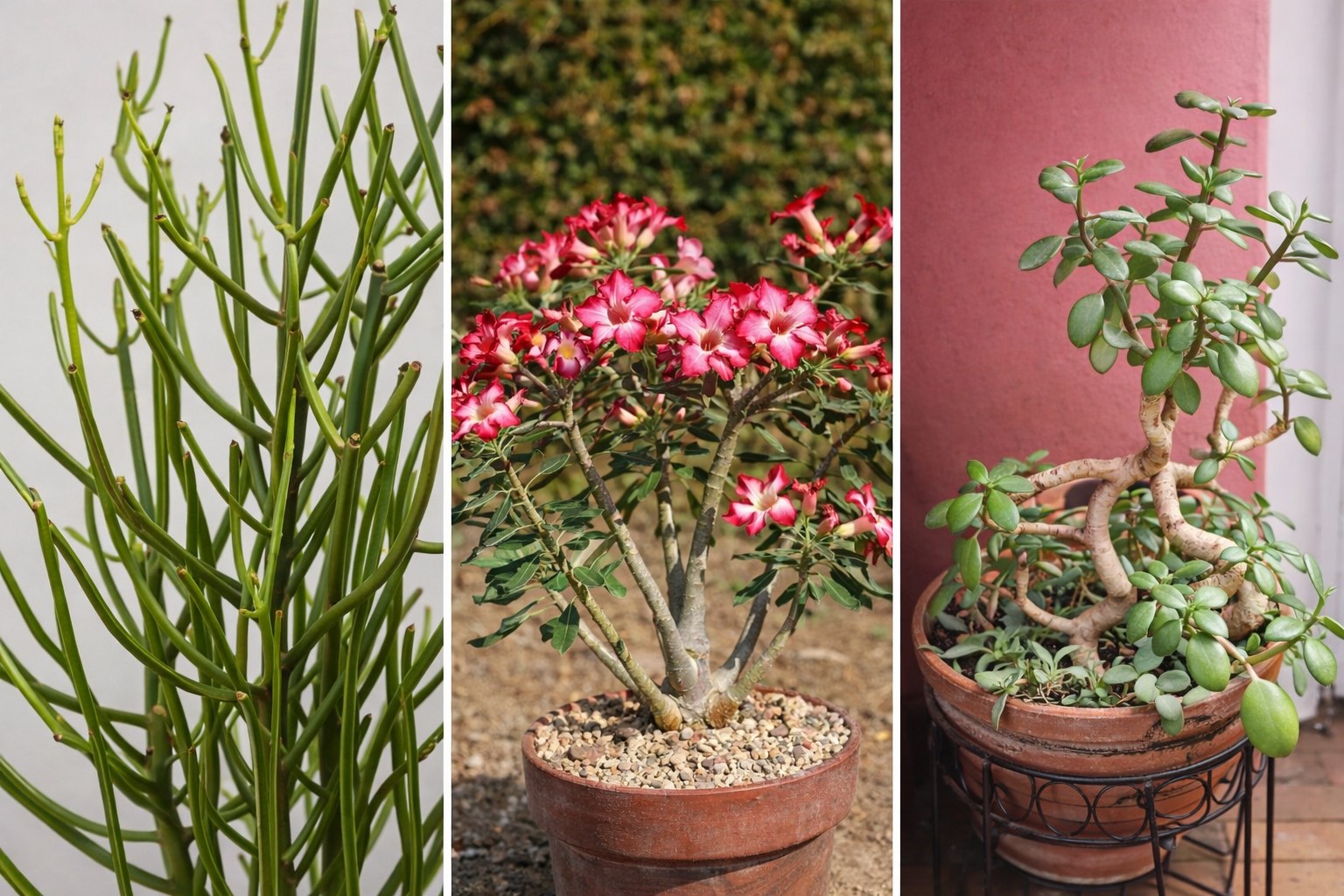
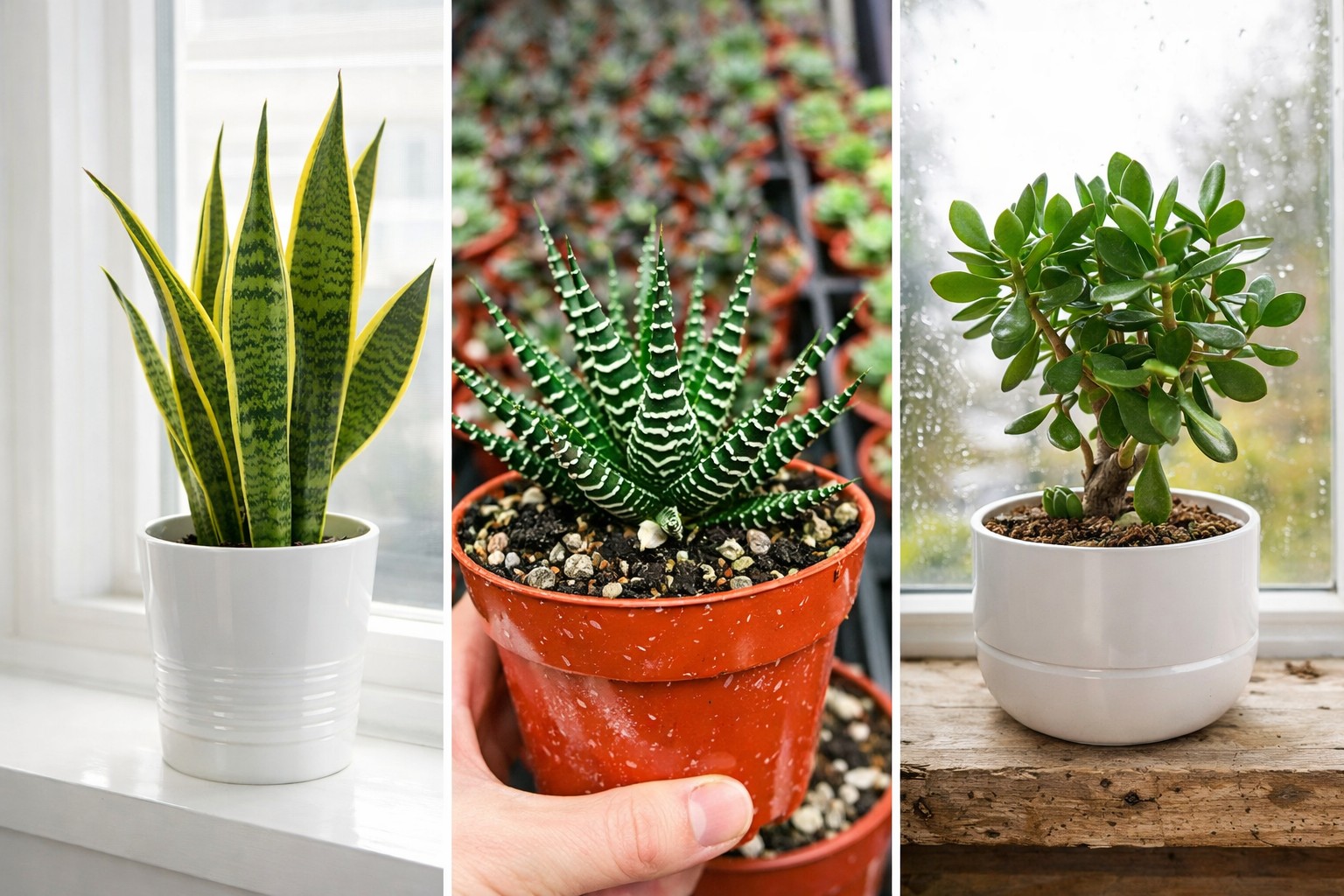
⦁ Indoor succulents: Indoor succulents are succulent plants that grow well inside homes andoffices under bright indirect light and require minimal care. They are ideal for low-maintenance indoor gardening. Ex: Sansveria, Haworthia, Jade
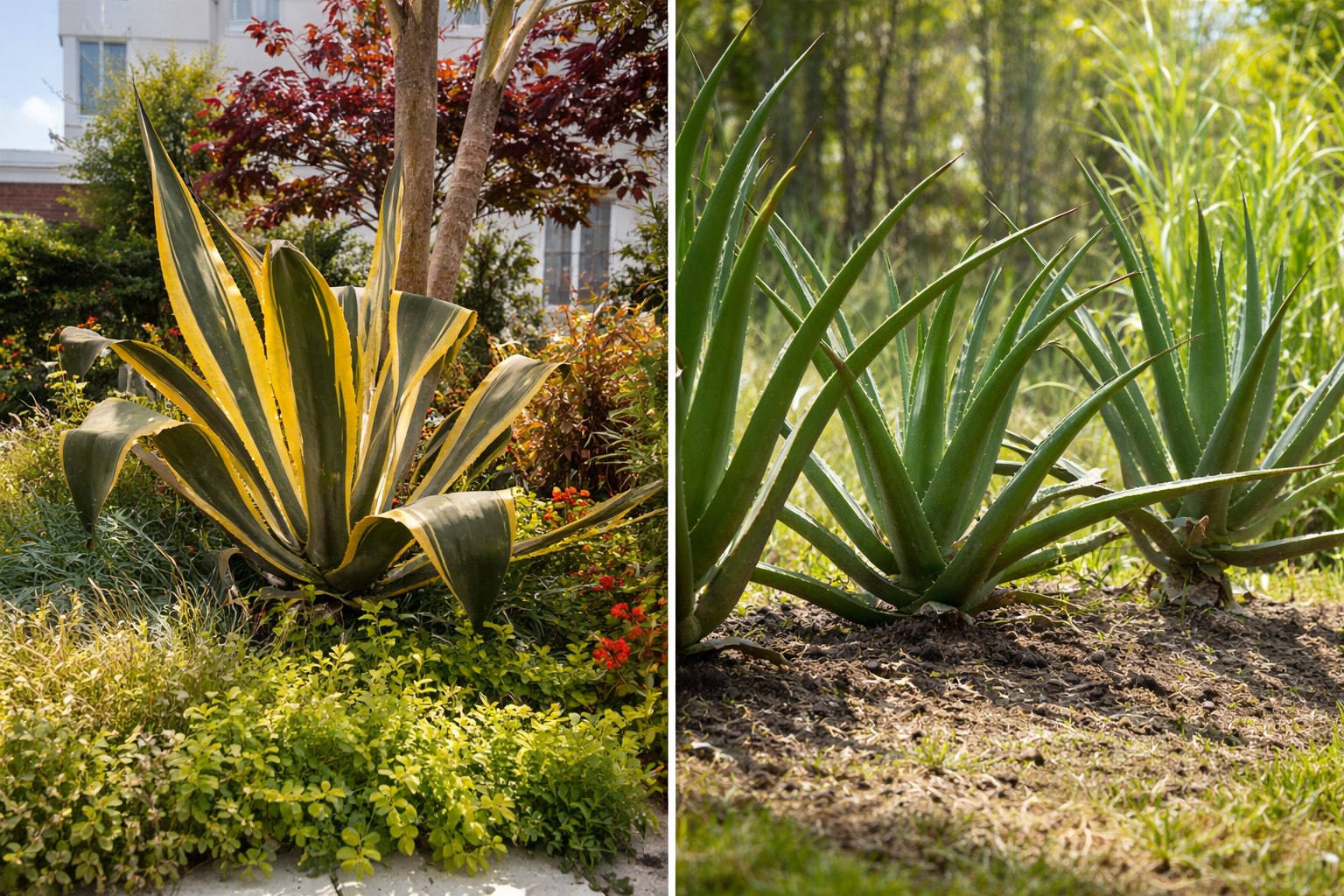
⦁ Out-door succulents: Outdoor succulents are those which thrive best in open areas under direct sunlight and natural environmental conditions. They are highly drought-tolerant and ideal for landscaping, rock gardens and xeriscaping. Ex: Century plant, Aloe vera, pencil tree, ice plant, barrel cactus
Utility in landscaping
⦁ Rock gardens
⦁ Xeriscaping
⦁ Ground covers
⦁ Border and edging
⦁ Focal points
⦁ Container and terrace gardening
⦁ Aesthetic advantage: year round greenery, attractive foliage (green, blue, grey, purple), variety of architectural shapes and few produce seasonal flowers
⦁ Environmental benefits: Conserve water, reduce irrigation cost, improves sustainability, best suit for climate resilient areas
Climate requirement
⦁ Light: Bright indirect sunlight for 4-6hrs is ideal, Indoors: place the plant at East or South-facing window Outdoors: Partial sun/shade
⦁ Temperature: 18-30 oC day temperature and 10-18 oC night temperature
⦁ Water requirement: During summer water once in 7-8 days, winters - every 15 days interval and during rainy, when the soil is fully dry
Growing media preferred (Soil):
40% coarse sand, 30% garden soil, 20% compost or cocopeat, 10% perlite / pumice / gravel, pH: 6.0–7.0. Never use heavy clay soil alone
Pot to be chosen:
Terracota or clay pot with drainage hole
When to repot:
Every 1–2 years, during spring or early summer
Sings to repot:
⦁ When roots coming out of drainage holes
⦁ Soil dries too fast
⦁ Plant becomes top-heavy
Fertilizer Requirement:
Use diluted cactus fertilizer, apply every 2–3 months (growing season only), avoid fertilizing in winter
Pest
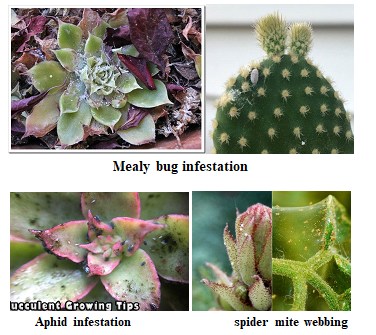
⦁ Mealybugs: White cottony mass- Neem oil
⦁ Mealybugs: White cottony mass- Neem oil
⦁ Aphid: Sticky leaves- Insecticidal soap
⦁ Spider mite: Fine webbing- Increase airflow
Disease
⦁ Fungal rot: Poor drainage- provide air circulation
⦁ Root rot: Overwatering- Remove rotten roots, repot
Comments
Join the Conversation
Sign in with Google to post comments, ask questions, or reply to other readers.
No comments yet. Share your thoughts!