Vastu Greens for a Balanced Home
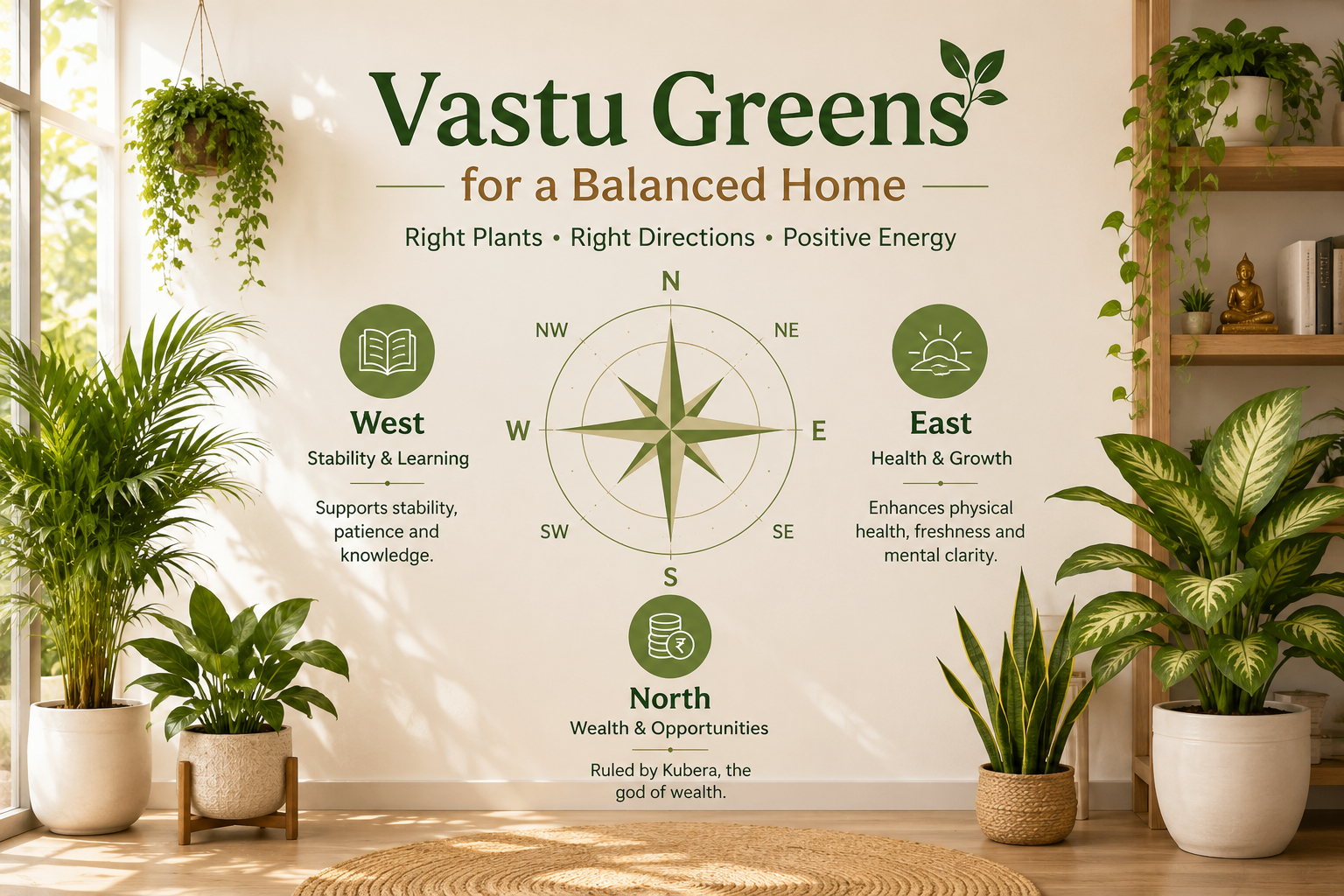
What Are Indoor Vastu Plants?
Indoor Vastu plants are selected houseplants according to Vastu Shastra that helps to balance natural energies within living spaces. These plants are believed to attract positive vibrations, remove negativity and promote health, peace, prosperity and emotional stability when placed correctly inside the home. Vastu emphasizes harmony between the five natural elements (earth, water, fire, air and space) and indoor plants act as living regulators of these elements.
Connection of Indoor plants with the Eight directions
Vastu Shastra assigns specific qualities to the eight directions and each direction influences particular aspect of life. Placing suitable plants in these zones helps to activate positive energy and supports physical and mental well-being.
⦁ East (Health & Growth): Associated with the rising sun and vitality, plants placed here enhance physical health, freshness and mental clarity
⦁ West (Stability & Learning): Supports stability, patience and knowledge when balanced with greenery
⦁ North (Wealth & Opportunities): Ruled by Kubera, the god of wealth plants are believed to improve financial flow and career opportunities
⦁ South (Energy Control): Requires balance; suitable plants helps to absorb excess heat and negative energy
⦁ North-East (Spirituality & Purity): Considered the most sacred zone; plants here promote peace, clarity and spiritual growth
⦁ South-East (Fire & Prosperity): Governs wealth and transformation; plants linked with financial growth
⦁ South-West (Stability & Strength): Heavy energy zone; minimal but strong plants support emotional stability
⦁ North-West (Movement & Communication): Plants here enhance relationships, communication and positive movement
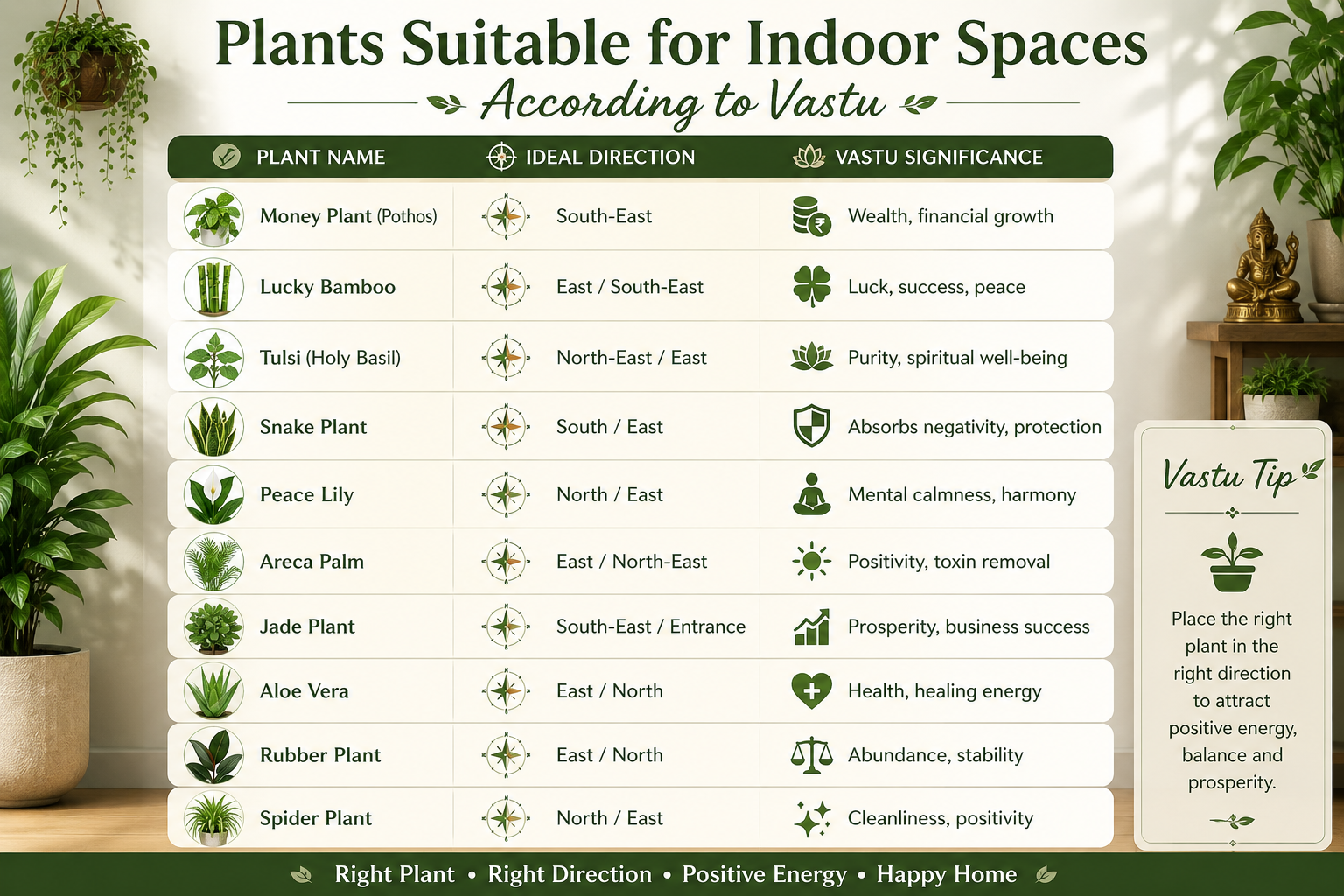
Plants suitable for indoor spaces according to vastu
Impact of indoor vastu plants on human well-being
Indoor Vastu plants positively influence physical health, emotional balance, mental clarity and productivity. Vastu believes that healthy plants regulate energy flow, reduce stress and create a peaceful atmosphere. When the environment is calm and balanced, individuals experience better concentration, decision-making ability, emotional stability and overall life satisfaction.
Science-Based reason behind Vastu plant placement
Scientifically, many Vastu principles align with environmental psychology and indoor ecology. Placing plants near windows (east or north directions) ensures adequate sunlight for photosynthesis, better oxygen release and proper air circulation. Avoiding dark or cluttered corners prevents mold growth and poor air quality. Plants release moisture through transpiration, increasing indoor humidity and preventing dryness of skin, eyes, and nasal passages. Comfortable humidity levels improve sleep quality and reduce fatigue.
Indoor plants improve air quality by absorbing carbon dioxide and certain volatile organic compounds (VOCs) released from furniture, paints, and electronic devices. Plants such as snake plant, peace lily, areca palm, spider plant, and money plant help increase oxygen levels and humidity, which reduces headaches, eye irritation and respiratory discomfort. Cleaner air improves brain oxygenation, leading to better concentration, memory and cognitive performance for academic and professional success. Certain plants such as snake plant release oxygen even at night, supporting better sleep. Increased greenery also triggers biophilia, the natural human response to nature, which reduces stress and enhances emotional well-being.
NASA’s famous Clean Air Study found that certain houseplants were able to remove measurable amounts of airborne pollutants such as benzene, formaldehyde, and trichloroethylene in sealed experimental chambers, example, peace lilies removed thousands of micrograms per hour of these toxins. Infographic-style data from industry research indicates that rooms with indoor plants can have 20–30% less fatigue and headaches and 50–60% fewer airborne molds and bacteria compared to spaces without plants. Maintaining appropriate indoor humidity via plant transpiration also helps reduce respiratory irritation and may support easier breathing and fewer sore-throat symptoms.
Placement of plants accordingly…
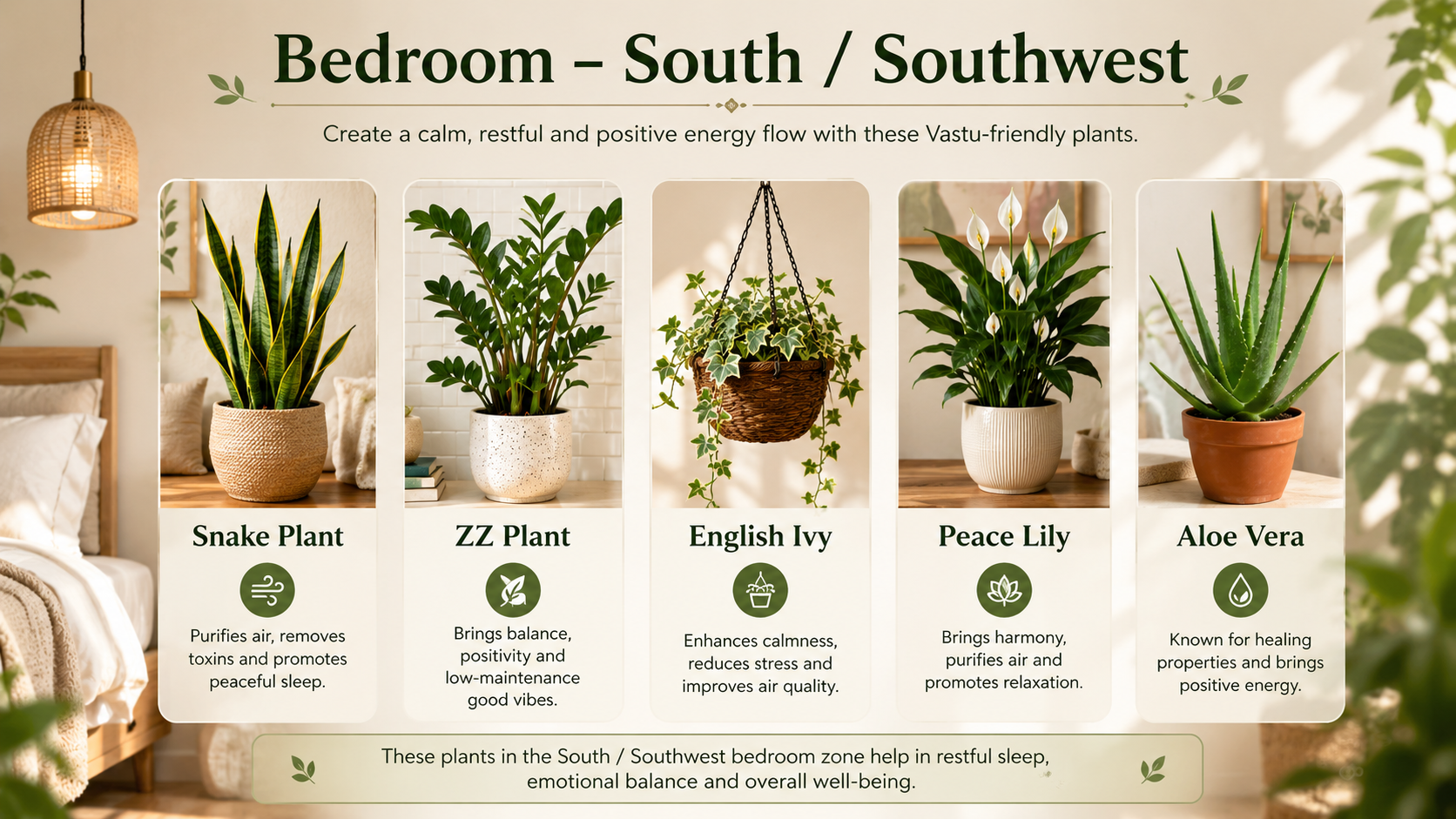
In the bedroom, plants such as snake plant, peace lily, aloe vera, ZZ plant, English ivy and lavender are considered most suitable because this space requires calmness, emotional balance and clean air for restful sleep. From a scientific point of view, snake plant releases oxygen even at night, peace lily reduces indoor toxins, aloe vera improves air quality and lavender helps reduce stress and anxiety, all of which contribute to better sleep quality. According to Vastu, these plants absorb negative energy and promote peace, making them appropriate for placement in the east or south side of the bedroom.
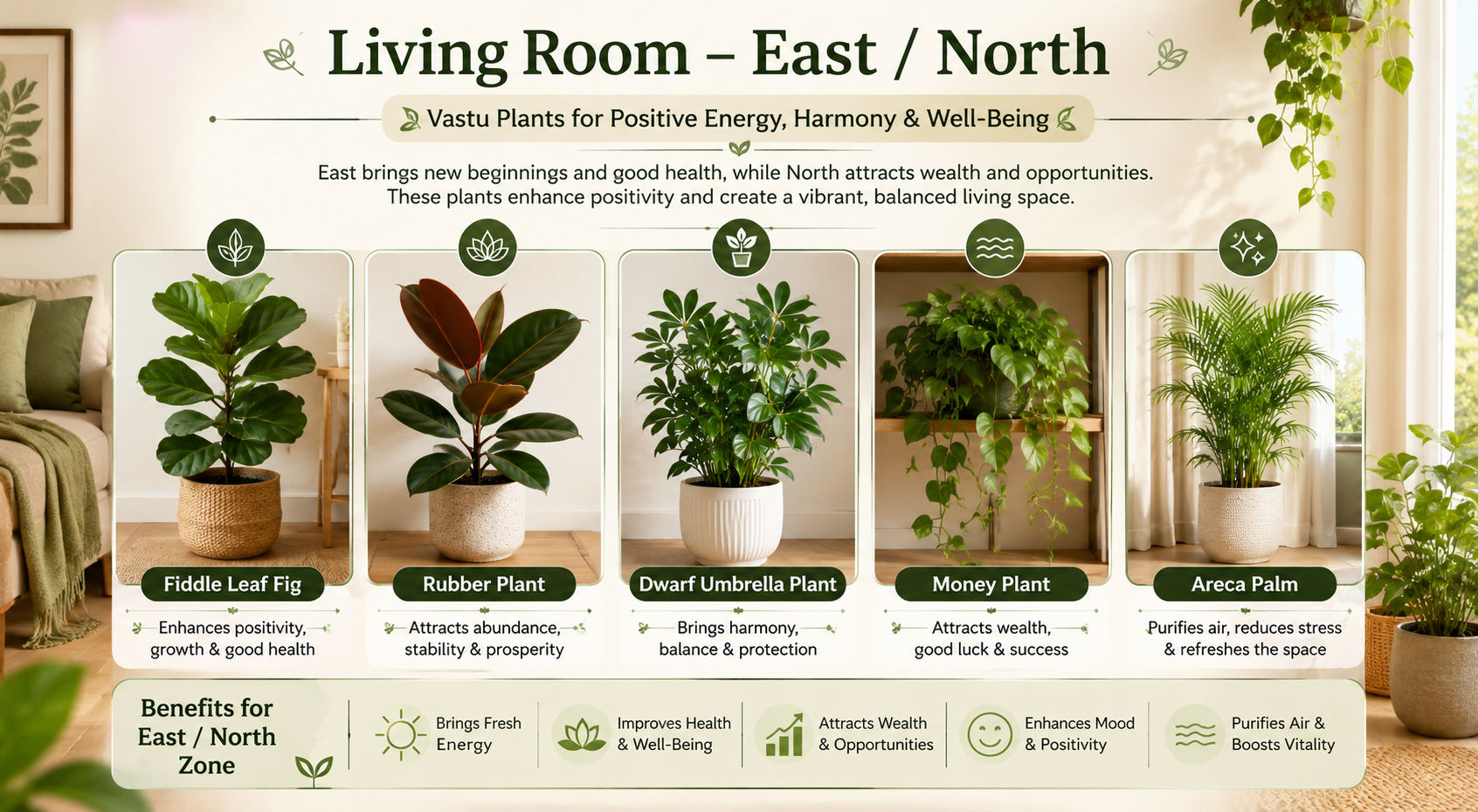
The living room, being the center of social interaction and energy flow in the house, benefits from plants that create positivity, harmony and a welcoming environment. Areca palm, rubber plant, fiddle leaf fig, money plant and peace lily are commonly recommended for this space. Scientifically, these plants improve indoor air quality by reducing pollutants, increasing humidity and enhancing visual comfort, which helps reduce stress and uplift mood for both residents and visitors. Vastu considers the living room an area where positive vibrations should circulate freely; therefore, placing such plants in the north, east, or north-east direction is believed to attract harmony, prosperity and balanced energy.
In the kitchen, which represents the fire element and is closely linked with health and nourishment, plants such as Tulsi, aloe vera, mint and money plant are preferred. These plants help balance excess heat, absorb odors and maintain freshness. Scientifically, Tulsi has antimicrobial properties, aloe vera tolerates heat and absorbs pollutants and mint improves air freshness and alertness. From a Vastu perspective, these plants support good health, digestion, and family well-being and are best placed in the east or north direction, away from direct heat sources like the stove.
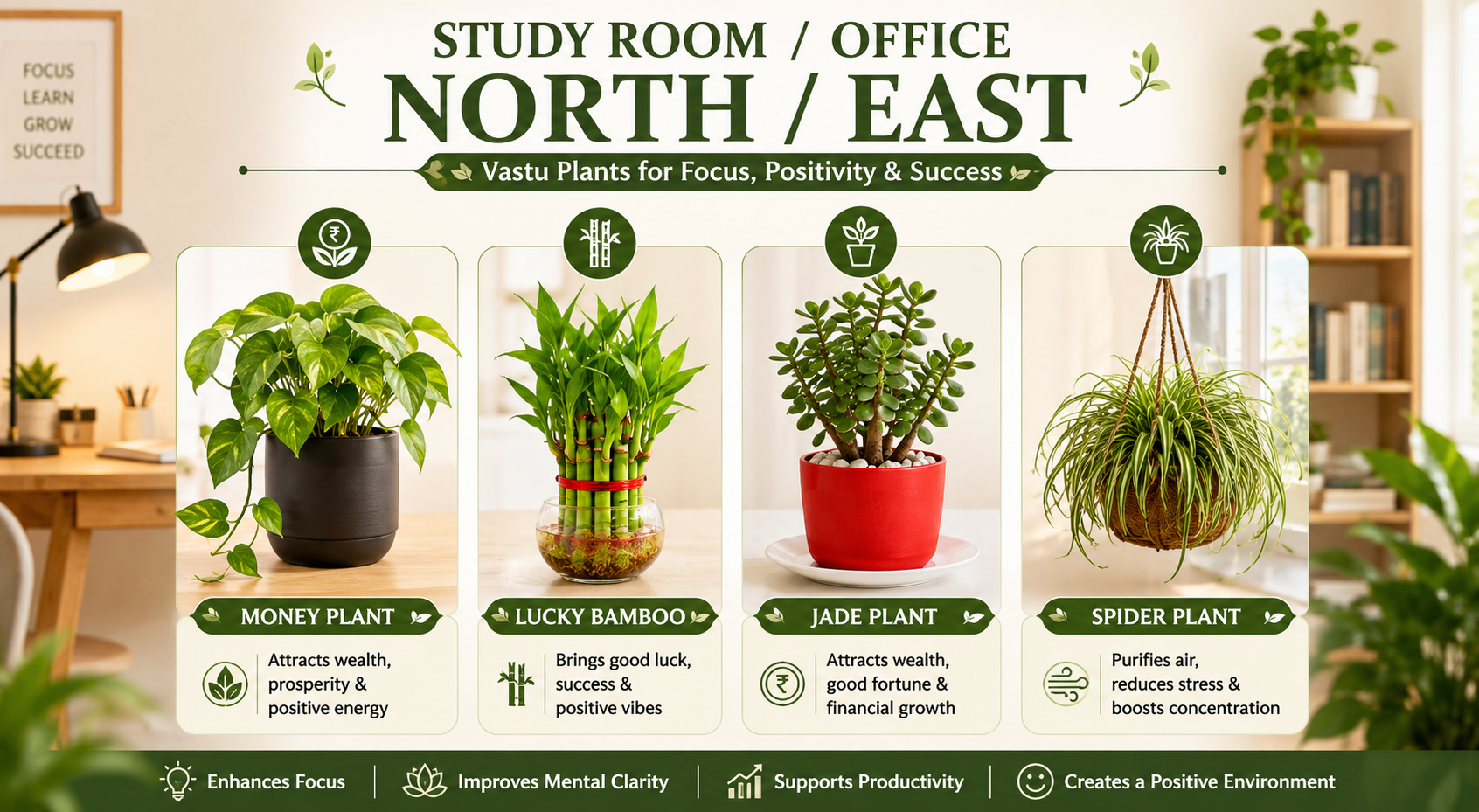
The study room requires an environment that supports concentration, mental clarity and productivity, making plants such as jade plant, lucky bamboo, snake plant and spider plant ideal choices. Vastu associates these plants with growth, success and stability, recommending their placement in the north or east direction to support learning, career progress and positive thinking.
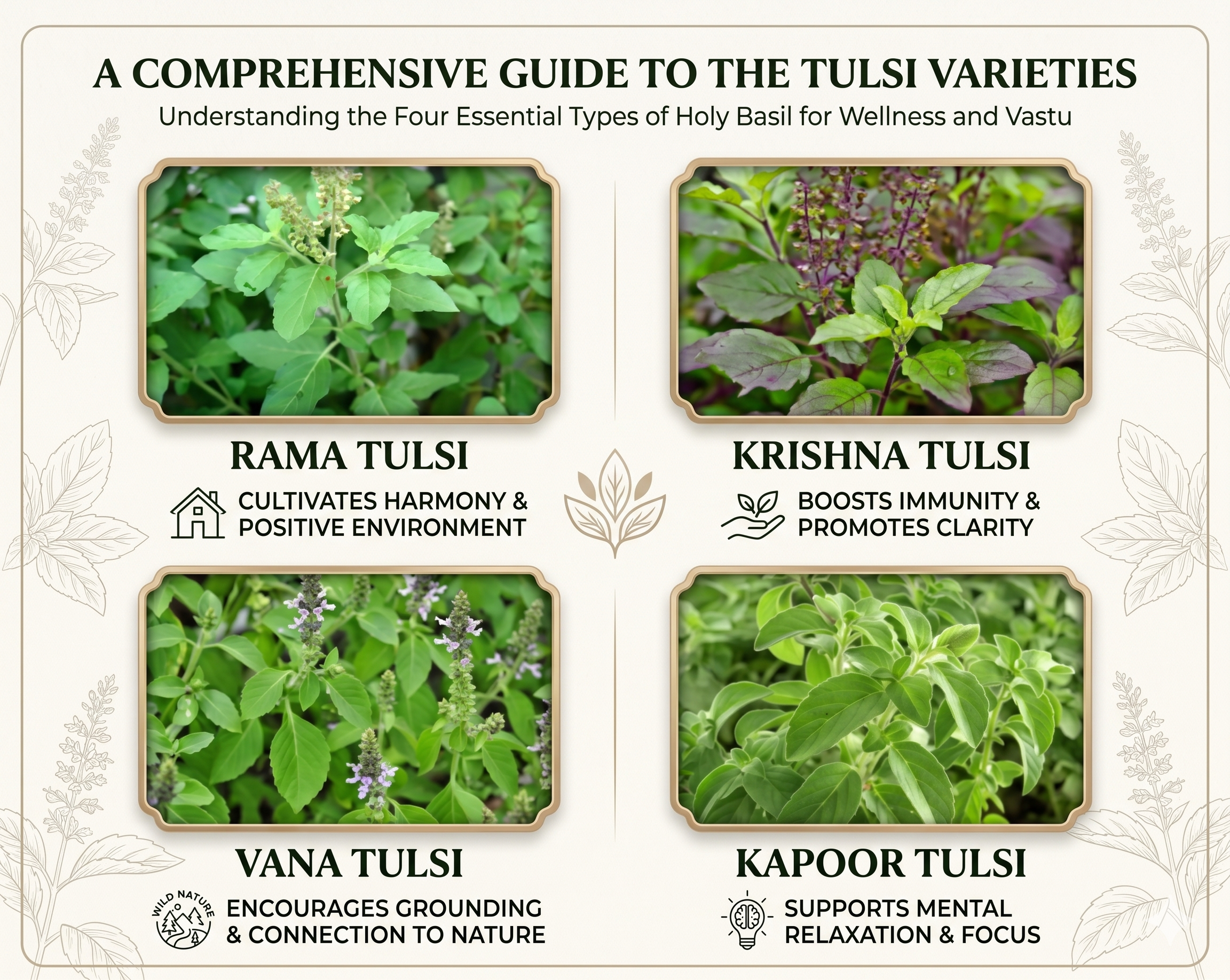
In the pooja room, plants are selected primarily to promote purity, peace and spiritual calmness, as this space is meant for meditation, prayer and inner balance. According to Vastu Shastra, the pooja room is ideally located in the north-east (Ishanya) direction, which represents clarity, divinity, and positive cosmic energy. Plants placed here should be sacred, non-thorny, fragrant and naturally purifying, as they are believed to enhance spiritual vibrations rather than stimulate physical or material energies. Tulsi (holy basil) is the most highly recommended plant for the pooja room or just outside it near a window. Scientifically, Tulsi releases oxygen for long hours, has antimicrobial properties and improves indoor air quality, creating a clean and calm atmosphere conducive to meditation. Peace lily is another suitable plant for the pooja room, especially in modern homes, as it symbolizes peace, purity and harmony.
Advantages of indoor Vastu plants
⦁ Attract positive energy and remove negative vibrations
⦁ Enhance peace, harmony and spiritual balance
⦁ Support financial growth and career stability
⦁ Improve relationships and emotional well-being
⦁ Create a balanced and prosperous living environment
⦁ Improve indoor air quality by reducing VOCs (5–15% in real homes)
⦁ Increase oxygen levels and humidity, reducing fatigue and headaches
⦁ Lower stress and anxiety levels by 30–60%
⦁ Improve concentration, productivity and cognitive performance by 10–15%
⦁ Support better sleep quality and emotional regulation
Conclusion
Indoor Vastu plants serve as a bridge between traditional wisdom and modern science. While Vastu explains their benefits through energy balance and directional harmony, science explains them through improved air quality, reduced stress, healthier microclimates and positive psychological effects. When placed correctly and maintained well, indoor Vastu plants create a nurturing environment that supports health, happiness, productivity and long-term success.
Comments
Join the Conversation
Sign in with Google to post comments, ask questions, or reply to other readers.
No comments yet. Share your thoughts!